
TL;DR
Building-first prospecting works until the buyer is a company, not a property - and in commercial services, that's more often than most reps realize.
Company type tells you what equipment a prospect likely has, what compliance obligations they carry, and how many locations they operate - none of which shows up in a property record.
Searching your territory by company type rather than building type surfaces accounts that are invisible to address-based prospecting.
Finding the company is step one. Finding the right decision maker at that company - based on what you sell - is what turns the search into a call worth making.
Reps who stop searching and start selling cover more ground in the same amount of time.
When the Building isn’t the Account
Most sales reps start prospecting at the building level. They find the type of building that matches their services, surface the decision maker, and start a conversation.
That prospecting workflow is effective 90% of the time.
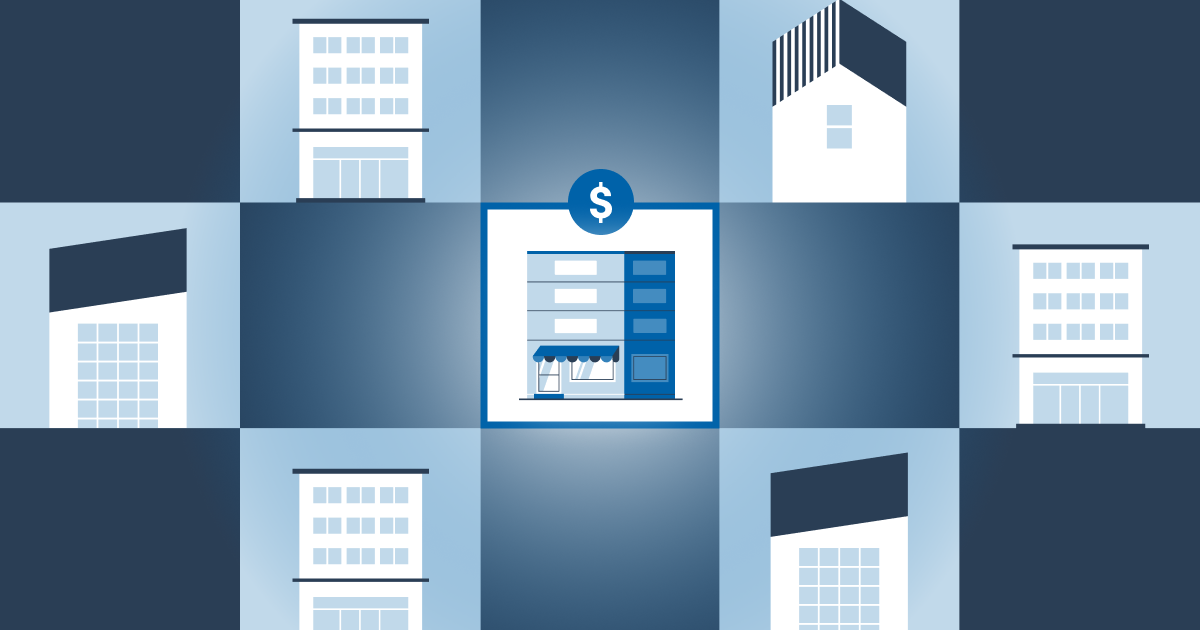
But some accounts work differently. For banks, restaurants, certain healthcare facilities, franchise operators, and multi-location businesses, the company is the faster path - not the building.
A freestanding restaurant is a solid prospect for a regional fire suppression company. But prospecting all 14 locations in your territory individually, each with mandatory suppression system inspections, is a different problem.
Going directly to a centralized facilities contact at the corporate level (one person with vendor sign-off across every site) could save hundreds of hours of windshield time and dead-end calls to location managers.
And, if you close all of them, the deal is 14x the size.
However, to land that corporate account, you have to be able to search companies - not just buildings. In this article, we’re going to cover how Convex customers are using company search to land bigger accounts and multiple locations.
There were 832,521 franchise establishments operating across the U.S. in 2025, projected to grow to 845,000 units in 2026 — each one a potential multi-location account that a building-first search can't surface on its own. (International Franchise Association, 2026)
Commercial and residential services franchises are projected to exceed 85,000 units in the U.S. in 2025, representing one of the fastest-growing franchise categories and a high-density target segment for HVAC, janitorial, FLS, and maintenance teams. (International Franchise Association, 2025)
66% of commercial contractors entered 2025 with stable or growing revenues, signaling an active market for teams willing to prospect beyond their existing building list. (ServiceTitan, 2025)
Repeat customers (65%) and word-of-mouth referrals (60%) remain the primary drivers of business volume for commercial contractors, leaving systematic outbound prospecting as the growth lever most teams haven't fully built. (ServiceTitan, 2025)
Why Building-First Prospecting Needs a Second Layer for Corporate Accounts
Property intelligence transformed how commercial services sales teams prospect. Instead of driving city streets and guessing at what's inside a building, reps could filter by square footage, building age, permit activity, and ownership type - surfacing key properties without windshield time and giving reps detailed context before the first call.
For most accounts, that’ll get you a “foot in the door.”
But some commercial services companies want to pursue larger corporate accounts: grocery store chains, restaurant groups, healthcare networks, schools. This is where building-first prospecting runs into roadblocks.
A 40,000-square-foot mixed-use building in your territory might house a dental group, a regional insurance carrier, a staffing agency, and a commercial kitchen. Four completely different service conversations. Four completely different buyers. Four different compliance obligations, equipment profiles, and decision-making structures.
And if you're talking to the location manager, you've got a long way to go up the chain before reaching someone with vendor sign-off.
The same problem applies to underground utility locating companies, excavation contractors, regional franchise operators, and multi-site healthcare networks.
These aren't prospects you find by looking at a property. They're businesses that happen to occupy properties at strategic locations inside your territory.
The distinction matters more than it sounds because it changes the prospecting workflow. When the buyer is the company, not the building, starting your search at the address puts you one layer below where the actual decision gets made.
What's the Difference Between Prospecting by Building and Prospecting by Company?
Property-first prospecting maps what exists in your territory. Company-based prospecting maps who controls it.
For single-site accounts, those are the same conversation. For multi-location operators, they're not even close.
Dimension | Building-First | Company-First |
Starting point | Property address | Business type / industry |
Data surfaced | Sq footage, permits, ownership, equipment signals | Industry classification, headcount, locations, compliance obligations |
Buyer identified | Property owner or manager | Operator, tenant, franchise holder, or corporate facilities contact |
Multi-location visibility | One building at a time | Full account footprint across territory |
Service scope signal | Building size and age | Company type and operational requirements |
When the Corporate Account Lives Above the Building
For a single-site account, the building and the buyer are usually the same conversation. For a multi-location operator, they aren't.
The property record shows you one address. The company record shows you the full footprint: every location in your territory, the same facilities contact covering all of them, and a procurement structure that makes one conversation worth far more than one contract.
When the Buyer Is the Business, Not the Property
Some categories of prospect don't anchor to a commercial building at all. David Vroblesky, Principal Product Manager at Convex and ServiceTitan, describes one of the clearest examples: a company that does underground utility tracking and locating, whose customers are contractors and excavators.
Their buyers aren't building owners or property managers. They're businesses. A property-based search misses them entirely. Company Search is the only prospecting mode that makes sense for their ICP. Schools, regional franchise operators, and healthcare networks follow the same logic: you find them by what they do, not where they sit.
How Do You Find Companies in Your Sales Territory?
Most reps who need to find companies in their territory start with the tools they already have, and quickly hit their limits.
LinkedIn searches return enterprise accounts and miss local operators. Google Maps shows locations but not operators. Chamber directories are a year out of date before you open them.
One Reddit thread on this exact question has reps describing their process: a Google Maps spreadsheet, a local business journal subscription, and a lot of guessing.
That cobbled-together workflow covers maybe a third of the market and takes hours to produce a list you still have to verify.
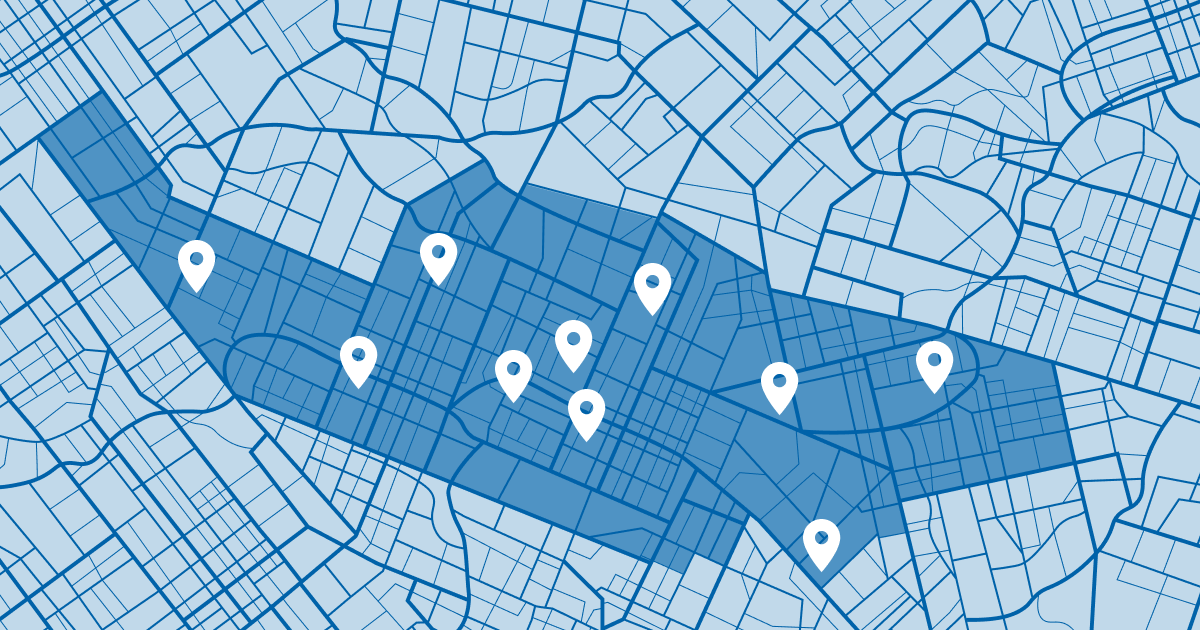
The more structured approach is to use a platform that lets you search by company type, industry classification, and geography simultaneously, surfacing operators you'd never find by address alone.
In Convex, Company Search is a mode that lets reps find businesses operating in their territory, not just buildings. A rep can search for a specific type of company: a restaurant group, a licensed childcare provider, a regional excavation contractor, and surface matching businesses across their territory with contact recommendations built in.
This shifts the sales motion. Instead of starting with a pin on a map and working backward to figure out who's inside, you start with the type of business you want to serve and let the platform surface where they operate.
For territory sales reps searching for leads in a defined geographic area, the difference in how the day starts is significant. A qualified list of company-type targets rather than a map of properties to investigate.
What Does Company Type Tell You That a Building Never Could?
Company type is a front-loaded qualification signal. It tells you the service conversation before you ever dial the number.
Industry Classification as a Service Scope Signal
When you know the company type, you know the service fit before the first call. A medical clinic and a law firm can share a floor in the same building.
But, their HVAC loads are different. Clinical spaces require tighter temperature control and more frequent filter changes than standard office environments.
Their FLS requirements differ. Healthcare facilities carry specific suppression and alarm requirements tied to patient safety codes.
Their janitorial needs differ. Medical-grade cleaning protocols versus standard office maintenance. protocols versus standard office maintenance.
Industry classification tells you which conversation to prepare for. The same logic applies across verticals.
Restaurant groups require suppression system inspections on a defined compliance calendar.
Licensed childcare facilities carry mandatory HVAC filtration and air quality standards.
Multi-tenant commercial properties managed by a regional property management company may have a centralized procurement contact covering dozens of buildings.
Knowing the company type front-loads the sales conversation with context a cold building search can't provide.
Multi-Location Accounts Start With a Company Search
The largest contracts in commercial services aren't single-building deals. They’re regional restaurant franchises with 20+ locations. Healthcare networks with clinics across your territory have a facilities director making service decisions for the whole system.
You can't identify any of these opportunities starting from a property address. You find them by searching for the company: the operator, the brand, the franchise holder, and then mapping their locations across your territory.
Kyleigh Moreno, Director of Sales, Marketing, and Development at Moreno & Associates, describes her workflow as combining building type, square footage, permits, and company data together, filtering from a universe of contacts down to the specific profiles that match her target customer in Convex.
"The filtering is very detailed, which I love," she says. "I prefer to not cast such a wide net because I might get contacts I don't need as opposed to finding and working with smaller groups that are more in line with our target customer profile."
Combining all of them allows you to filter your territory by your ICP and focus your efforts on the biggest opportunities.
How Do You Find the Right Decision Maker Once You've Found the Company?
Back to the restaurant group. You've found the company. Fourteen locations across your territory. Mandatory suppression inspections, centralized facilities contact. Now what?
Finding the company is step one. Finding the right person at that company is where most reps lose time. They bounce between LinkedIn, Google, front desk numbers, and old directory listings trying to figure out who actually makes the call.
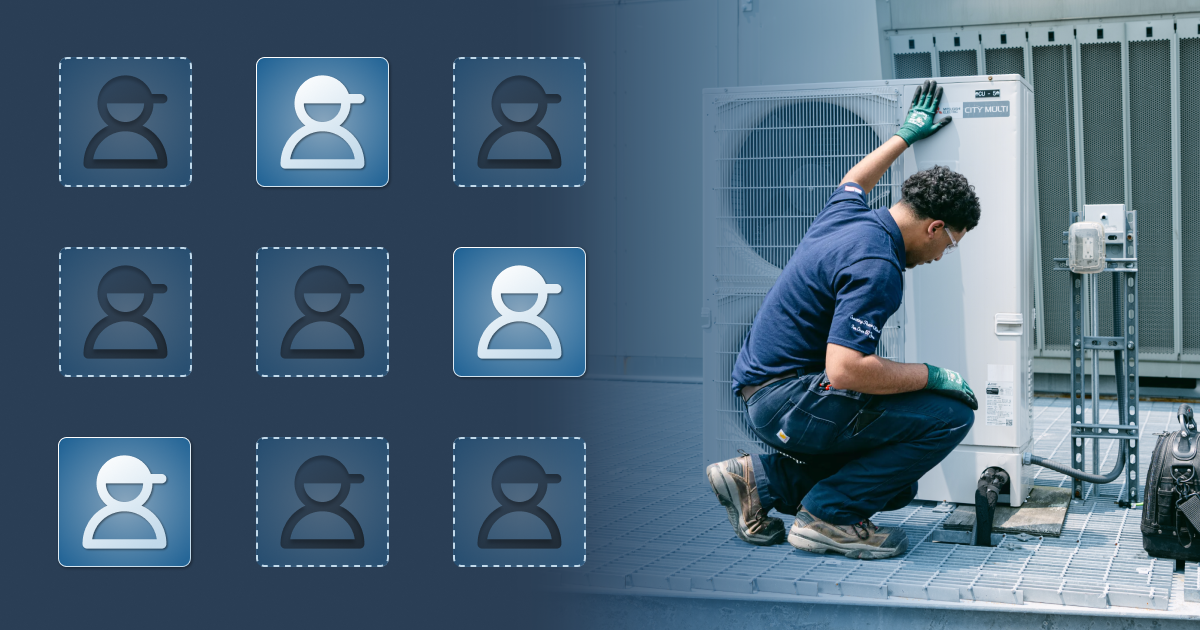
David Vroblesky, Principal Product Manager at Convex and ServiceTitan, describes how Convex approaches this differently. When you pull up a target company, the platform recommends the decision makers most relevant to your services - not a generic title list, but contacts filtered to what you actually sell.
An FLS company gets routed toward the facilities director at a restaurant group. An HVAC contractor gets a different recommendation at the same account. Same company. Different conversations.
That contact arrives with a verified phone number and email. Not a mainline that routes to a receptionist - the direct line to the person who can say yes.
For reps focused on reaching decision makers faster, that collapses the research step between finding a company and making the call.
Why "Sell, Don't Search" Is a Territory Strategy, Not a Slogan
For the 90% of accounts where property-first prospecting gets you to the right buyer, nothing changes.
You still use the map, the permits, the equipment signals. That motion works.
For the accounts that need the company layer (the franchise groups, the multi-site operators, the corporate facilities contacts), the rep who can search by company type and surface the right decision maker before the first call is having a fundamentally different conversation than the rep cold-calling location managers one site at a time.
Kyleigh Moreno cut her prospecting time from 4-5 hours per session to approximately 1 hour after combining building type, square footage, permits, and business data in a single platform.
That's not a replacement workflow. That's the building layer and the company layer running together, and four hours of research time returned to outbound calls.
Your territory has more qualified accounts in it than most current search tools can surface. If you’d like to see what company-based prospecting finds that building-first prospecting misses, schedule a demo of Convex to see how it works.
Frequently Asked Questions
How do I find companies in my sales territory?
The most reliable approach combines company-type filtering with geographic boundaries. Tools like Convex let commercial services reps search their territory by business category: restaurant groups, healthcare operators, contractors, surfacing matching companies with recommended decision-maker contacts, rather than starting from a property address and working backward to figure out who's inside.
What's the difference between prospecting by building and prospecting by company?
Building-based prospecting starts with a property address and surfaces physical attributes: square footage, permits, equipment signals, and ownership. Company-based prospecting starts with a business type and surfaces the operator. Their industry classification, headcount, compliance obligations, and multi-location footprint. The right approach depends on who the actual buyer is. When the buyer is a tenant, an operator, or a franchise holder rather than the property owner, company-based prospecting gets you to the right conversation faster.
What does company data tell a commercial services rep that a building doesn't?
Company data tells you the service conversation before you make the call. A medical clinic and a law firm can share the same building and the same square footage, but their HVAC requirements, FLS compliance obligations, and cleaning protocols are completely different. Industry classification also surfaces multi-location account potential, equipment inference by business type, employee headcount as a service scope signal, and compliance triggers tied to specific operator categories.
How do I find decision makers at companies in my territory?
The challenge with generic contact databases is that they don't know what you sell, so they can't tell you which contact at a given company is relevant to your service. Platforms like Convex use your company's profile to recommend decision makers based on what you sell and which vertical you serve. An FLS contractor and an HVAC contractor get different recommended contacts at the same account, because the right buyer for each conversation is different.
When does company search work alongside property search?
For most accounts, property search and company search work together. Property data tells you what's at an address. Company data tells you who's running the operation and whether they have locations you're not seeing. The accounts where company search becomes essential are the ones where the buying decision happens above the building level: underground utility locating companies whose customers are contractors, school districts where the buyer is the district not a single building, healthcare networks with centralized facilities procurement. In those cases, the ICP is defined by what the company does, not where it sits. Starting at the address means starting one layer below the decision.
Can I search my entire territory for a specific company type at once?
Yes. Instead of investigating buildings one by one, a rep can run a territory-wide search for a specific business category: every restaurant group, every licensed childcare provider, every healthcare operator, and surface a structured list of matching companies with recommended contacts across the full territory simultaneously.
How does company-based prospecting affect first call quality?
Significantly. When a rep already knows the company type, they know the relevant compliance obligations, the likely equipment profile, the multi-location footprint, and the appropriate decision maker before they dial. That front-loaded context changes the first call from a qualification exercise into a relevant service conversation, which is why reps who combine company-level data with property intelligence tend to reach the right person faster and convert more first calls into follow-up meetings.
What's the best tool for finding companies in a commercial services territory?
The right tool depends on your vertical and ICP. For commercial services teams selling to building operators, tenants, and business owners across HVAC, FLS, janitorial, roofing, solar, BAS, and landscaping verticals, Convex is purpose-built for this workflow, combining property intelligence, company search, buyer intent signals, and AI-assisted contact recommendations in a single platform built for territory-based outbound selling.
Related Reading
Sales Territory Analysis: How Commercial Services Teams Study Their Market Before Hitting the Field
Prospecting Tips for Reaching Decision-Makers at Commercial Buildings in 2025
The Modern Sales Process for Commercial Services: From First Touch to Close
How to Find Warm Fire and Life Safety Leads: Property Intelligence for FLS Sales
Auto Prospecting: How to Find High-Intent Prospects Without the Manual Grind
What is Property Intelligence Software? Unlock Insights to Streamline Prospecting
Warm Leads in B2B Sales: How Commercial Services Start Better Conversations
Share