
Key Takeaways
Most commercial service territories contain thousands of buildings that never make it into the CRM - territory analysis is how you find the ones worth calling before you burn windshield time on the wrong ones.
The four data layers that matter for commercial services territory analysis are property data, permit activity, decision-maker contacts, and buyer intent signals - not just CRM pipeline reports.
Territory imbalance can cut sales capacity by 15–25%, and 64% of B2B companies rate their own territory design as ineffective - often because they skipped the analysis step entirely.
Climate Engineering surfaced 50-plus qualified leads in minutes using property intelligence to study a new territory from the office, and one rep's campaigns produced 1,250-plus prospects and 140-plus first appointments.
Smart territory realignment can boost revenue 2–7% without adding headcount - the gain comes from better targeting, not longer hours.
ZIP Codes Don't Tell You What's Inside the Building
It's 6:45 a.m., and you're staring at your territory map.
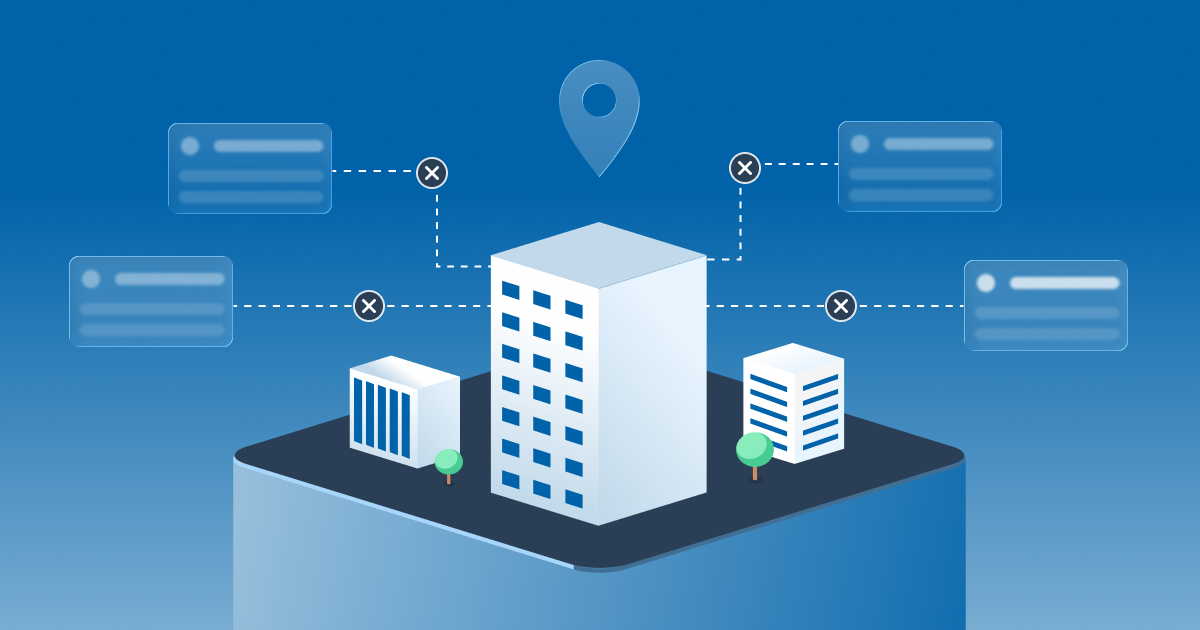
There are 2,400 commercial buildings inside your lines. You know, maybe 200 of them - the ones already sitting in your CRM. The other 2,200 are just shapes on a screen. You have no idea which ones need a new chiller, which ones changed ownership last quarter, or which facility manager would actually pick up the phone.
So you do what you always do. You drive the route you already know. You stop at the buildings you've already stopped at. And the 90% of your territory you've never touched stays invisible.
That gap (between what you know and what's actually out there) is where commercial services teams lose. Not because reps don't work hard. Because they're working without the full view of their territory.
Sales territory analysis closes that gap.
For field teams in HVAC, roofing, fire safety, janitorial, and electrical, the work starts with the buildings themselves. Not a spreadsheet. Not a color-coded ZIP code map that tells you nothing about what's happening inside any given property.
64% of B2B companies rate their own territory design as ineffective. (Salesmotion, 2026)
Territory imbalance can reduce a team's sales capacity by 15–25%. (Alexander Group)
Sales reps spend only about 30% of their time actually selling. (Salesforce State of Sales)
Optimized territory alignment can boost revenue 2–7% without adding headcount. (Xactly, 2025)
83% of companies still rely on manual processes to build sales territories. (Salesmotion, 2026)
What Is Sales Territory Analysis?
Sales territory analysis is the process of studying the buildings, decision-makers, and buying signals in your area to decide where your team should spend its time - using property data, permit activity, and contact coverage before anyone goes into the field.
Most sales advice on this topic assumes your territory is a list of named accounts that you can easily find in a CRM.
For commercial services, that's only a sliver of the full picture.
Your territory is a geographic area full of commercial buildings. Most have never been touched by your sales team.
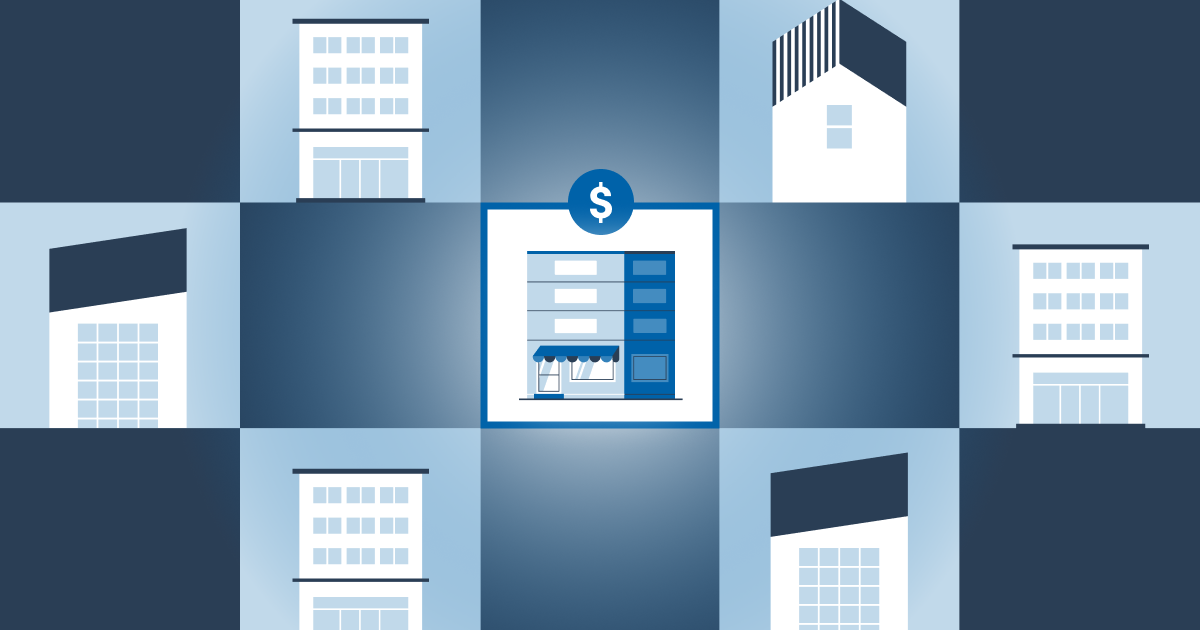
Territory analysis sorts them. Which ones are worth a call? Which buildings have active needs right now? Which can wait til next quarter?
That distinction matters because most teams jump straight to planning - dividing ZIP codes, assigning reps, balancing headcount - without understanding what's actually inside each territory.
Why Does Territory Analysis Matter More in Commercial Services?
A SaaS sales team can tier accounts by revenue, assign them to reps, and start dialing. The "territory" is a list.
A commercial services team is staring at a geographic area with thousands of buildings inside it. The territory isn't a list - it's a map. And without analysis, that map is “noise” - clusters of pins on a page.
When teams skip the analysis step, the costs compound in ways that don't show up in an activities dashboard. Reps default to familiar routes. High-signal, in-market buildings sit untouched two miles from accounts they visit every month. The team works 10% of its territory and never realizes the other 90% exists.
Alexander Group research shows that territory imbalance can cut sales capacity by 15–25%. That's not a rep performance problem. It's a territory knowledge problem. A rep who doesn't know what's in their territory can't work it properly, no matter how many calls they make.
Territory analysis done upfront gives your team better data, less time searching, and more time selling.
"Territory imbalance can reduce a team's sales capacity by 15–25% - not because reps underperform, but because they can't work what they can't see." - Alexander Group
What Data Do You Actually Need for a Territory Analysis?
The standard playbook says pull your CRM data, segment by revenue, and balance the map. That works when your CRM contains the full picture. For commercial services, it rarely does.
Territory analysis requires four data layers that go beyond what you can find in your CRM.
Property data is the foundation. Building type, square footage, age, usage, ownership, tenant info. A 200,000-square-foot medical office with an aging HVAC system is nothing like a 5,000-square-foot retail space.
Both might sit on the same block. Without property data, they're invisible.
Permit and project activity is the signal layer. When a building pulls a permit for electrical work, roof repair, or fire system work, that's a real event with a real timeline. Permits reveal which buildings have active projects, which contractors did the work, and when the job was completed.
For a deeper look at how these signals create natural openings, seethe hidden 90-day window when commercial properties consider new vendors.
Decision-maker contacts are the access layer. Knowing a building exists and has active signals doesn't help without the right person.
You need the facility manager, property owner, or operations director - withverified contact information that gets you past the gatekeeper.
Buyer intent signals are the timing layer. Beyond permits, intent data shows which properties are actively researching services like yours.
Signal strength helps sort thousands of buildings into a priority list, not just a map.
According to Salesmotion research, 83% of companies still rely on manual processes to build their territories. For commercial services, that often means reps driving neighborhoods, taking notes on building exteriors, and Googling for property managers.
That approach doesn't scale - property intelligence tools built for commercial teams consolidate all four layers into one view.
How Do You Run a Sales Territory Analysis?
A useful territory analysis doesn't require a quarterly offsite or a six-week consulting engagement. A rep or manager can do the core work in a single morning with the right data, and have a working plan before anyone starts driving.
Map What's Actually There
Start with the physical inventory. How many commercial buildings are in your area? What types? What sizes? Where are they packed together?
Most reps have a rough mental model of their territory based on the buildings they've visited. That model is usually 5–10% of what's actually there. A proper inventory surfaces the other 90%.
An HVAC team needs the large office buildings, hospitals, schools, and industrial facilities. A janitorial team needs Class A office space and medical facilities. Fire safety teams need buildings with complex alarm systems and inspection cycles. The physical map tells you where your ideal commercial customers sit before you've made a single call.
Find the Activity Signals
Not every building on the map is a good prospect right now. The signal layer tells you which ones are.
Permit activity is the strongest signal for commercial services. A building that just pulled a mechanical permit has an active project and a timeline. A building that hasn't pulled a permit in five years might still need service, but the urgency is different.
Ownership changes matter too. When a property changes hands, the new owner often reviews existing service contracts. That's a window — and it closes fast.
Identify Your Decision-Makers
For each high-priority building, you need the person who makes service decisions, controls budgets, and signs contracts. In commercial buildings, that's usually a facility manager, property manager, building owner, or operations director.
This is where territory analysis for commercial services splits from standard B2B. You're not looking for a VP of Procurement at a software company. You're looking for the person who manages a physical building and decides who services the roof, HVAC, fire system, or floors.
Salesforce's “State of Sales” report showed that reps spend roughly 70% of their time on tasks other than selling. Most of that time is spent doing admin work like hunting for the right contact at the right property.
When the analysis has already surfaced that contact, the rep skips the research and starts the conversation.
Score and Cluster Your Opportunities
Now you have buildings, signals, and contacts. The next step is sorting.
Not every building with a permit is worth a visit. Scoring combines signal strength, building size, service fit, and contact availability into a priority ranking.
A 100,000-square-foot hospital with a recent mechanical permit and a verified facility manager is a clear first call. A 3,000-square-foot strip mall storefront is not.
Clustering matters for field teams. Five high-priority buildings within a two-mile radius is a morning route. Five scattered across 40 miles is a full day of driving with less time selling.
Territory analysis helps reps and managersbuild smarter routes around opportunity clusters instead of random pins on a map.
Xactly research found that smart territory changes can boost revenue by 2- 7% without adding headcount - and the gains come almost entirely from better targeting, not longer hours. That's the difference between a balanced territory and one where two reps fight over the same corridor while 60% of the map goes untouched.
The Math Moment: What Territory Analysis Actually Saves
Here's a formula you can run on your own numbers.
Say your team has 4 reps covering 2,400 buildings. Each rep can meaningfully work 15 buildings per week - research, outreach, follow-up, drive time.
That's 60 buildings a month across the team. At that rate, it takes 40 months to touch every building once.
Now apply territory analysis. You filter by building type, square footage, permit activity, and signal strength. That cuts the list from 2,400 to roughly 500 buildings worth pursuing.
Same 4 reps, same 60 buildings a month - but now you're working the ones that matter. Full coverage of your warm opportunities in under 9 months instead of over 3 years.
The gain isn't about working more hours. It's about spending every hour on a building that has a reason to buy.
How Does a SWOT Analysis Apply to a Sales Territory?
The scoring and clustering you just built gives you a working plan. A territory SWOT takes it one level higher - mapping what you control against what you don't so you can see where the plan has gaps.
For commercial services, the inputs need to go beyond revenue. You need property signals, permit activity, and contact coverage in each quadrant.
Here's what a commercial services SWOT looks like when you fill it with building-level data instead of pipeline summaries:
Quadrant | Standard B2B Input | Commercial Services Input |
Strengths | Top accounts by revenue | Buildings with active service contracts, strong relationships with facility managers, properties where you've completed recent work |
Weaknesses | Underperforming reps | Territory zones with zero CRM coverage, outdated contact data, building types you've never prospected |
Opportunities | Market trends, budget cycles | Permit activity, ownership changes, new construction, aging equipment at buildings you haven't contacted |
Threats | Competitor pricing | Competitors locked into multi-year contracts at key properties, construction slowdowns in your service area, new entrants |
The difference between a useful SWOT and a checkbox exercise is the specificity of the inputs.
"We're weak in the northeast quadrant" means nothing. "We have zero coverage of 47 medical office buildings in the northeast quadrant, 12 of which pulled HVAC permits in the last six months" - that's actionable.
"The difference between a useful territory SWOT and a checkbox exercise is the specificity of the inputs. Revenue data shows where you've been. Building-level signals show where you should go."
What Changes When You Analyze Before You Drive?
Organizations that optimize territories see 10– 20% gains in sales productivity without adding headcount, according to the Alexander Group.
Those gains come from pointing reps at the right buildings, not pushing them to make more calls to the wrong ones just to improve activity metrics.
An example of this is Climate Engineering, a mechanical and building automation company in Colorado.
Their team wanted to expand into an adjacent region but had no data to justify it.
Using property intelligence, they filtered the target area by their criteria and surfaced 50-plus leads in minutes - without leaving the office. One rep's campaigns built 1,250-plus qualified prospects and booked 140-plus first appointments.
As Branden Jovaag, a rep at Climate Engineering, put it: "I've found buildings I would never have come across if not for Convex, especially when pushing into a new territory."
Stanley Security (now part of Securitas Technologies) faced a similar challenge at enterprise scale.
With 230 sales consultants across the U.S., each working their own territory, the team needed net-new business beyond existing customers. Their CRM showed accounts they already had. Property intelligence showed the whitespace.
In 10 weeks: 720 new prospects, 16 active proposals, projected ROI over 5x the cost of the software.
Convex customers report collapsing 2-3 days/week of prospecting to fill the pipeline into just 2-3 hours. What does this look like in practice?
A Day in The Life
A rep opens the map over coffee at 7 a.m. She filters by building type and signal strength. Fifteen high-priority buildings cluster in a 5-mile radius on the east side - three schools with recent mechanical permits, two medical offices that changed ownership last quarter, and a warehouse complex showing strong intent signals.
She pulls up the facility manager's verified contact for each one, generates a personalized email (with Generative AI) referencing the permit activity, and has her route planned before she finishes the cup. By 8:30, she's in the truck - not guessing where to go, but knowing.
If you’d like to see how solutions like Convex can help your team make the most out of their sales territory, Book a demo to learn more.
Frequently Asked Questions
How often should you review your sales territory analysis?
At a minimum, once per quarter. Markets shift, buildings change hands, and permit activity creates opportunities that didn't exist 90 days ago. Teams using property intelligence can watch these signals in real time and run reviews when the data shifts, not just on a set schedule. Annual reviews are too slow for commercial services - a building that pulled a mechanical permit in January is old news by Q4.
How do you balance sales territories for commercial services?
Balance on opportunity, not geography. A territory with 500 buildings in a 10-mile radius might hold more revenue potential than one with 2,000 buildings spread across 200 miles. Factor building density, signal strength, building type fit, and existing customer base when dividing territories. The goal is to give every rep a real path to quota based on what's actually in their area.
What's the difference between territory analysis and territory planning?
Analysis is the study (what's here, where is the opportunity, what signals are active). Planning is the action (how to allocate reps, set routes, and assign accounts based on what the analysis uncovered). The mistake most teams make is jumping straight to planning without the analysis underneath it.
What tools do you need for sales territory analysis in commercial services?
At minimum, you need property data (building type, size, age, ownership), permit history, verified decision-maker contacts, and buyer intent signals. General-purpose B2B tools like LinkedIn Sales Navigator or Apollo.io weren't built around buildings - they're built around companies. Commercial services teams need property intelligence platforms that start with the physical building and layer contacts and signals on top.
How do you prioritize buildings in a sales territory?
Score each building on four factors: signal strength (is there active buying intent?), building fit (does it match your ICP by type and size?), permit activity (is there a recent or upcoming project?), and contact availability (do you have a verified decision-maker?). Buildings that score high across all four go to the top. Buildings with strong signals but no contact get a research flag. Buildings with no signals and no fit drop off the list entirely.
How long does a territory analysis take?
With the right data, a single rep can run a working analysis in one morning. The time previously went to driving neighborhoods, searching county permit sites, and Googling facility managers. Property intelligence compresses that to filtered searches and sorted priority lists. A full team-level analysis (including territory balancing, gap identification, and route clustering) typically takes a manager one to two days.
What is territory mapping versus territory analysis?
Territory mapping defines the boundaries - which rep owns which geography. Territory analysis studies what's inside those boundaries. You can map a territory in five minutes by drawing lines on a map. Analysis tells you whether there are 50 or 500 qualified buildings inside those lines, which ones are showing buying signals, and who to contact first.
How do you measure territory coverage and performance?
Track three metrics: buildings contacted as a percentage of total qualified buildings (coverage rate), signal-to-conversation ratio (how many high-signal buildings convert to a first meeting), and pipeline created per territory. These tell you whether your analysis is translating into activity - and whether the activity is hitting the right buildings.
Can territory analysis help with new rep onboarding?
Significantly. A new rep inheriting a territory they've never seen can use property intelligence to study the entire area before their first day in the field. Instead of spending months learning which buildings matter through trial and error, they start with a prioritized view of every building, every signal, and every contact. Teams using this approach have cut onboarding timelines from 6-plus months to around 90 days.
Do I need territory analysis if my team already has a CRM?
Your CRM shows you the buildings your team has already found. Territory analysis shows you the ones they haven't. In most commercial services territories, the CRM covers 5–10% of the total buildings. The other 90%, including buildings with active permits, recent ownership changes, and strong intent signals, sits outside your pipeline entirely. Analysis is how you find them.
Share