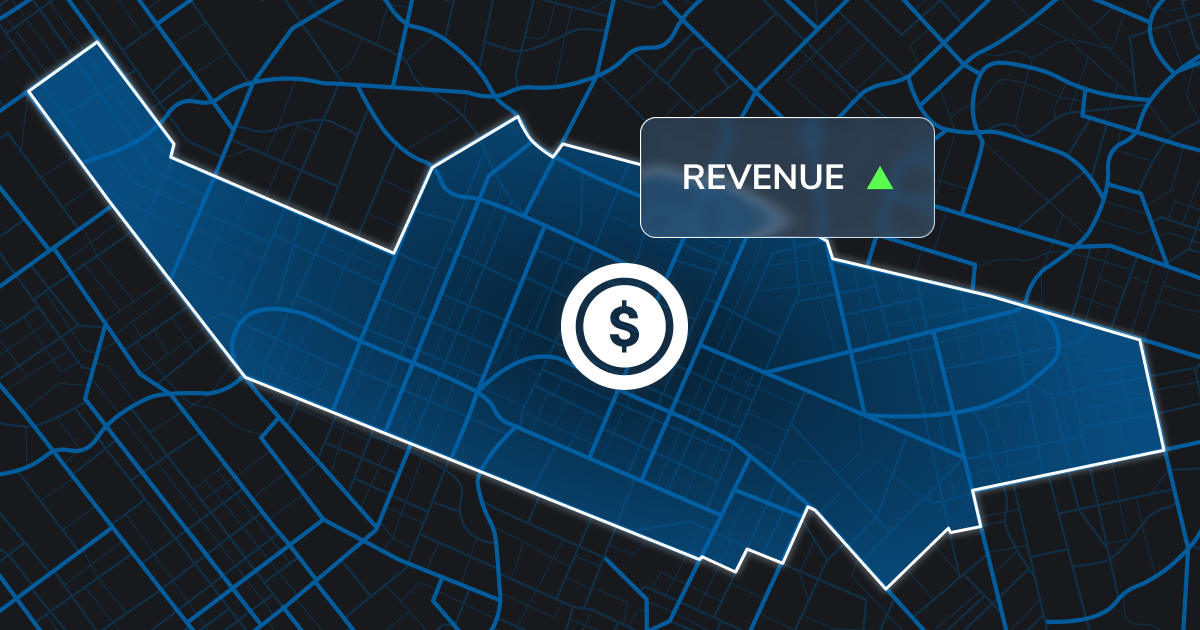

Sales reps, especially those with fewer than five years in commercial sales, are running into a challenge: knowing who to target when some commercial build types are experiencing record growth while others are shrinking by double digits every year.
Inside a sales team it looks something like this. Two reps, same tenure, same training, same manager. Both log around ninety calls a week. Both book six to eight meetings. Both get three proposals approved.
One finishes the quarter at 100% of quota, maybe even more. The other sits at 45%.
Upon first glance, the activity metrics look identical. The difference is the buildings they focused on prospecting.
Both worked hard for those 3 deals, but only one of them is targeting a building type that’s actively increasing CapEx. The others operate on razor thin margins.
Not all work is good work. Learning how to prioritize key profitable accounts starts with being able to tell which is which before a rep spends the whole quarter in frustration trying to “figure it out.”
The 13% of Associated Builders and Contractors members under contract on data center work carry 11.0 months of backlog, against 8.5 months for the 87% who are not. (Associated Builders and Contractors, 2026)
Through July 2026, offices including data centers reached $92.8 billion in spending, up 148.5%, while manufacturing fell 32.2% to $47.9 billion. (ConstructConnect, 2026)
Data center construction is forecast to grow 33% in 2026 and 25% in 2027, reaching roughly 8% of all nonresidential building spending. (AIA Consensus Construction Forecast, 2026)
The average seller spends 40% of their time selling. (Salesforce, 2026)
Why Does a Busy Market Still Feel Tight?
Every few weeks there is another headline about commercial construction spending hitting new record highs.
But, that doesn’t mean your pipeline is growing at the same rate.
It is not that the market is not growing. It is that the growth has concentrated into a narrow set of building categories while everything seems to contract at the same time.
This is what happens in an innovation cycle. Capital leaves an old asset class and moves into a new one. The buildings themselves do not disappear, but the money that maintains, expands, and replaces them goes somewhere else, and it goes quickly.
In its study of Census Bureau data for June 2026, Associated Builders and Contractors (ABC) found private commercial construction spending (excluding data centers) down 7.9% year over year. Data center construction rose 46% over the same stretch.
This means some commercial services companies have P&L that’s showing massive growth and even a backlog, while others are struggling to find new deals.
Among ABC members, the 13% under contract on data center work carry 11.0 months of backlog. The 87% who don’t carry 8.5 months.
Same trade associations, same labor market, same interest rates. Two and a half months of difference, produced by which buildings a company sells into.
In short, your reps are not competing against a bad economy. They’re prospecting from a playbook that was written 3+ years ago - and nobody told them the game had changed.
A thorough sales territory analysis is something that should be run at least once a year - but many teams skip it - even though it can hurt the bottom line.
Key account prioritization (commercial services): Ranking buildings and building owners by how much profitable, recurring work they are likely to produce, then assigning rep time in proportion to that ranking.
Key account vs. target account: A key account is an existing customer with expansion potential. A target account is a net-new pursuit with no revenue history. They score on different inputs and belong to different cadences.
Account scoring model: A weighted set of building and owner attributes that produces a single fit score, used to sort a prospect list before any rep picks up a phone.
Not All Work Is Good Work: What Shifted In Your Territory
The target list your team is working was built against real data. When retail, office space, and manufacturing were where the recurring work lived, a list weighted toward those buildings consistently hit quarterly goals. This is kind-of like an NFL team playing from last year's playbook.
Here’s what the spending data from Q3 shows.
Through July 2026, offices including data centers reached $92.8 billion in spending, up 148.5% year to date. Manufacturing dropped 32.2% to $47.9 billion.
Strip those two categories out and the rest of nonresidential construction still grew 10.4%, which is the signature of a cycle not a downturn.
Health care construction also reached $53.7 billion, running just ahead of data centers among major categories for growth and expansion.
New construction is a leading indicator of a service base. Something built this year needs maintenance for the next twenty.
Leila Rookstool, a fourth-generation MEP professional with more than 15 years in the trades and Senior Industry Advisor, Commercial at ServiceTitan, puts the downstream effect this way:
"With all of these data centers being built, naturally we're going to have to have skilled technicians on the service end to actually maintain and have the proper training and credentialing to work on some of these more specialized pieces of equipment."
A rep working traditional office space or manufacturing in 2026 is working the list that probably hasn’t accounted for the new market conditions.
This is where a market penetration framework can help you see where you’re winning, and turn old assumptions into a verifiable strategy.
What Criteria Are Used to Prioritize Key Accounts?
Most account prioritization advice was written for B2B companies like software and consulting - which focus on industry, titles, technologies, fund raising rounds, or revenue. So they include targeting factors like: firmographics, technographics, or financial metrics.
While these are important to consider, especially if you’re targeting buildings in key categories, commercial services sales reps are selling into buildings, not companies. So they need different targets.
Square footage, type, use, tenancy, occupancy, and ownership structures all give you a better sense of which local accounts to prioritize - and none of these are found on a traditional B2B contact database.
In addition, permit history (especially newly filed permits), give your reps the ability to see prospects who actually fit your ideal customer profile (ICP).
When you layer buyer signals and intent data on top of those things, you have the ability to see who’s actively searching for solutions or looking to make purchases within your market.
So the criteria changes when you see real data on buyers actively looking for solutions.
But this can also work in reverse - meaning, who do you want excluded from your targeting list?
Haynes Mechanical Systems, a 230-person HVAC and building automation contractor in Colorado, actively takes this approach when building targeting lists in Convex.
Their focus is prospecting buildings 50,000 square feet and up and avoiding what the team calls the three Rs: restaurants, retail, and residential.
Now, if you’re plugging that criteria into your sales team, it’s a whole lot easier to remember than a 10 page PowerPoint.
What Is the Difference Between a Key Account and a Target Account?
A key account is a customer you already serve where the opportunity is expansion, meaning more locations, more scope, or a service agreement where you currently do demand work. A target account is a building you have never sold into.
They score on different inputs. Key accounts score on relationship depth, share of the customer's portfolio you hold, and open scope. Target accounts score on building fit and timing signals.
If these are all on one list, contract renewals absorb a rep’s focus and net-new never gets touched.
How Do You Build an Account Scoring Model That Reps Actually Use?
Five attributes determine whether your reps can win. Before we get into the attributes themselves, we have to go back to "sales 101" - and the B.A.N.T. framework in particular.
BANT asks whether a prospect has budget, authority, need, and a timeline. Miss one and the deal stalls.
Scoring models fail because they get built in the office by well-intentioned people pattern-matching past wins, instead of around the five building attributes that show whether BANT exists before a rep ever picks up the phone.
Attributes have to be trade-specific, because the same data point reads in opposite directions depending on what you sell. Upon first glance that feels counterintuitive, but on a recent call, David Vroblesky, Principal Product Manager at Convex and ServiceTitan said,
“A roofing contractor filters brand-new construction out. A commercial door and dock contractor filters it in, because a recently built distribution facility of the right size almost certainly has doors worth servicing. One field, two opposite rules.” This is how you target key accounts.
Attribute | Weight | What it looks like in the field | Source |
Building size and type | 30 | Above your square footage floor, in a category you service | Property records |
Timing signal | 20 | Recent permit, ownership change, expansion, active search | Permits, buying signals |
Recurring revenue potential | 15 | Supports a service agreement, not a one-time repair | Account history |
Access to the decision-maker | 10 | Named contact who can approve spend | Contact data |
Scoring has to live where the rep already works.
In practice - a sales rep prospecting new accounts would open the day's target list in a combined sales and property intelligence platform like Convex, where they can see their entire territory in a map view, with all the commercial buildings as points on that map.
Buildings are then easily sorted against those five attributes, and signal strength (the accumulation of those five attributes), brings prospects to the surface for outreach.
Most of those inputs come from property intelligence and buying signals.
Which Building Attributes Belong in Your Score?
Deciding upon an ICP doesn’t have to be complicated. A simple way to do it is to review the last twenty jobs that your company was happy to win. They will tend to share three or four of the five attributes.
Not the biggest twenty. The twenty worth taking again at the same price - which means they were profitable.
It might be hospitals and healthcare facilities. Could be manufacturing or data centers. In any case, the shared attributes of those last twenty are the honest weights and you can use them to define the accounts you want to target in your market.
What Does Chasing the Wrong Account Actually Cost You?
Go back to those ninety calls from the intro. At five minutes each, ninety calls is seven and a half hours. One day of work.
Run that across six reps each quarter and you have spent roughly 585 hours, most of a full-time position, on a list nobody re-examined.
David Vroblesky describes the compounding effect of imprecise targeting: “a single call feels cheap, two calls become ten minutes, ten minutes becomes a day, and a day becomes a month before anyone sits back and asks who they have been calling. No one line item ever looks big enough to investigate.”
And it's why, according to Salesforce, the average seller spends 40% of their time selling. 60% is lost in administrative tasks like hunting for contact information and chasing the wrong prospects.
Many sales managers fear that narrowing the list will lead to less deals, but if your targeting is well defined from the beginning, it actually does the opposite.
Beyer Plumbing, a roughly 100-person commercial plumbing contractor in San Antonio, cut its target lists from around 100 contacts down to a focused 10 to 20 and watched email response climb to between 20% and 30%.
This is quite an increase since most cold outreach generates replies at around 3-5%.
Richard Lopez, the company's commercial sales manager, described the old approach as shooting blanks. Eighty percent fewer names, several times the response.
All of this is visible from a manager or directors view. Unfortunately, it’s not visible to a rep from inside their own week.
Cutting research time only changes the outcome if the research is pointed somewhere worth going.
How Do You Coach a Rep Off the Wrong Buildings?
As the commercial real estate market experienced low interest rates and rapid growth, activity metrics became the measure of a successful week. This is when the number of calls and emails a rep sent were reliable indicators of whether they were going to hit their number.
One hundred calls meant roughly five or six meetings, and those meetings meant 2-3 closed deals.
That math held for two reasons:
People weren’t receiving 100+ emails and calls per week - most of which were spam to be ignored.
Rapid growth meant someone was always in need of commercial services.
Innovation cycles and higher interest rates change that. These two factors shift where money flows. Once capital concentrates into a few categories, two reps making the same hundred calls are no longer running the same experiment, and the activity report stops carrying the information it used to carry.
Building selection is now the variable that moves the number. The activity was fine. The targeting wasn't.
Seeing what buildings a rep is actually working turns the theory into an actionable sales strategy.
Matt Koenig, General Manager at Haynes Mechanical Systems, uses that visibility to train new hires: "With Convex we could clearly see the kinds of buildings new reps are targeting and can offer better coaching about who they should be going after."
His team caught reps drifting toward restaurants and retail early, before the habit set, corrected their targeting, and first appointment bookings nearly doubled inside two months.
Jarret Ryan has also seen a similar shift.
"If you make 1-in-12 cold calls actually turn into an opportunity, you're doing well." — Jarret Ryan, Chief Commercial Officer, Exigent Mechanical Services
Ryan's team runs cold-call sprints against tightly defined building profiles in what he calls the mission critical space, meaning facilities where mechanical downtime is not an option.
One or two of those sprints hit close to a 30% appointment rate. Against his own stated benchmark of roughly 8%. And, in his words, it was account prioritization and targeting that moved the number by more than three times without changing the script or the caller.
To do this you need territory visibility. You need to be able to see on a map who your reps are working and why so you can correct course before they waste a quarter on untargeted prospects.
How Often Should You Re-Evaluate Your Prioritized Account List?
Quarterly is the standard answer. But only if you see projections and coverage ratios lagging.
A full re-score twice a year is enough to keep you in the game and pipeline strong unless something rapidly shifts in the market.
But here’s the caveat - and this is where territory awareness comes into play.
A permit pulled on a Tier 3 building changes its score - and moves it to the top of the priority list this week.
An ownership change resets the economics and can unlock new CapEx.
A decision-maker change resets the relationship, regardless of how strong the account looked a month earlier.
A category gaining momentum across your metro moves every building in that category at once.
If you can see when these changes happen, you’re already ahead of competitors waiting on the phone to ring or calling from stale lists.
Recent signals beat stale scores, every time.
Prioritizing Your Accounts So Reps Can Win
Reps are working hard. The question is, are they prioritizing the right accounts?
The activity report was never the problem. Ninety calls into a shrinking market with little capital to spend was.
Nonresidential spending grew while most contractors felt a tightening, because an innovation cycle moved the capital into categories a 2023 target list was never built to find.
Every hour your team spends is already being allocated by something. Right now that something is a list built for a market that has moved on.
Your reps will work just as hard either way.
See What Your Territory Actually Looks Like
Knowing which building categories in your market are growing, and which are quietly draining rep hours, starts with seeing the buildings and the decision makers in one place.
If you’d like to see how Convex combines sales and property intelligence to give your reps actionable sales insights, schedule a demo with our team. We’re happy to show you where the best deals are hidden in your territory.
Frequently Asked Questions
How do you handle low-tier accounts that still generate revenue?
Low-tier accounts keep producing light touches. What they stop earning is live selling time, which moves to email check-ins and scheduled service visits instead of standing meetings. Teams that set live time by annual service value keep the revenue and recover the rep hours. The pressure comes when a low-margin customer asks for an unscheduled visit.
What criteria are used to prioritize key accounts in commercial services?
Building size and type, and its age, timing signals like permits or ownership changes, recurring revenue potential, and access to a decision-maker who can approve spending. Exclusion criteria carry as much weight as inclusion criteria.
How do you score accounts for account-based selling?
A working model weights four to six attributes drawn from the company's own closed-won history, scores every account on that scale, and sorts the list before a rep touches it. The constraint is field usability, not analytical completeness. A model a rep cannot read between appointments does not get read.
How many accounts should one rep actively work?
The top tier is capped by how many accounts a rep can genuinely research, personalize, and revisit on a set cadence, which is a function of available hours rather than a target number. Everything below that tier runs on lighter, repeatable touches.
Should sales managers or reps own the prioritization?
Managers own the criteria and weighting. Reps work the list and flag buildings the model scored wrong. When reps own the criteria, every territory drifts toward its own definition of a good account.
Related Reading
Share