

TL;DR: What You Need to Know About Warm Leads
A warm lead is any prospect who has shown interest in your services before you contact them - through search behavior, permit activity, engagement, or a referral.
In commercial services, warm leads look different: the "lead" is a building with an active need, and a decision-maker looking for a solution.
Warm conversations (outreach backed by property data and buyer intent signals) convert at 20–30%, compared to 2–5% for cold calls (Sopro, 2025).
The fastest-growing commercial services teams aren't buying more leads - they're identifying buildings already in-market and reaching the right decision-maker with real context.
One mechanical services company sourced over $42 million in pipeline over 18 months after switching from cold calls to a warm, signal-based outreach (Convex).
Intro: Separating Fact and Fiction
The internet is a crazy place. Everyone seems to be online giving advice on how to grow a business, but few have actually done so. They make money selling the dream, but most don’t understand the challenges that your team actually faces on a daily basis.
In this short article on warm leads we’ll answer the question, “How do I build an outbound sales motion that actually converts into sales?” Not cold calling and canvassing, but generating warm conversations with decision-makers at commercial properties with real needs and budget control.
If you’re running a sales team of 1-50 people, this 5 minute “read” will take internet lore about generating warm leads and give you actionable steps and tools to generate revenue.
Let’s dive in.
What Is a Warm Lead?
A warm lead is a prospect who has already shown interest in your services - through website visits, content downloads, referrals, or observable buying behavior - before your sales team makes contact.
And, we’ve all heard that warm leads convert at significantly higher rates than cold prospects because trust and relevance already exist when the conversation starts.
And that's accurate… but it’s missing context for a commercial services sales team.
Most B2B sales advice defines warm leads the same way: someone who “went through the funnel,” filled out a form, downloaded a whitepaper, or attended a webinar.
If you sell SaaS or professional services, those definitions work fine. Your lead is a person. Their engagement with your content tells you they're interested. You follow up.
But if you sell commercial HVAC units, maintenance contracts, fire and life safety products, janitorial services, roofing, or any other building-based commercial service - that definition misses the point entirely.
Your “lead” is rarely a person who downloaded a PDF from your website.
They’re probably a facilities manager at a 200,000-square-foot warehouse with 15-year-old rooftop units who just searched "commercial HVAC contractor near me,” because they were trying to find a solution.
The building has a need. The person has the authority. The signal tells you now is the time for outreach.
Sales reps spend 70% of their time on non-selling tasks like administrative work, research, and data entry (Salesforce State of Sales, 2024).
Cold call conversion rates sit between 2–5% for B2B in 2025; warm calls convert at 20–30% (Sopro, 2025).
67% of sales reps don't expect to meet quota this year (Salesforce, 2024).
B2B cold email average reply rate is 3.5%, while warm email reply rates average 21% (Marketing LTB, 2025).
84% of B2B buyers say most sales interactions feel transactional (Salesforce State of the Connected Customer, 2024).
What's the Difference Between Cold, Warm, and Hot Leads?
Cold, warm, and hot leads represent how close a prospect is to having a conversation with you - and ultimately making a buying decision.
The warmer the lead, the less convincing you need to be, and the more time you spend solving their actual problem.
Cold leads don't know you exist. There's been zero interaction, no urgency on their end, and your only move is to interrupt and introduce yourself - hoping timing happens to be right for them.
Warm leads are already aware of you or are actively researching solutions. They've shown interest or need (maybe through search behavior, a permit filing, or a referral) and they're evaluating options.
Your approach shifts from interrupting to referencing their needs and adding value.
Hot leads know exactly who you are and want a solution. They've requested a quote, asked for a demo, or told you directly they need help. Your job isn't to educate - it's to close.
The problem for commercial services teams isn't understanding these categories; it's applying them. Most sales tools were built for the "cold" end of the spectrum: buy or scrape a list, dial 100 numbers, hope 2–5 people pick up and care.
That math doesn't work anymore. Cold calling converts at 2–5% in B2B (Sopro, 2025). And according to Salesforce's State of Sales report, reps are spending 70%+ of their time on non-selling activities (canvassing, research, admin, and data entry).
So not only is cold outreach ineffective, but your team barely has time to do enough activities necessary to hit quota.
What Does a Warm Lead Look Like in Commercial Services Sales?
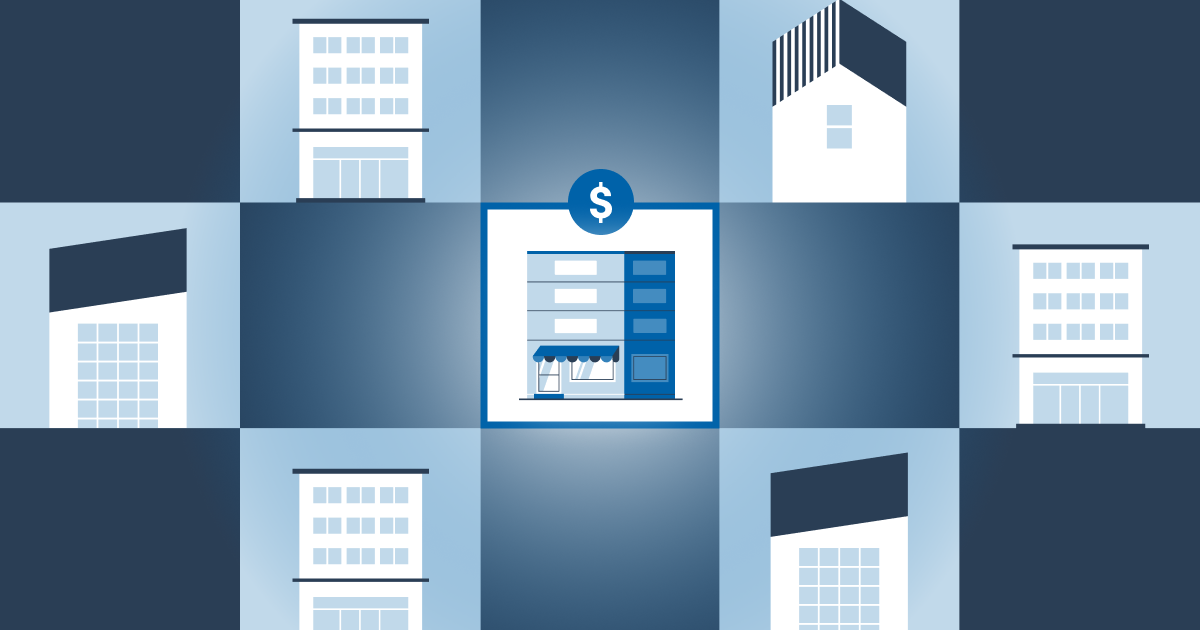
In commercial services, a “warm lead” is a property showing active buying signals combined with a verified decision-maker researching solutions.
This gives your sales rep the building context, the right person, and the timing to start a relevant conversation instead of a cold pitch.
We like to say, “right person, right time, right message.”
You find these leads by watching building signals.
A permit filed for rooftop unit replacement. An ownership change that triggers vendor reviews. Online search activity showing a facilities team is actively evaluating commercial roofing or fire safety providers.
These are the signals that tell you a prospect is warm - even if they've never visited your website.
Here's what that looks like across commercial services verticals:
HVAC: A 120,000-square-foot office complex pulled an HVAC permit in 2009. The equipment is approaching end-of-life. Convex Signals show the facilities director has been searching for “commercial HVAC providers in [City]” online in the last 30 days. That's not a cold call. That's a warm conversation waiting to happen.
Fire & Life Safety: A hospital system with six properties across your territory just had an ownership change. New ownership almost always triggers compliance reviews. The verified contact for the safety director is available. Your rep reaches out and references the transition — not a generic pitch.
Janitorial: A Class A office building downtown changed property management companies last quarter. New property managers often re-bid service contracts within 90 days. That's a “warm window” your team can act on.
These aren't theoretical. They're exactly how the highest-performing commercial services sales teams are working right now.
Why "Warm Conversations" Matter More Than "Warm Leads"
This is why Convex talks about "warm conversations" rather than "warm leads." The distinction is very important, especially for sales teams who need consistent lead flow from their outbound sales efforts.
A “warm conversation” means your rep already knows the building, understands the signals, maybe even the approximate timing, and reaches the right person with relevant context.
That’s real personalization.
It's not about waiting for someone to raise their hand. It's about recognizing that the hand is already up - through buyer intent signals your team can see and act on.
Most "warm lead" strategies depend on inbound activity you control: forms, downloads, webinar registrations. Warm conversations flip that. Your reps go outbound with the same relevance and timing that inbound leads provide — because the data gives them the context before the first call.
"In commercial services, the lead is a building first and decision-maker second. The building has a need. The person has the authority. The signal tells you when." — Convex
How Do Buyer Intent Signals Create Warm Conversations?
Buyer intent signals track observable behaviors - permit filings, search activity, ownership changes, facility expansions - that indicate a property is actively evaluating service providers.
These signals transform cold outreach into warm conversations by telling your reps which buildings need help right now and allowing them to prioritize those accounts.
Think about it from your prospect's point of view. There are facilities directors at distribution centers actively searching for “commercial roof repair in Dallas, Texas”.
Now, imagine that your rep sends them an email (the same week) and says: "I noticed your facility might be evaluating roofing options. We recently completed a similar project on a 180,000-square-foot warehouse in Plano. Worth a 10-minute conversation to see if we’re a fit?"
That isn't a cold call. That's a warm conversation backed by signals.
Jarret Ryan, Chief Commercial Officer at Exigent Mechanical, describes the shift this way. His team - many of whom were ex-technicians who transitioned into sales - used to make cold calls all day with little context about the buildings they were targeting.
In Jarret’s own words, "If you make 1-in-12 cold calls actually turn into an opportunity, you're doing well."
However, after adopting buyer intent signals, one of his reps hit nearly a 30% appointment rate during a cold call sprint.
That jump - from roughly 8% to nearly 30% didn't come from better scripts or more confidence. It came from calling the right buildings at the right time.
"It doesn't replace effort. But it surely sets you up for success. Strategies are more well thought out. Convex provides the ability to make impactful calls vs. the traditional spinning of your wheels." — Jarret Ryan, CCO, Exigent Mechanical
The Math: Cold Outreach vs. Warm Conversations
Let’s make this concrete. Run these numbers against your own team's metrics.
The Math behind Cold outreach: Your rep makes 50 calls per day from a purchased list.
At a 2– 5% conversion rate (Sopro, 2025), that's 1– 2.5 conversations per day. Each requires hours of manual research - pulling up county records, searching LinkedIn, and verifying phone numbers.
According to Salesforce, 70%+ of their time is spent on non-selling tasks. After a full week of effort, your rep might book 5–10 meetings. Maybe half show up.
The Metric behind Warm Conversations: Your rep opens a property intelligence platform, filters their territory for buildings with active intent signals, and immediately sees 10– 15 qualified properties with verified decision-maker contacts.
They use generative AI to prepare a personalized message referencing the specific signal - a recent permit, a search query, an ownership change - in their outreach.
At a 20– 30% conversion rate, those 10– 15 calls yield 2– 4 meetings before lunch. With context, those meetings are also more likely to advance.
Same rep. Same territory. The difference is the starting point.
With cold outreach, your rep needs to send 100 emails and make 25– 50 calls to generate a single meeting.
Each prospect takes 15– 30 minutes of researching, and typically waits 3– 5 days before landing a qualified conversation - all with minimal context about the prospect's actual situation.
With warm conversations, that same rep needs to send 25-30 emails (which take 3-5 minutes in Convex), and just 5– 10 calls to book a meeting because they're starting with building data, a live intent signal, and a verified contact.
Research time drops to less than 10 minutes per prospect and conversion rates jump to 20–30%.
Sources linked in the Stats box: Sopro, 2025; Salesforce State of Sales, 2024; Convex internal data, 2024.
What Does This Look Like in Practice?
Mechanical Services and Design (MSD), an HVAC and fire & life safety contractor based in Dayton, Ohio, used to generate leads the hard way.
Reps made 100 cold calls per week. They drove around town looking for buildings. They researched at the local library. And when they finally got a phone number, it was usually the building's main line, which meant fighting through gatekeepers.
Nick Davis, CSO at MSD, realized the problem: "We were losing time we weren't going to get back."
After switching to signal-based outreach with Convex, the entire workflow changed.
Reps could see which properties in their territory showed active buying signals. They could pull verified contacts for facilities directors and property managers without digging through LinkedIn. And they could use Generative AI to draft personalized outreach referencing each property's specific context.
Over 18 months, MSD sourced over $42 million in pipeline using this approach. You can read more about their results in MSD's full case study.
Another leading commercial HVAC contractor saw similar results. Before adopting property intelligence, sales reps used to spend 2-3 days each week prospecting and hope they had enough deals to fill the sales pipeline.
Now, that same work takes 2– 3 hours each week - freeing reps to spend their time on actual selling conversations instead of research and other administrative tasks.
How To Start Generating Warm Leads for Your Team
Generating warm leads for commercial services sales requires three core capabilities working together:
Property intelligence: to identify the right buildings
Sales intelligence: verified contact data to reach the right decision-maker without fighting through gatekeepers
Buyer intent Signals: to contextualize outreach and prioritize timing.
If you're reading this and thinking, "My team is still mostly cold calling," - you're not behind. It’s okay. You're at the starting line that most commercial services sales teams are standing at right now.
If you’re wondering how your team will fill the sales pipeline with lead next quarter, start by answering these questions:
Do you know which buildings in your territory need your services right now? Not which ones might need you someday - which ones are actively showing buying signals. If you can't answer that, property intelligence fills the gap.
Can your reps reach the decision-maker directly? If your team is still calling main phone lines and getting stuck at front desks, verified contact data for facilities directors, property managers, and operations managers changes the game.
Does your outreach reference the prospect's actual situation? Generic pitches get deleted. Messages that reference a specific permit, building characteristic, or timing signal get responses.
If you want to see what warm conversations look like for your specific vertical and territory, schedule a demo with Convex and see how property intelligence, buyer intent signals, and verified contacts work together in one platform.
FAQ
What is an example of a warm conversation?
Your rep sees a 150,000-square-foot warehouse in Convex where the facilities director has been searching for "commercial HVAC repair" online and the building pulled a rooftop unit permit in 2010. Instead of cold calling with a generic pitch, your rep sends a message referencing the aging equipment and the director's active search — and asks if a 10-minute call to discuss replacement options makes sense. That's a warm conversation: the right person, the right building, the right timing, and outreach that actually references their situation.
What's the difference between a warm lead and a hot lead?
A warm lead shows interest or active need - they're researching, their building has signals, or they've engaged with your brand. A hot lead has gone further: they've requested a quote, asked for a demo, or explicitly said "I need this solved." Hot leads are ready to buy. Warm leads are ready to talk.
What's the difference between cold leads and warm leads?
Cold leads have no prior relationship with you and no observable signal that they need your services right now. You're interrupting their day and hoping it's relevant. Warm leads have shown some form of engagement or need — a search, a permit, a referral, a content download - that gives your outreach context and relevance.
How do you warm up a cold lead?
In traditional B2B sales, you warm cold leads through drip campaigns, content marketing, and nurture sequences. In commercial services, the fastest path is to identify properties already showing buying behavior (permit activity, online searches, ownership changes) and reach out with context about their specific building. You're not warming them with marketing. You're recognizing that they're already warm.
What are buyer intent signals?
Buyer intent signals are observable behaviors that indicate a property or prospect is actively evaluating service providers. In commercial services, these include online search activity for services like yours, permit filings (HVAC, electrical, roofing), ownership or management changes, equipment nearing end-of-life, and facility expansions. Platforms like Convex track these signals across 6 million commercial properties in North America.
Do warm leads really convert better than cold leads?
Significantly. Research from Sopro (2025) shows warm calls convert at 20–30%, compared to 2–5% for cold calls. Separately, B2B warm emails average a 21% reply rate, while cold emails sit at 3.5% (Marketing LTB, 2025). The conversion gap is even wider when your outreach includes property-specific context. (Links to each in the stats box)
What does "warm conversation" mean in commercial services sales?
A warm conversation is outreach backed by three things: property data (you know the building), buyer intent (you know the timing), and verified contacts (you reach the decision-maker directly). It means your rep isn't calling blind - they're calling with context that makes the conversation relevant from the first sentence. Convex helps commercial services teams start warm conversations by combining property intelligence, intent signals, and verified contacts into one workflow.
How is Convex different from buying warm leads?
Lead vendors sell you a name and phone number (often shared with your competitors) with no context about the building, timing, or need. Convex gives your team property intelligence on 6 million commercial buildings, real-time buyer intent signals, and verified decision-maker contacts so your reps can identify and pursue warm conversations on their own terms. You own the process, not a vendor.
Share