

TL;DR
Referrals are the warmest lead you have, but waiting for them is passive. Run your existing base as a proactive outbound program instead.
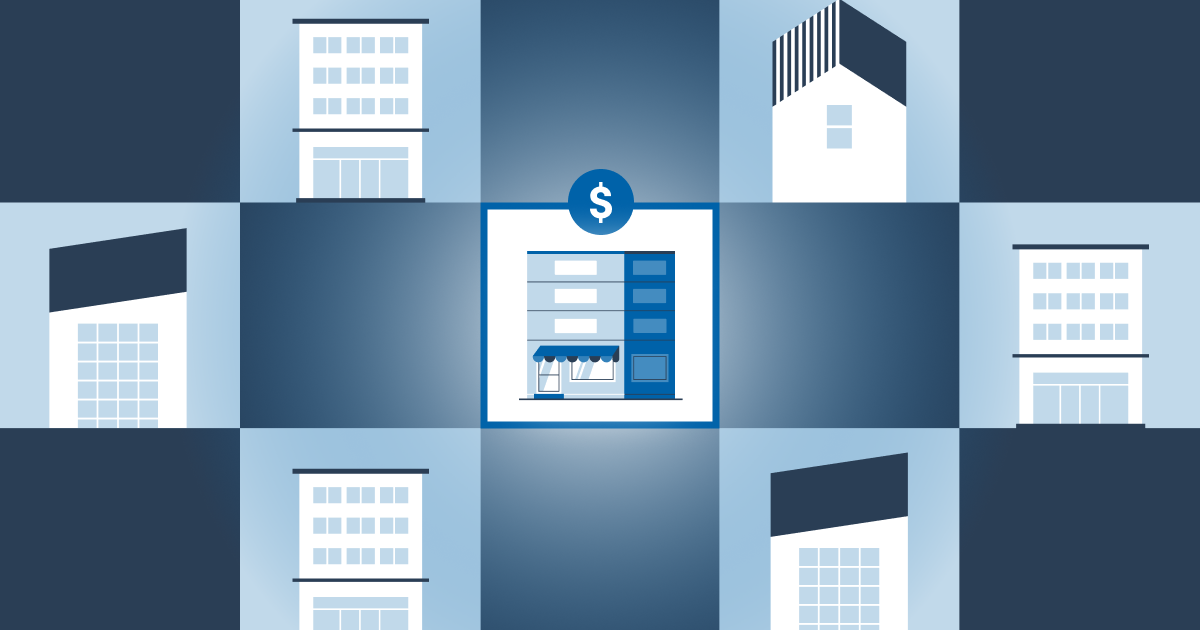
Every customer you already have is two assets at once: a name you can reference, and a location you can prospect around.
Work it in three stages. Start with your existing base, move to the buildings around them, then hit every job site while you're already out there.
The customer you just signed is the sharpest instance, because the relationship is warmest right after close and it cools fast.
The name opens the door. A real reason to call, tied to that specific building, is what keeps you from becoming a cheap name-dropper.
It takes 8 to 12 touches across channels to earn 3 to 6 real conversations. Reps who quit after three calls never find out what was there.
From Passive Referrals to Active Revenue Generation
You've probably heard it dozens of times. "We've been in business 40 years. Most of our work comes from referrals and word of mouth." It's said with pride, and it should be. Referrals are a sign of happy customers and good work. Plus, if you have a good strategy around it, it’s a warm profitable channel.
Then you ask what happens when the referrals slow down. The room goes quiet.
This is the core problem with channels you don't control. Deals show up when they want to, not when your pipeline needs it.
You can't dial it up in a slow quarter. You just wait, and hope the phone rings.
The good news is that the trust behind those referrals doesn't have to sit idle. Every customer you already have can point you toward new clients right now, on your schedule, without waiting for anyone to make an introduction for you.
This is how to get new clients from existing customers on purpose, as a motion you run instead of a lucky break you hope for.
Repeat customers (65%) and word-of-mouth referrals (60%) remain the primary drivers of business volume for commercial contractors (ServiceTitan, 2025).
82% of buyers accept meetings with sellers who reach out to them proactively (RAIN Group).
B2B buyers now use an average of 10 channels across a single buying journey, up from 5 in 2016 (McKinsey).
Referred customers are at least 16% more valuable than comparable non-referred customers, and they stay longer (Journal of Marketing).
Is Asking for Referrals Quietly Capping Your Growth?
Asking for referrals is a great strategy if you do good work, but relying on them caps your growth because the timing is out of your hands.
Repeat customers and word-of-mouth referrals still drive most commercial business (ServiceTitan, 2025), yet both arrive on the customer's schedule, not yours, which leaves your pipeline exposed in slow seasons.
Think about how the referral usually works. You do great work. Months later, your customer happens to be talking to someone who happens to need what you do, and your name happens to come up.
All three things have to line up, and all of them are out of your control.
However, there's a version of this that’s well within your control - and your team can start “running the play” today. It starts with what’s in your CRM and grows with every new project you complete.
Here’s how it works.
Instead of waiting for your customer to “refer you,” you reference that relationship yourself and go win their neighbors. Call it a proactive outbound pseudo-referral program. I know this sounds complicated in those terms but it’s very simple, and it creates warmth by connecting the needs of potential customers with a past or existing customer’s project.
And, the best part is, you’re not waiting for deals to find you.
Before we talk about the play itself, let’s talk about why it works.
In-market buyers - meaning people that are actually interested in making a purchase - are open to a proactive approach. Research from the RAIN Group Center for Sales Research found that 82% of buyers accept meetings with sellers who reach out to them - especially when referencing a warm connection or similar situation (RAIN Group).
So the contractor who built 40 years of goodwill is sitting on the best cold-call ammunition in the market. The question is whether they use it.
Winning new clients from existing customers: A prospecting motion that uses a current customer as both a warm reference and a geographic anchor to reach net-new accounts nearby. It targets new logos, not upsell inside the same account.
Proactive outbound pseudo-referral: Generating referral-grade warmth on purpose, by referencing a real customer relationship in outreach to their neighbors, instead of waiting for that customer to hand you an introduction.
What Does It Mean to Win New Clients From Existing Customers?
Winning new clients from existing customers means using a current customer as two assets at once: a name you can reference, and a location you can prospect around.
Many reps only focus on the first part - closing the deal. They build the relationship with the existing customer and forget that there are a dozen buildings within walking distance that could also be a great fit for their services.
Take your last completed project, or your best customer. Open Google Maps and type in their address. Unless they’re the only business in a rural area, there are potentially a hundred other commercial buildings within a mile of their location - this is a great place to start.
Said differently, if you think about your territory as a map, and your customers as pins on that map, those pins are the hub in a prospecting approach, and all the commercial buildings surrounding them are the spokes you can reach out to.
That map pin matters because commercial work clusters. The property manager who trusts you has other buildings in their portfolio, other property managers that they work with, neighbors that they interact with, and networks with people who share similar roles.
This is the relationship network. Then, there’s the geographic network.
The building you service sits in an office or industrial park full of other buildings. The job site you're standing on has neighbors who watch your trucks pull up every week - so your company name comes up in conversation.
Warmth doesn't stop at your customer's front door. It radiates outward, and most of it goes unused.
That's the difference between a cold list and a warm lead in B2B sales. A cold list is a name with no context. A warm lead is a name you can connect to something real, and an existing customer gives you that connection for free.
The sales workflow to run this playbook has three stages, and they line up with how warmth fades over time.
Start with the customers already in your book - do they have other properties in their portfolio that you don’t currently “own?” Then, move to the buildings surrounding them. Once you’ve done that, work every job site, commercial building, and local prospect while you're already there.
This is simple in Convex’s map interface. You can use the map to identify all of the commercial buildings surrounding your current customer location - then, use the verified contact data for decision-makers at the property level to send a quick message their way.
Most reps can do this in 15- 20 minutes before or after customer meetings - making it a simple convenient way of bringing in new business.
How Do You Start With the Customers You Already Have?
Start with your existing base, especially the customers who've already vouched for you - think positive online reviews, referrals, and others. People with whom you’ve built trust.
Then, move on to the customer you’ve just signed. But keep in mind, a freshly signed customer is perishable.
Goodwill is the highest when you sign the customer, and when you complete a project for a happy customer - so keep those timeframes in mind. They’re an excellent time to run this playbook.
Most reps will log the deal as “closed won” and move on to the next name on a cold list. Which means they’re starting from scratch with every relationship.
That's a mistake that slows reps down.
This is one of the core training modules for each new sales rep at Convex. Sales Leader, Ben Walters, talks about this approach like a referral program.
"My existing customers are some of the best points of entry for expansion." - Ben Walters, Sales Leader at Convex
When you land a new customer, ask yourself what they may be a segue into? Are they an owner-operator with a network? Or is it a portfolio or properties? How many buildings does the portfolio include? How many are yours? How many other buildings are close by?
The gap is your target list, and it's warmer than any purchased lead lists.
Haynes Mechanical Systems runs this exact playbook in their market. They cross-reference their own customer data against the wider market to see their penetration, down to how many hospitals in the Denver metro exist and what percentage Haynes already serves.
As Matt Koenig, General Manager at Haynes, frames this approach: “...the point is to control the leading measures, like buildings tracked and meetings booked, that produce the lagging results you actually want.”
You can do that same math on a single account. It's the fastest path to new clients from existing customers, and it starts with a firm you've already won.
For a deeper dive on targeting high-value accounts this way, see our guide to property intelligence for account-based selling.
If you’re just entering a market, this is a perfect time to begin running this playbook. Every new customer becomes a warm intro to another.
How Do You Prospect the Buildings Around Your Customer?
To prospect the buildings around your customer, put their building on a map, draw an outline around it, and work outward. I know this sounds too simple, but that’s why it works.
A half-mile radius around one account can surface hundreds of nearby buildings, the businesses inside them, and the people to call, turning a blank map into a target list.
This is where property-first prospecting does something a contact list can't. A contact database starts with a name. A pin on a map starts with a place, and that place is exactly what you share with your customer's neighbors.
Terri Reddan, Director of Operations at Stratus Building Solutions, runs this play in janitorial.
She maps her existing customers, then targets every business in the same area to build a localized, high-value prospect list. In four months, that motion generated over $125,000 in annual revenue for her Pittsburgh franchise, revenue directly attributable to Convex.
"When you have those insights, you're one step ahead of the decision maker. It gives you that ability to have a more intelligent conversation with them." - Terri Reddan, Director of Operations, Stratus Building Solutions
The hundreds of buildings a radius surfaces are the start, not the plan.
You still have to know who to call inside each one. As David Vroblesky, Principal Product Manager at Convex, puts it, a roofing company needs to reach the owner or property manager of a building, not the tanning salon that happens to be one of many tenants inside it. The right contact depends on what you sell.
Then filter, so you're not spraying the whole block.
Permit history and buying signals tell you which neighbor has a reason to hear from you this week. A building that just pulled a permit for the exact system you install is a call worth making today. A building with nothing happening can wait.
For a broader look at reaching the right person, at the right time, with the right message, see our guide to prospecting property owners.
How To Turn Every Job Site Into New Pipeline?
Turn every job site into pipeline by treating each visit as a trigger. While your truck is already parked on a customer's block, the surrounding buildings are the warmest cold calls you'll make, because you can point to real work happening next door and offer to help while you're in the area.
Most reps don’t realize that this is one of the best times to prospect. They sold the job, and now they're back on-site managing it or checking in. That physical presence is a prospecting asset most people waste.
A BDR who came up in commercial roofing built his whole pipeline this way. He'd book an inspection at a building in some industrial park. Before he left, he'd pull up the surrounding buildings and cold-call every one of them.
His opener was simple. "We're going to be at the property next door on Tuesday doing a roof inspection. Want us to stop by and take a look at yours while we're out there?"
While still a cold call, he’s got a reason to be there. He can name the building next door and the decision-maker in charge. He can also offer something before he asks for anything. A free look, while he's already in the area, at no cost to them.
The proximity and the offer do the work.
You can point new reps at this from day one, because it turns a single scheduled visit into a cluster of conversations. Our guide on how territory visibility speeds up sales covers how even your newest people can work a block like a veteran.
All three stages run on one move, and it's the move that can blow up in your face - if you do it wrong.
What Makes a Name-Drop Land Instead of Backfire?
A name-drop lands when it's true, relevant, and paired with a real reason to call. It backfires when it's just a name.
The difference comes down to a few things: proximity, the reference, and a specific signal tied to that building.
Here's what keeps it clean.
Reference, don't claim. "We're already working with the team right next door at [building]" is true and checkable. "Bob sent me" is a claim you haven't earned. Reference the relationship. Don't invent an endorsement.
Lead with their problem, not your logo. The name buys you about three seconds of attention. The next sentence has to be about them. Their aging roof, their upcoming inspection, the permit their building just pulled. A name with no relevance behind it is exactly the cheap name-drop everyone hates.
Offer before you ask. "We'll already be out there, want a free look while we're in the area" is a gift. It costs the neighbor nothing to say yes. That's what separates "we already service your neighbor" from a pitch that makes people hang up - and worse, ruin your credibility with a new customer.
Get this stack right and the name is a bridge. Get it wrong and it's a red flag. Same word, opposite result.
Now you know what to say. The last question is how often to say it before it works.
How Many Touches Does It Take to Land a Commercial Meeting?
It takes roughly 8 to 12 touches across multiple channels to produce 3 to 6 real conversations that lead to a booked meeting. Touches and conversations aren't the same thing. Reps who make three calls, hear nothing, and give up quit long before the motion has a chance to work.
That range isn't guesswork. The RAIN Group Center for Sales Research found it takes an average of 8 touches to land an initial meeting with a new prospect, and most sellers need 5 to 10 just to connect (RAIN Group).
Spread those touches across channels. Phone, email, LinkedIn, and the in-person drop-in. Fifteen phone calls to the same person is noise - which will probably get your phone number marked as spam or even blocked.
The same number of touches across four channels is persistence.
The channels reinforce each other when you sequence them. Leave a voicemail, but don't beg for a callback. Say you're sending an email and name the subject line so it stands out in the inbox. Then connect on LinkedIn a couple days later. Each channel makes the next one land.
This is what Ben Walters trains his reps on, but it’s also the playbook that Taj Shaw, Manager of Customer Success has seen most efficient.
"Maybe you called first, sent an email, and then you stop in, and you reference that email or call when you're doing it, so that you are more efficient with your time." - Taj Shaw, Manager of Customer Success at Convex
LinkedIn adds a second thread you might be missing. Your existing champion is often a shared connection with the neighbor you're targeting. When you can see that overlap, your outreach gets to reference a real mutual relationship, not just proximity.
And measure it. Track touches, connects, and booked meetings, so you know whether a slow week is bad luck or a broken cadence. Our guide to B2B cold calling breaks down the sequence in detail.
Do this consistently and one signed customer turns into many new opportunities.
Your Existing Customers Are a Prospecting Engine, Not Just a Referral Source
Your existing customers become a prospecting engine when you work them as an outbound source instead of waiting on referrals.
The same base that quietly caps your growth (if you don’t work it) becomes the thing that expands it, one signed account turning into a cluster of new clients nearby.
Start by having reps run the playbook on the customer they signed last week. First you worked their firm's portfolio and found eight buildings you weren't in. Then you drew a radius around their building and surfaced a block of neighbors. Now every time you're on-site, you leave with another conversation started.
One logo became a portfolio play, then turned into a cluster of customers, and a standing trigger for local prospecting on every visit.
The referral you would have waited months for, you went and built yourself.
The customers are already in your book. The warmth is already there. The only question left is how much of it you decide to use.
Ready to see who's next door to your best customers?
Convex maps your existing accounts and surfaces the buildings, businesses, and decision makers around them, so your next conversation is one touch away. Schedule a demo today to see how your existing customers become a prospecting engine.
FAQ
How can I leverage existing customers to attract new clients?
Use each customer as a reference point and a location. Reference your work with them when you reach out to nearby businesses, and prospect the buildings around them. You're borrowing the trust you've already built to warm up outreach to net-new accounts in the same area.
How is this different from a referral program?
A referral program waits for your customer to introduce you. This is proactive. You reference the relationship yourself and reach out to their neighbors on your own schedule, without asking your customer to do anything. You control the timing instead of hoping it happens.
Is name-dropping a customer in outreach unprofessional?
Only when it's empty. Referencing a real, current relationship is fair game and genuinely warm. It crosses the line when you claim an endorsement you don't have, or when the name is the whole message. Pair it with a specific reason you're calling that building and it lands.
How do you expand within a property management portfolio?
Find out how many buildings the firm holds, then compare that to how many you already serve. The gap is your target list.
How do you ask existing clients for new business leads?
The stronger move is often to reference them rather than ask them. Instead of putting your customer on the spot for names, use your relationship as context when you contact businesses near them. It protects the relationship and still generates warm entry points.
What are effective incentives for customer referrals?
Reciprocal value works best. Service credits, priority scheduling, or a genuine thank-you tied to results. But incentives only activate the passive channel. Pairing them with proactive outreach to your customers' neighbors gives you a pipeline you control, not just one you wait on.
How many touches, across how many channels, does it take?
Plan for roughly 8 to 12 touches to earn 3 to 6 real conversations. Spread them across phone, email, LinkedIn, and in-person visits. A voicemail that references the email you're about to send outperforms repeated calls to the same number.
What signals tell you which nearby building to call first?
Recent permit activity and buying signals. A building that just pulled a permit for the kind of work you do has a live reason to talk. Prioritize those over buildings with no activity, so your first calls go to the neighbors most likely to need you now.
Related Reading
Sales Prospecting Best Practices: Why AI Made Outreach Worse (And How to Stand Out Because of It)
The Best Way to Prospect Commercial Accounts: A Step-by-Step Guide
Warm Selling: How Automated Sales Intelligence Outperforms Traditional Prospecting
Prospecting Tips for Reaching Decision-Makers at Commercial Buildings in 2025
Share