

TL;DR
Outbound is the only go-to-market channel most companies run without a targeting standard.
Paid channels force targeting decisions before a dollar is spent. Outbound has no equivalent gate.
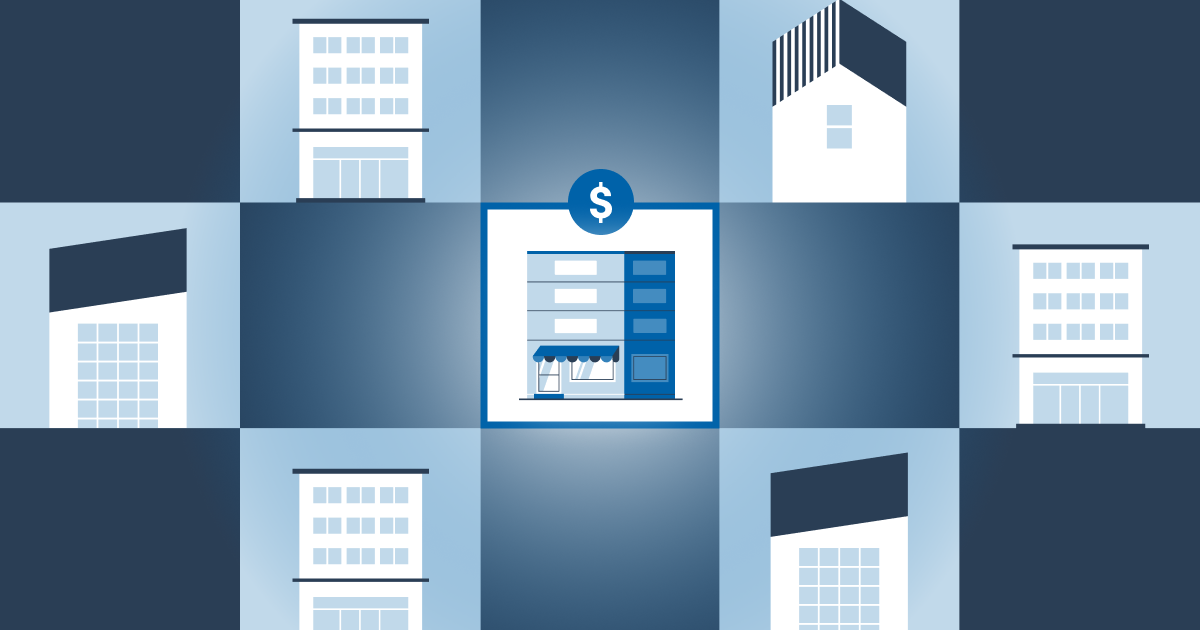
In commercial services, the unit of targeting is the building, not the company inside it.
A wrong call costs five minutes, which is exactly why the cost compounds unnoticed.
Targeting is a front-loaded activity, not a continuous one. You build the list, then you work it.
Verified contact data answers whether a phone number is real. It never answers whether a building belongs on the list.
Reps still running the canvassing playbook?
Marcus pulls out of the company lot at 7:50 on a Tuesday.
He has a territory to manage, saved pins on Google Maps, and a number of drop-ins he's expected to log by Friday. What he doesn't have an answer to is “why those buildings?”
The territory lines were drawn by somebody in the office three years ago while two reps were fighting over a deal. Now, the buildings inside that outline are Marcus’ prospects.
He'll work hard today. He'll be polite to four receptionists and get past one of them. He'll hit his activity metrics by Thursday afternoon and his manager will see a clean row of checkboxes.
But no-one is looking at the time wasted behind the windshield or the qualified buildings that got overlooked, to chase the roof that “looked old” on Google Maps.
In marketing, we would call this “targeting.” But in sales, most reps are still chasing pins in a generic map built to give directions - not show them where the best opportunities live.
Reps needed 209 calls to produce a single appointment or referral when working a randomized, unsegmented list (Baylor University, 2012).
Only 28% of those cold calls were answered at all, with 55% going unanswered and 17% reaching non-working numbers (Baylor University, 2012).
Repeat customers (65%) and word-of-mouth referrals (60%) remain the primary drivers of business volume for commercial contractors (ServiceTitan, 2025).
The average seller spends 40% of their time selling, leaving 60% of the week to everything else (Salesforce, 2026).
The average B2B field rep spends just 33% of the week in front of customers, with the balance going to travel, admin, and CRM entry (SPOTIO, 2026).
Why does outbound run without a targeting standard?
Your company wouldn’t spend five hundred dollars on an ad campaign without defining an audience. It isn't a matter of policy. The interface - Google, Facebook (Meta), or any other platform - won't let you.
You can't buy the placement on the platforms until you've answered who you're trying to reach and who to exclude.
But most sales reps in the traditional industries start from a very different place. Marcus, to go back to the last section, gets in his truck armed with pins on a map, a tank full of gas, and the hope that someone needs what he’s selling.
To be clear - that asymmetry isn't about rep discipline. Targeted outbound prospecting isn't a technique anyone withheld from your reps - it’s only accessible from specific sales tools.
And, here’s why this matters.
Every paid channel makes you pay up front, so it makes you plan up front. Outbound lets you pay on the back end. A rep’s salary covers “windshield time,” prospect research, and sales conversations so the cost goes unnoticed.
According to Salesforce, non-selling tasks eat 60% of a rep's time. Browsing multiple tabs with county permit records, maps tools with satellite imagery, and scanning LinkedIn Sales Nav for insights steals a rep’s day one five-minute increment at a time.
But, you’ll never get an invoice - it’s a sunk cost.
However, this sunk cost can be measured in real dollars. If your average rep is making $100K, that’s $60,000 (according to Salesforce data) per year just on administrative tasks - prospecting being the most time consuming.
But the whole conversation changes when you shift to a targeted approach for outbound. Reps that used to spend 3-4 days prospecting, now only have to spend 3-4 hours.
David Vroblesky, Principal Product Manager at Convex and ServiceTitan, put it directly during a recent ServiceTitan webinar.
"You can apply that same layer of that hyper targeted intelligence that we attribute to other marketing channels to cold calling, cold emailing, and drop ins." - David Vroblesky, Principal Product Manager, Convex
In that same conversation, the ServiceTitan team polled the audience of commercial services companies on how they run outbound prospecting today.
The responses were split between referrals only, a patchwork of separate tools, and no defined process at all. And, the tools attendees named themselves were contact databases, commercial real estate data platforms, and general-purpose AI assistants.
None of those were built to answer the question Marcus needs answered before he leaves the parking lot in the morning.
The referral dependency shows up in the market data too. Repeat customers and word-of-mouth still drive most commercial contractor volume, which tells you outbound is the channel with the most room for growth and the least structure.
It's also why declining cold outreach effectiveness gets blamed on the market when list quality is the variable no one addressed.
Targeted outbound prospecting: Selecting prospects against defined criteria before any outreach begins. It happens upstream of the first call, which distinguishes it from qualification, which happens after contact is made.
Marketing-grade targeting: Applying the same audience definition standard to outbound sales that paid media channels require before a campaign can run. Every prospect on the list satisfies stated criteria, and the criteria are written down before the week starts.
Drop-in: An unscheduled in-person visit by a field sales rep to a commercial property. It differs from cold calling in channel and in cost, since a drop-in consumes drive time and can only be undone by driving somewhere else.
What does a campaign brief ask that a prospect list never does?
Put the two planning documents next to each other and the difference stops being an opinion.
Targeting question | Answered before a paid campaign runs | Answered before reps begin prospecting |
Who is the audience? | Yes, required before purchase | Territory boundary only |
What defines a fit? | Yes, stated in the brief | Rarely written down |
What excludes someone? | Yes, exclusion lists are standard | Almost never |
What's the expected return? | Yes, modeled before spend | Activity count, not yield |
What happens if it underperforms? | Review, then reallocate budget | The number stays the same or even increases as new tools get deployed |
Every row in the middle column has an answer because a platform demanded one. Meta's advertising documentation treats audience definition as a core setup decision rather than an optional refinement, with location functioning as a hard control decision on every campaign.
Picture the same thing as two funnels running side-by-side.
The paid funnel narrows through five filter bands, geography into industry into company size into role into behavior, before a single dollar commits.
The outbound funnel has one band - from an outlined territory straight into 100 cold dials per week.
Draw them side by side and the shape makes the argument.
But an average sales rep making 100 cold calls with a 5.4% connect rate (according to GONG) means 95% went nowhere.
This is also true for cold email with reply rates hovering in the same 3-5% range.
Once you’ve calculated the sunk cost of untargeted prospecting - it’s hard not to look for another approach.
So let’s narrow the frame for a minute and focus on one core vertical - roofing.
How do you decide which roofs are worth a drop-in?
A drop-in is a targeting decision you make with your feet.
Marcus parks outside a two-story office building because it's on the way to the one he actually had an appointment with. He goes in. He leaves a card.
That stop actually cost him twenty-five minutes and it will show up in the CRM looking exactly like a stop that turned into a maintenance agreement.
There’s no way to tell the difference.
Here's the part that gets missed. A cold call you regret costs less than five minutes. A drop-in you regret costs fuel, the drive there, the drive back, and the stop you didn't make instead.
What if you started with a completely different approach?
If Marcus wants to be effective, he needs to answer certain questions about each building before he ever picks up the phone, or schedules a drop-in.
How old is the roof?
How big is it?
Who owns the building and do they occupy it?
Who approves large CapEx projects?
Has anyone pulled a permit for roofing recently?
Is a decision maker at the property considering a replacement?
Those answers exist before he drives anywhere - he just doesn’t have answers to them yet.
The right tools can answer all of these questions before he ever starts his truck.
But contact databases won’t be able to answer any of these questions because they’re tracking and targeting the wrong thing.
Why is the building the targeting parameter in commercial services?
Every targeting toolkit sold to sales teams was built for companies.
In software, “targeting” means headcount, funding stage, tech stack, job title. Those fields describe a company. They work because in software, the company is what you're selling to and the decision makers are all on an org chart.
In commercial services, you're selling to a building. Two 40,000 square foot properties on the same street can be completely different prospects, and nothing about the company's headcount will tell you which is which.
One has a roof that was replaced four years ago. The other hasn't had a permit pulled on it in two decades. Same company profile, completely different opportunities.
This is where a contact database stops being useful and can actually be misleading. It will tell you the facilities manager's direct dial is verified and current. It has no opinion on whether that building should even be on your list, because it was never built to include that variable.
But with tools like Convex, Marcus can narrow his territory by property attributes before his week even starts.
He can see which decision makers are actively searching for roofing contractors. He can view which roofs have recent permits pulled for work, and which ones haven’t been touched in years.
The filtering happens on a map, so he can plan his day to hit all of the key accounts in his territory in advance.
Now, let’s zoom in on this - because it’s important for pipeline.
Which property attributes actually predict fit?
For a commercial roofing team, the useful fields cluster into four groups.
Roof age and service history. How long since the last significant work, which is where ownership and permit data does the heavy lifting. A property with no permit activity in twenty years is telling you something. So is one with activity last spring.
Square footage. It sets the size of the job and whether it clears your minimum.
Ownership structure. Owner-occupied properties put the decision-maker on site. Investor-owned properties put them somewhere else entirely, which changes the channel before it changes the message.
Tenancy. Single-tenant and multi-tenant buildings route decisions differently, and a drop-in that lands on the wrong party is a drop-in you'll repeat until you find the decision maker at the building level.
Intent and Signal Strength. Potentially the most valuable signal to a sales rep is what’s known as buyer intent. Buyer intent signals are collected as a decision maker actively searches for solutions related to your services.
This could be roofing, HVAC, mechanical, landscaping and grounds maintenance or something else.
None of those fields appear in a contact record or traditional database.
How much does calling the wrong prospects actually cost?
Go back to Marcus on Tuesday.
Say four of his stops were never going to buy. Not because he handled them badly, but because the buildings didn't fit anything his company sells profitably or just replaced a roof and didn’t need his services at all.
Just finding that information cost his entire morning - which is the entire problem.
Once again, David Vroblesky talks about this exact problem.
"The 5 minutes (of searching) leads to 10 minutes when you call, which leads to a whole day, which leads to a whole week, which leads to a whole month, before you have this time to kind of sit back and think about who exactly you're targeting." - David Vroblesky, Principal Product Manager, Convex
We talk about this as if it’s a five minute problem - but when you add it up, it’s far from that.
Why five minutes never feels expensive
A wrong call has no moment of sticker shock. There's no invoice, no budget line, no approval to sign. The cost arrives in increments small enough that nothing triggers a re-evaluation of the process.
Compare that to a marketing manager who spends a month of budget on an untargeted campaign. There's a meeting about it. There are slides. Somebody asks who the audience was supposed to be.
Marcus burning a month of Tuesdays produces a dashboard full of “activities” - but did revenue follow closely behind them?
The month you can't see on a dashboard
The most-quoted number in cold calling is worth thoughtful examination, because of what it actually measured.
A 2012 study from Baylor University's Keller Center had 50 reps place 6,264 calls and produce 19 appointments, working out to roughly one appointment or referral per 209 calls. That figure gets cited constantly, usually credited to a B2B sales research firm that never published it.
Read the methodology and the number changes meaning. The reps were given a randomized, generic list from a region with no prior marketing exposure.
The study wasn't measuring cold calling effectiveness. It was measuring cold calling with the targeting deliberately removed, which makes 209 calls the price of an unfiltered list rather than a benchmark to plan against.
There's no equivalent published figure for commercial field sales - or that information would’ve been front and center in this article.
But if you’re seeing 100+ calls to book a meeting, you’re already feeling the impact in your pipeline.
“Targeting” as a key activity metric
When we talk about targeting, two misconceptions usually come up. One, the rep who spends days building the perfect list. Two, the rep who uses one primary trait to define their whole list.
Both will lead them down the wrong path.
Building the perfect list looks responsible from the outside. The spreadsheet gets more columns. The criteria get more precise. But, actual outbound activities aren’t happening - nobody is making the calls or sending the emails that open the conversation.
Analysis becomes a way to avoid the part of the job that involves rejection, and it's harder to catch than laziness because it produces a trail of breadcrumbs that seem effective.
Conversely, the rep who focuses on one primary building trait - especially the wrong one, will spend even more time chasing unqualified deals.
A simple way to resolve this is to use targeted ICP development.
Start with the deals you win most often and use a tool like Convex to find and build a targeted outbound campaign to all of the decision makers at buildings that fit that profile. Focus on what buildings share similar traits. Maybe it’s the type or use of the building, it could be size or equipment on site, in any case, build the targeted prospecting list around where you can win.
Then, set up specific times to test it in the field. Maybe Friday you build a list and you work it Monday through Thursday - checking your results. If you’re winning - run the play again, if it fails one week, then you know which buildings are not a fit.
The failure this article is actively describing isn't planning versus doing. It’s a strategic balance between planning and outreach so that you’re targeting deals you can win.
Cold call scripts, email personalization, drop-ins, omni-channel outreach, and other techniques still define the relationship, but you’ll never get a foot in the door if the targeting isn’t right to begin with.
So what does a week look like when the planning has already happened?
What changes when the list is built before the week starts
Kyleigh Moreno runs new business development at Moreno & Associates, a building maintenance company in San Jose serving the Bay Area and Silicon Valley. She's the only person doing it.
Before, a prospecting session meant four to five hours of searching Google and either pasting or hand-entering results into a spreadsheet.
Now it takes about an hour. The mechanics changed, but what actually changed is the order of operations. The selection happens before the outreach.
She uses Convex to filter the contacts available to her, roughly 700,000 in her local area, down to about 100 by role. Then she combines building type, square footage, permit activity, and business data to decide which of those are worth her week.
"The filtering is very detailed, which I love. I prefer to not cast such a wide net because I might get contacts I don't need as opposed to finding and working with smaller groups that are more in line with our target customer profile." - Kyleigh Moreno, Director of Sales, Marketing, and Development, Moreno & Associates
That's targeted prospecting. She's never called it that, and she's applying a standard most outbound teams don't have access to because they’re building lists in contact databases.
Seven hundred thousand to one hundred is what precision looks like when somebody does it on purpose. The question it leaves open is how you set the criteria in the first place.
How do you build a targeted prospect list for outbound?
Targeted outbound prospecting starts with the buildings you've already won.
Pull your last twenty profitable roofing accounts and write down what they had in common. Roof age at the time of sale. Square footage range. Ownership structure. Whether the decision-maker was on site.
That list is your criteria, and it took an afternoon to build rather than a consulting engagement.
Then apply it to the territory before the week starts rather than discovering it building by building.
Convex's AI search tool, Bruno, can take a plain-language description of that criteria and return matching properties, which shortens the Friday afternoon list building exercise considerably.
The criteria are still yours. The rest of the workflow is about reducing prospect research time so planning stays front-loaded and doesn't quietly take away from the core activities that drive sales.
What targeted outbound prospecting asks of your team
It asks one question, once, before the week starts: “Why this building?”
Your marketing function answers a version of that question every time it spends money, because a platform makes it. Your outbound function has never been asked to do the same until now.
Closing that gap doesn't require more activity or better scripts. It requires writing down what a fit looks like and refusing to send anyone to unqualified buildings that don’t fit.
Once you have this, all you need is the right tool to find those targets.
Ready to see which buildings belong on your list?
Convex helps commercial services teams define targeting criteria against property attributes, then apply them across a territory before reps hit the road.
If you’d like to see how sales teams increase sales efficiency and effectiveness by using targeted prospecting, book a demo of Convex and our team will show you how easy it is to find the right buyers in your territory.
FAQ: Targeted outbound prospecting
How do you target the right prospects for cold calling?
Work backward from your profitable closed accounts and write down what they shared. In commercial services those attributes are usually property-level rather than company-level, covering roof or equipment age, square footage, ownership structure, and permit activity. Apply that criteria set to your territory before outreach starts.
Is cold calling still effective in 2026?
It works in proportion to how the list was built. Most published cold calling failure rates were measured on randomized lists, which means they describe untargeted calling rather than calling generally. The channel isn't the variable most teams should be examining first.
How many cold calls does it take to book a meeting?
The most-cited answer is 209, from a 2012 Baylor University study of agents working a randomized list. It's worth knowing that figure comes from residential real estate rather than commercial field sales, and that no equivalent benchmark has been published for commercial services. Treating it as a target imports a standard built for a different business.
What should be on a prospect list?
For commercial services, each record needs the property attributes that predict fit alongside the contact information. Square footage, ownership type, tenancy structure, and service or permit history determine whether the building qualifies. A contact record on its own tells you how to reach someone, not whether you should.
Why are my cold calls not working?
Before adjusting scripts or cadence, check whether anyone wrote down the criteria the list was built against. If the answer is a territory boundary, the technique isn't the constraint.
Should sales reps build their own prospect lists?
Reps should apply the criteria. Leadership should own defining them, because criteria set by individual reps drift and can't be evaluated across a team. The practical split is a written standard from the top and list construction at the rep level against it.
Related reading
Share