
TL;DR
Property intelligence for GTM ties square footage, permits, ownership, tenants, and verified contacts to a street address instead of to a company record. GTM is the software industry's term for “go-to-market", meaning everything your team does to find and win new work.
Contact databases sort on headcount, revenue, and industry. None of that tells you how old the roof is or how many RTUs are sitting on it.
The right first call depends on what you sell. A roofing contractor screens new construction out. A door and dock contractor screens it in. Same field, opposite rules.
Permits, ownership changes, and tenant turnover are the triggers. One on its own is noise. Two or three inside ninety days is a building worth calling.
Narrowing beats expanding. Beyer Plumbing cut its target lists from about 100 contacts to 10 or 20 and moved email response from low single digits to between 20 and 30 percent.
Most reps have a prospecting tool that knows the headcount, revenue, and industry code of every company in the U.S. But it knows nothing about the building, the tenants inside it, or when it had a full roof replacement.
For many B2B sales teams that's fine. Their customer is a company.
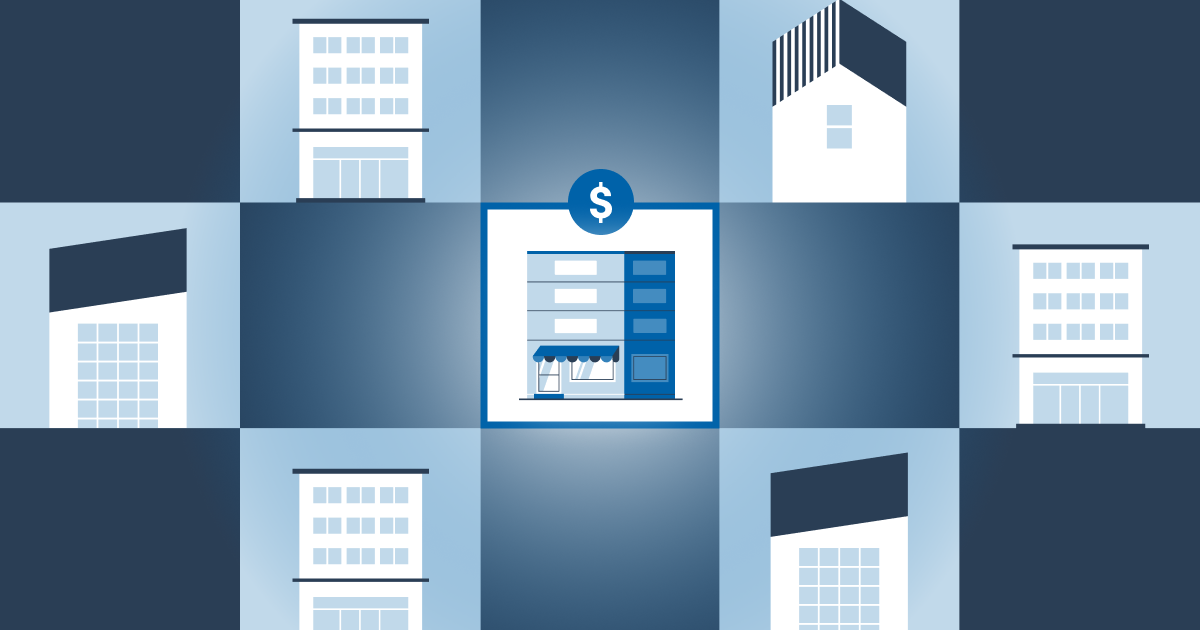
In commercial services and trades, understanding the company isn’t enough, you’re selling into a physical asset. A building.
Unlike companies, buildings have automation systems, elevators, rooftop units, a chiller that was installed four years ago, or an overhead service door that gets hit by a forklift twice a year.
Those data points are perfect triggers for sales outreach - but none of them are available in a contact database. They require property-data, and permit history.
In this article we'll cover how property intelligence for GTM turns the building into a prospect, and what changes for sales reps when it does.
B2B field sales reps spend just 33% of their week selling, against 49% for B2C teams. (SPOTIO, 2026)
Reps lose 9% of their time to prospecting research before a single call, rising to 11% for B2B. (SPOTIO, 2026)
The average cold email reply rate is 3.43%, down from 5.1% in 2024. (Woodpecker, 2026)
Campaigns sent to fewer than 50 recipients average a 5.8% reply rate. Large sends average 2.1%. (Prospeo, 2026)
Beyer Plumbing cut target lists from about 100 contacts to 10 or 20 and moved email response to between 20 and 30 percent. (Convex, Customer Case Study)
Exigent Mechanical ran cold-call sprints against tightly defined building profiles and hit close to a 30% appointment rate, against an internal benchmark of roughly 8%. (Convex, Customer Case Study)
What is property intelligence for GTM?
Two pieces of vocabulary before we go further, because one of them is borrowed from the sales teams in other industries.
GTM stands for go-to-market. It's a catch-all term for how a company finds and wins new business. In commercial services sales, this means turning a territory map into sales opportunities.
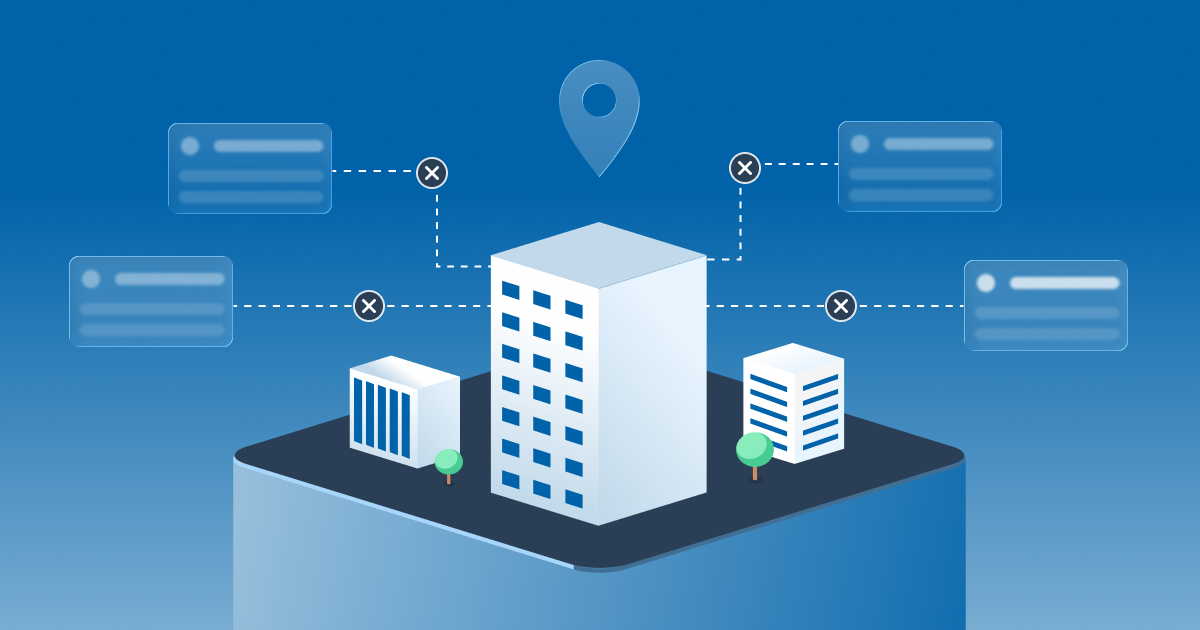
Property intelligence is the building-side version of a contact database. What sales intelligence does for companies, property intelligence does for buildings.
But, instead of headcount and revenue, it carries key data-points like square footage, building age and use, who owns it, who occupies it, what permits have been pulled on it, and which contact owns budget decisions.
What that actually looks like on a screen
Put the two together and a rep opens a map of their territory with every commercial building on it, filtered down to the ones that fit your company’s services and ideal customer. On a granular level, this means everything from filtering capabilities for different building types and use cases like data centers and hospitals or restaurants and retail to aerial views where reps can count the rooftop units.
Instead of filtering through lists of titles to find property managers or facilities staff, property intelligence tools shift the focus to property data and the building itself, giving reps a better way to find leads.
So why doesn't the tool your team already pays for handle this?
Property intelligence for GTM: Running your prospecting off building-level data, where the property is the account rather than a line item on a company record.
Property intelligence: Square footage, building age and use, ownership and tenant records, permit history, and verified contacts, all tied to one address.
Buying signal: Evidence that a specific building needs work soon. A permit filing, an ownership change, a new facility manager, or someone at that account searching online for a service like yours.
Why can't contact databases find the buildings you want?
The question Ben Walters, Sales Leader at Convex, asked is, “Should they?” B2B contact databases were built for a specific purpose - helping you find key decision makers. For consulting, manufacturing, software, financial services, and so many more industries they’re targeting the right profile.
Commercial services start with a different ideal customer profile (ICP).
Let’s use an example to make this clear.
Picture a commercial roofing sales manager with a revenue target of $3 million. His team pays for a well-known prospecting database. His reps are dialing every day.
Nothing in the activity report looks broken - but he’s unsure whether he’ll be able to hit goals with connection rates at 30-40%. And, that’s on verified phone numbers.
Property intelligence surfaces a different “vector.” Aging roofs.
With permit history, that same sales manager can see all the aging commercial roofs in his region and focus sales reps on running the company paybook: Get in with a repair or a small agreement, hold the account, and be the contractor who gets the call when that roof finally needs a full replacement.
But, roof age isn't in a contact database. Neither is square footage, or tonnage.
The filter that doesn't exist
Haynes Mechanical Systems hit the same wall from the other direction. A 230-person HVAC and building automation contractor in Colorado, in business since 1968, with service agreements making up close to a third of revenue.
Before property data, their maintenance sales reps drove city streets looking for buildings that looked right. Then knocked on doors, left a business card, and tried to network their way to whoever handled mechanical decisions.
Their target profile is simple enough to teach reps on day one: Focus on buildings 50,000 square feet and up, and stay away from what the team calls the three Rs. Restaurants, retail, residential.
None of which can be found in a contact database.
Sales teams have tried to close this gap by running three or four tools at once. Running Google Maps in one tab, Salesforce in another, tacking on a tool like hunter.io to find email addresses and phone numbers, matching company websites with LinkedIn profiles.
The research phase alone is a full time job. And, it’s one of the reasons many B2B sales reps only spend 30-40% of their time selling.
How is this different from the property data real estate firms use?
Google “property intelligence” and you'll find plenty of property data platforms. Almost all of them were built for someone buying a building, running comps to finance it, insuring it, or leasing space in it. Not for the contractor who services it.
| Real estate platforms | Property intelligence for GTM |
The question it answers | What's this building worth? | Who do I call at this building? |
Who uses it | Investors, brokers, underwriters | Sales leaders, field and outside sales reps |
What it produces | Valuations, market reports, site forecasts | Target lists, contacts, call queues |
What it optimizes | Where to put capital | Where to put rep hours to increase sales |
How you know it worked | A signed lease or a closed purchase | A meeting on the calendar |
Both pull from the same parcel and ownership records. Where they’re different is how the data is used.
One tells a retail chain where to open a store. The other tells your rep which building to stop at on Tuesday afternoon because a property manager is actively searching for “commercial HVAC maintenance.”
Once the building becomes the prospect - how do you know who controls the budget?
Who do you call first at a building you've never sold into?
Unless the building is owner occupied, usually the owner isn’t the buyer. And the bigger the building gets, the more stakeholders it will generally have.
The harder part is when there are six people you could reach out to, but only one controls the budget for your services. This can change by trade and by building.
Facility manager. Building engineer or chief engineer. Operations director. Plant manager. Maintenance supervisor. Property manager. Sometimes the tenant, sometimes the owner.
Richard Lopez, commercial sales manager at Beyer Plumbing, a roughly 100-person commercial plumbing contractor in San Antonio, put the reason plainly:
"A lot of these companies don't service their own space or their own building. That helps us just go directly to the one who can make the decisions."
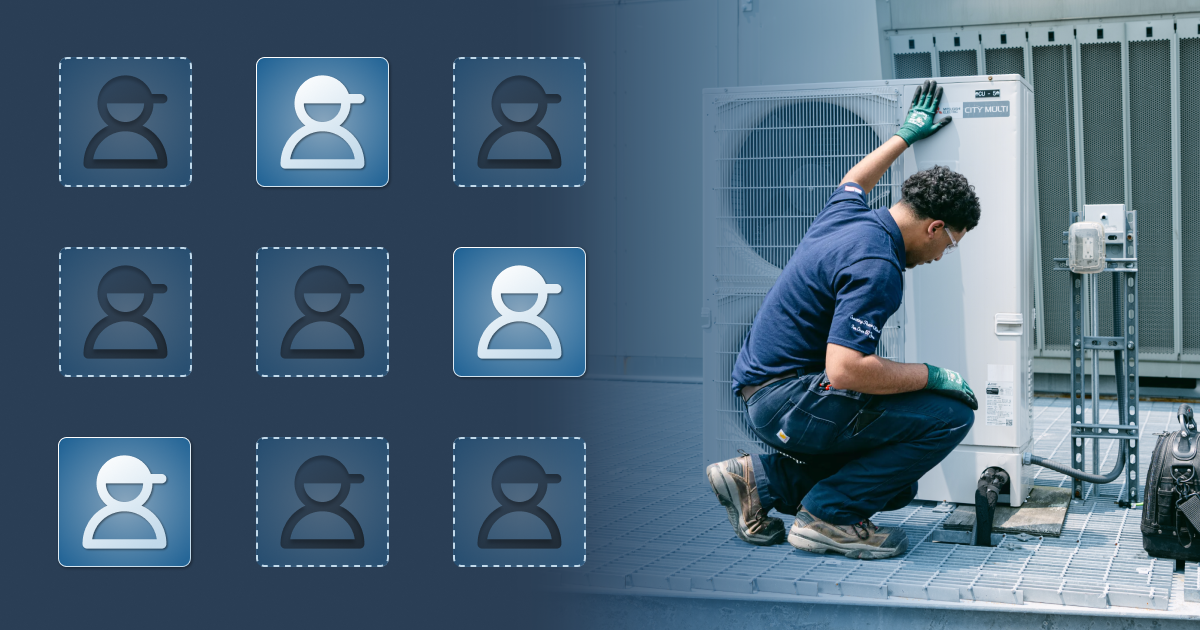
Taj Shaw, Customer Success Manager at Convex, spends a real share of her onboarding calls helping sales teams solve this exact problem. Her reframe for reps who keep aiming at the top:
“The facility manager runs and operates the work. The owner usually just signs the contract.”
Why the same building sorts three different ways
David Vroblesky, Principal Product Manager at Convex and ServiceTitan frames it differently - as a sorting problem, and his example is very specific:
"A roofing contractor filters brand-new construction out. A commercial door and dock contractor filters it in, because a recently built distribution facility of the right size almost certainly has doors worth servicing. One field, two opposite rules."
Take a 40,000-square-foot mixed-use property. Two contractors work it the same week. The roofer needs the ownership entity. The janitorial rep needs the property management firm.
Same address. Two different types of accounts. But both are attached to the building.
Contacts also go stale fast. Terri Reddan, Director of Operations for the Pittsburgh franchise of Stratus Building Solutions, used Convex to view an existing customer’s property and found a facility manager two weeks into the job.
In Terri’s own words: having building size, business type, and the property manager in hand before the first call: “…it puts you one step ahead of the decision maker.”
What tells you a building is ready before anyone calls you?
Go back to the roofing manager. He can describe the buildings he wants by now. He still can't find them, because the things that make a building ready to buy never show up online the way they do in other industries.
Software companies watch for what they call “technographics,” meaning what software, IT infrastructure, or hardware their target companies are using - which lets them know that what they’re selling is a good fit.
The equivalent is equipment on-site, which shows up in permit history.
But, even before a permit is filed, buying signals tell you what a company is actively searching for.
Let’s say a newly hired facilities manager at a 140,000 square feet, light industrial building that was built in 1998 is actively searching for “chiller maintenance.” This comes up as a signal.
When you click into the property details, you see that their company filed a chiller permit 14 months ago. Meaning, this is a perfect time to reach out and see if they need help with annual maintenance.
This is why property intelligence for GTM exists - none of those details would be included in a contact database.
Why one trigger usually isn't enough
Permits carry the most weight. A chiller permit on an industrial building above your size floor means somebody just spent real money on equipment that now needs maintaining.
That filing gives you the first piece of data you need to identify the building as a sales opportunity.
But it also helps you with competitor research.
Haynes (the company we mentioned earlier) checks where a competitor pulled work in territory where Haynes has an edge, then builds a head-to-head approach.
Convergint, a global security, fire and life safety, and building automation contractor, ran a permit-driven campaign against a fire and life safety competitor that had shut its doors without warning. Their read on the ROI of this data: the software paid for itself in six hours.
"The reps who see results fastest aren't the ones who send the most. They're the ones who stop and read the property record before they write anything." - Taj Shaw, Manager of Customer Success, Convex
One trigger on its own is noise. Two or three inside ninety days is a building worth “working,” then the opportunity window begins to close.
Chase a single trigger and reps burn goodwill on buildings that weren't ready. Wait for two, keep them recent, and the call list gets short enough to actually work through.
The 90-day test: is your team working the right buildings?
Ben Walters, Sales Leader at Convex, opens sales conversations with a question many teams can't answer.
“What kinds of buildings do you target?” The answer comes back as some version of we kind of do everything.
But building a targeted list of buildings is the key to keeping reps focused on what Stephen Covey called, “The main thing,” in his book, “The 7 Habits of Highly Effective People.”
So let’s lean into this concept.
A true 90-day test starts with a good target - maybe for your team that’s pipeline growth.
Ask yourself, which buildings are the most profitable for my company? What category is our highest close rate? And, which customers are easy to work with and always pay on time?
That’s a good place to start. Now to get your team onboard.
How do you write a target profile a rep can remember?
Teams that get this right tend to start with their own history instead of a worksheet. Ask them to pull the last twenty jobs they were happy to win. If you filter through that list, the three or four attributes that they share become clear.
Now the mistake here is to filter for the 10 largest deals. This can often be misleading and slow the team down. Chasing whales often means new installs at high contract values - and those deals can mean long sales cycles and multiple stakeholders who can kill a deal.
Instead, focus on the 10-20 best deals - the shared traits from those are the best basis for a target profile.
Haynes got theirs down to one sentence a new rep can hold in their head: fifty thousand square feet and up, no restaurants, retail, or residential.
Narrowing feels like it should shrink the pipeline. It does the opposite when the profile is right.
Lopez cut Beyer's lists from around 100 contacts to a focused 10 or 20 and watched email responses climb to between 20 and 30 percent, against a typical cold baseline of 3 to 5 percent.
Eighty percent fewer names. Several times the replies.
What to measure over the next ninety days
Touchpoints is the number most teams set too low. Ben puts the real range at 8 to 15 touches to book a meeting, spread across calls, emails, drop-ins, and LinkedIn.
But most reps quit after 4.
A rep carrying thirty active targets at twelve touches each is looking at 360 touches in a quarter. Roughly thirty a week, across four channels.
This is probably less work than they’re currently doing - but it’s more targeted, and relevant.
Once you’ve got a touch strategy running the tools to manage it well, shift to focus on the buildings your reps are actually working.
Matt Koenig, General Manager at Haynes Mechanical Systems, uses Convex’s territory visibility tools to catch new reps drifting toward restaurants and retail before it becomes a habit. When they fixed this one issue, first appointment rates doubled in less than two months.
Those meetings led to 30 proposals, $400,000 in new pipeline, and $370,000 in closed deals.
What Changes When You Sell to Buildings, Not Companies.
In commercial services the building is the account. Company data tells you who's inside. Building data tells you what the property needs, who handles it, and whether the timing is right.
Haynes couldn't sort for fifty thousand square feet on a contact database. Lopez couldn't reach the right person at a building his prospect doesn't own. Terri couldn't have known the facility manager started two weeks ago.
None of those were effort problems. They were data problems. And having the right property intelligence changed how their team prospected.
If you’d like to see what your territory looks like building by building, schedule a demo. We'll walk through the properties, the permits, and the contacts in your market with you.
FAQ
What's the difference between location intelligence and property intelligence?
Location intelligence describes an area: population, traffic, market conditions across a zone. Property intelligence describes one building and the people attached to it. Service contractors need the second, because you're selling to buildings, not neighborhoods.
Can I use property intelligence for commercial building lead generation?
Yes, though the motion is different from the investment side. Sales teams use it to find serviceable buildings and reach the right contact. Investors use it to value assets. Same records, different question.
How does building data get into my CRM?
Through direct integration. Contacts and prospecting activity push into Salesforce, HubSpot, Zoho, or Pipedrive, so reps aren't retyping records. Teams looking to cut down on the number of tools can run the pipeline inside Convex’s CRM if you choose to.
Which triggers actually predict a service sale?
Permit filings, ownership transfers, tenant changes, buying signals, and equipment in a maintenance or replacement window. The strongest predictor is two or more landing on the same building inside a short stretch.
Does this replace the prospecting tool we already have?
Not necessarily. Legacy contact databases are still useful for company-level research. But they can't sort buildings by size, age, or what's on the roof, which is what most commercial services target profiles depend on.
Do I need this if referrals and repeat customers still fill our schedule?
Referrals and repeat work are the top drivers of volume for many commercial contractors, and that channel is worth protecting and even expanding if you can. It also has a ceiling, and it doesn't turn on when you need it to.
Related reading
How to Build Winning Sales Territories Using Property Intelligence (Not Just ZIP Codes)
The Property-First Cross-Selling Framework for Commercial Services Teams
The Best Way to Prospect Commercial Accounts: A Step-by-Step Guide
Sales Territory Analysis: How Commercial Services Teams Study Their Market
Share