
TL;DR: Key Takeaways
Effective discovery calls can increase win rates by over 20% (Gong.io).
In commercial services, discovery isn't just about the buyer's pain - it's about the building's condition, equipment age, compliance status, and contract cycles.
Reps who walk into discovery calls with property intelligence (permit history, building details, intent signals) ask sharper questions and qualify faster.
The biggest discovery call mistake in commercial services: asking generic SaaS-style questions that ignore the physical reality of the sale.
The best discovery calls feel like consultations, not interrogations - and the data your rep brings to the table determines which one it becomes.
Why Discovery Calls Fail in Commercial Services
A facilities director at a 300,000-square-foot hospital system agreed to take your call. She carved out 20 minutes from a day packed with vendor reviews, maintenance tickets, and budget meetings.
Your rep opens with: "So, tell me a little about your business."
The conversation is over before it started. She manages six buildings. She doesn't have time to explain what her business does. She assumed you already knew.
That your reps showed up ready.
Here’s the disconnect. Most discovery call frameworks come from SaaS or professional services sales, where the rep is learning about a company, a software stack, and a buying committee. The questions are designed to uncover abstract pain points: "What's your biggest challenge right now?" or "Walk me through your current process."
Those questions aren't wrong. They're just incomplete if you’re selling into a commercial building.
When you're selling HVAC systems, generators, elevators, roofing, fire safety equipment, or janitorial contracts, the "current process" is tied to a physical building with measurable characteristics.
This means that the equipment has an age. The building has a permit history. The compliance calendar has deadlines. The budget cycle follows a fiscal year, and your rep can find most of this before the call ever happens.
Discovery calls fail in commercial services when reps treat them like blank slates. The best calls start with what you already know and use questions to fill in what you don't. That way, you can cover more ground, faster.
What Should a Commercial Services Discovery Call Cover?
A discovery call in commercial services needs to qualify five things “simultaneously.”
1. The building. Square footage, building type, equipment age, number of floors, tenant vs. owner-occupied. This tells you whether the property fits your service model and what the scope of work could look like.
2. The need. Is there a specific problem (failed equipment, compliance gap, energy cost overruns) or a proactive initiative (upgrade cycle, new ownership evaluating vendors, expansion)?
3. The decision-maker. Who controls the budget? Is your contact the final authority, or does this go through a property management company, an ownership group, or a procurement committee? In commercial services, reaching the right decision-maker often determines whether deals move or stall.
4. The timeline. Urgency varies wildly. A failed chiller in August is an emergency. A planned rooftop unit replacement next fiscal year is a 6- 9 month sales cycle. Your follow-up strategy depends entirely on which one you're dealing with.
5. The competition. Are they evaluating other contractors? Do they have an incumbent provider? Understanding competitive dynamics tells you whether you're competing on price, capability, or relationship.
Miss any one of these five, and the deal either stalls or your rep invests weeks chasing a prospect that was never going to close.
The Property-First Discovery Framework
Traditional discovery frameworks like BANT (Budget, Authority, Need, Timeline) or MEDDIC work well as a baseline - but they focus more on the organization.
Commercial services need something more grounded. We call it the Property-First Discovery Framework - because in this industry, you’re assessing the needs of the building.
The framework follows a natural conversation flow:
Start with what you know (building context from property intelligence).
Confirm and expand (verify your data, ask about what you can't see).
Understand the need (reactive vs. proactive, scope, and urgency).
Map the decision (who decides, who influences, what's the approval process).
Establish next steps (timeline, site visit, proposal, competitive landscape).
When your rep walks in with building data - a permit from 2010, the property's square footage, the fact that ownership changed last quarter - the discovery call shifts from "tell me about your situation" to "I noticed [specific detail]. Can you help me understand what's driving the evaluation?"
That's a different conversation entirely.
Gong’s research shows that effective discovery calls increase win rates by over 20% (Gong, 2024). The reason is simple: better questions surface better information, which leads to more accurate proposals, which close at higher rates.
15 Discovery Call Questions Organized by Category
Building & Property Context
These questions confirm and expand on what your rep already knows from property intelligence. They show preparation and establish credibility immediately.
1. "I see your facility is roughly [X] square feet - is that all under one roof, or are we looking at multiple structures on the campus?"
Why it works: Demonstrates you've done homework. Clarifies scope. A 200,000-square-foot single-structure warehouse is a different job than four 50,000-square-foot buildings spread across a campus.
2. "Your property shows a [mechanical/electrical/roofing] permit from [year]. Is that equipment still in service, or have you made upgrades since?"
Why it works: Permit data is public record, so referencing it isn't invasive. It opens a conversation about equipment lifecycle - which is exactly what your rep needs to understand to propose the right solution.
3. "Is this building owner-occupied, or is there a property management company involved in service decisions?"
Why it works: This question maps the decision-making structure. Owner-occupied buildings often have faster procurement. Managed properties may require approval from an ownership group you'll never meet. Knowing this early prevents wasted follow-up.
Need & Pain Identification
These questions move from building context into the specific driver behind the prospect agreeing to the call.
4. "What prompted you to start evaluating [service type] right now - is this a planned upgrade, or did something break that's forcing the timeline?"
Why it works: Reactive needs (equipment failure, compliance violation) have short timelines and higher urgency. Proactive needs (planned capital improvements) have longer cycles but often larger deal sizes. Your follow-up strategy depends entirely on the answer.
5. "When was the last time you had this system serviced or inspected? Were you happy with how that went?"
Why it works: Opens the door to competitor displacement without directly asking "who's your current vendor?" The answer reveals both the maintenance history and the emotional experience with the incumbent.
6. "Are there other buildings in your portfolio that have the same issue, or is this specific to this property?"
Why it works: This is the cross-selling question that most reps forget to ask. A facilities director managing 12 properties may have the same problem across six of them. One discovery call could surface a multi-site opportunity.
Budget & Decision-Making
These questions establish whether the deal can close - and who needs to say yes.
7. "Has the budget already been approved for this project, or is this part of a capital planning process for next fiscal year?"
Why it works: Direct, respectful, and necessary. A project with an approved budget moves in weeks. A project in the capital planning phase moves in months. Both are worth pursuing, but your rep's pipeline forecast needs to reflect reality.
8. "Besides yourself, who else weighs in on a decision like this? I want to make sure any proposal I put together addresses everyone's priorities."
Why it works: B2B buying committees (especially at companies with large commercial real estate holding typically involve 6+ stakeholders (Gartner, 2024). Asking who else "weighs in" is less threatening than "are you the decision-maker?" and usually surfaces the real approval chain.
9. "What does the evaluation process typically look like for a project this size? Are you collecting multiple bids, or have you narrowed it down?"
Why it works: Tells you where you stand competitively and what the procurement process looks like. If they're collecting five bids, your proposal needs to differentiate aggressively. If you're one of two, the conversation is different.
Timeline & Urgency
10. "What's your ideal timeline for getting this resolved - or started?"
Why it works: Simple and open-ended. Let the prospect define urgency. A facilities director who says "yesterday" needs an emergency response. One who says "before next cooling season" gives you a 3–4 month window to build the relationship.
11. "Are there any compliance deadlines or inspection dates that are driving the timing on this?"
Why it works: In fire & life safety, elevator maintenance, and many building systems, compliance triggers create non-negotiable deadlines. Identifying these early lets your rep position urgency around the regulation - not their sales quota.
12. "Is there a lease renewal or budget cycle coming up that affects when this decision needs to happen?"
Why it works: Commercial real estate runs on lease cycles. A tenant whose lease renews in 6 months may need improvements completed before renewal negotiations. This question surfaces timing drivers your rep wouldn't otherwise know.
Competitive Landscape
13. "Who's handling [service type] for this building right now?"
Why it works: Direct. No dancing around it. You need to know who the incumbent is, whether there's a contract in place, and whether the prospect is dissatisfied or simply shopping for comparison.
14. "What would an ideal service partner look like for a project like this - not in terms of company, but in terms of how they work with you?"
Why it works: This question uncovers selection criteria without asking "what are your requirements?" The answer tells you what the incumbent gets wrong and what your proposal needs to emphasize.
15. "If we put together a proposal that fits, what would the next step look like on your end?"
Why it works: The closing question that most reps skip. It establishes commitment without pressure. If the prospect describes a clear path forward (site visit, second meeting with the ownership group, board approval), the deal is real.
If they hesitate, you've identified an objection to address now - not three weeks later from now when you get ghosted.
How Building Data Changes the Discovery Conversation
The difference between a good discovery call and a great one often comes down to what the rep knows before they dial.
Think about the typical preparation process. Your rep Googles the company. Checks LinkedIn. Maybe look up the building on Google Maps. Spends 15–20 minutes assembling basic context, and still walks into the call with gaps.
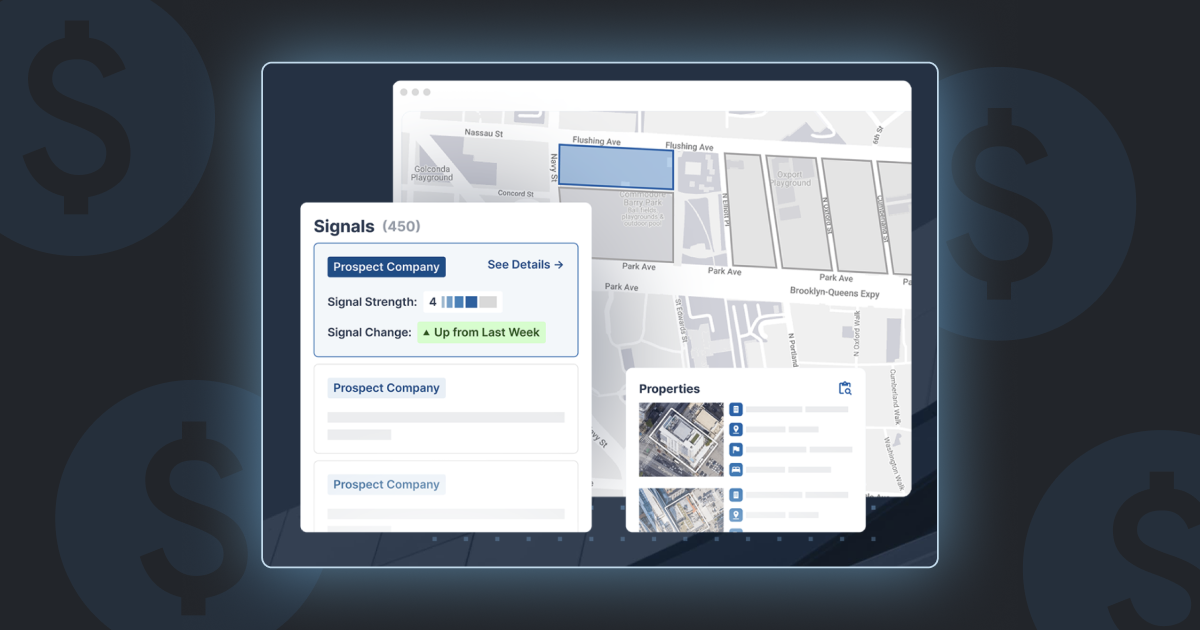
Now think about a rep who opens a property intelligence platform like Convex and sees: the building is 175,000 square feet, pulled an HVAC permit in 2011, changed ownership 8 months ago, and the facilities director has been searching online for commercial HVAC providers in the last 30 days.
That rep doesn't need to ask, "Tell me about your building." They already know.
They start with: "I noticed your property changed hands last year and the HVAC system goes back to 2011 - is the new ownership group looking at upgrades, or are you focused on maintaining what's there?"
That question earns 10 minutes of honest conversation. The generic version earns a polite summary and a "let me think about it."
Nick Davis, Chief Strategy Officer at Mechanical Services and Design (MSD), saw this play out across his entire team.
Before using Convex, his reps made 100 cold calls per week and researched prospects at the local library on county websites and permit databases. After the switch, reps could see which properties showed active buying signals, pull verified contacts for decision-makers, and walk into conversations with specific building context.
Over 18 months, MSD sourced more than $42 million in pipeline - and the discovery conversations that built that pipeline started with better data, not just better questions.
Generic Questions vs. Property-Informed Questions: A Comparison
There’s a strategic shift that happens when you show up with informed questions.
Notice the shift. A generic question like "Tell me about your business" puts the burden on the prospect to educate you.
A data-informed version like, "Your facility on Oak Street is about 150K square feet and the mechanical permit dates to 2009. Is that system still running?" tells the prospect you already did the work.
That pattern holds across every stage of discovery. "What are your biggest challenges?" becomes "With equipment from 2009, you're probably seeing efficiency drop-offs - is that what's driving the evaluation?"
Same information gathered. Completely different conversation. The generic versions sound like a checklist. The property-informed versions sound like a consultation - and facility managers can tell the difference in the first 30 seconds.
Here are some generic and property-Informed questions side by side so you can see the different approaches.
Generic questions that get generic answers:
"Tell me about your business."
"What are your biggest challenges right now?"
"Do you have a budget allocated for this?"
"Are you the decision-maker?"
"Are you looking at other vendors?"
"When do you need this done?"
Property-informed questions that open real conversations:
"Your facility is about 150K square feet, and the mechanical permit dates to 2009. Is that system still running?"
"With equipment from that era, you're probably seeing efficiency drop-offs and higher repair costs. Is that what's driving the evaluation?"
"Projects this size on a building your age usually run about ($ price). Has capital planning started, or is this still in the evaluation phase?"
"Besides yourself, who else weighs in on a capital project like this? I want to make sure the proposal addresses everyone's priorities."
"Who's handling the maintenance on this system right now - and what's working or not working with that relationship?"
"With cooling season starting in April, are you targeting completion before then - or is this a next-fiscal-year project?"
Many sales reps report to managers that they lost the deal because they didn’t ask enough questions. This may be true in some cases, but quite often, the questions they asked just didn’t get the feedback they needed.
How to Prepare for a Discovery Call in Under 5 Minutes
If you ask an average rep how much time they spend preparing for a discovery call they’ll usually say 15- 20 minutes. Or worse, some wing it entirely. Neither approach works consistently.
With property intelligence, the prep shrinks to under 5 minutes:
Minute 1: Open the property profile. Note square footage, building type, permit history, and ownership structure.
Minute 2: Check buyer intent signals. Is this prospect actively researching solutions? What topics are they searching for? How strong is the signal?
Minute 3: Review the decision-maker's role. Are they facilities, operations, or property management? This determines which questions to lead with.
Minute 4: Identify one specific detail to reference in your opening - a permit date, an ownership change, a building characteristic. This is your credibility anchor.
Minute 5: Use Generative AI to draft a quick pre-call email confirming the meeting time and referencing one building-specific detail. This primes the prospect before you even get on the phone.
This isn't theoretical. Companies like Haynes Mechanical, which require their reps to book five new meetings per week to hit service targets, rely on this kind of rapid preparation to keep the pipeline moving without burning out their team.
Start Better Discovery Calls Tomorrow
The questions your reps ask on discovery calls determine whether deals move forward or die quietly in the pipeline. But questions alone aren't enough - the context behind those questions is what separates a call that’s consultative or from one that feels more like an interrogation.
If your team is still walking into discovery calls without building data, permit history, or intent signals, you're leaving deals on the table.
Schedule a demo with Convex to see how property intelligence, buyer intent signals, and verified contacts give your reps the context to run discovery calls that actually close.
Frequently Asked Questions
What is a discovery call in sales?
A discovery call is the first real conversation between a sales rep and a prospect. Its purpose is to qualify the opportunity by understanding the prospect's needs, budget, decision-making process, timeline, and competitive landscape. In commercial services, discovery calls also need to qualify the building itself - square footage, equipment age, permit history, and compliance requirements.
What questions should you ask on a discovery call for commercial services?
Focus on five areas: the building (size, equipment, permit history), the need (reactive problem vs. proactive upgrade), the decision-maker (who approves the budget), the timeline (urgency and fiscal year alignment), and the competition (incumbent provider and evaluation process). Reference specific building data whenever possible to demonstrate preparation.
How long should a discovery call last?
Most effective B2B discovery calls run 15–25 minutes. In commercial services, the goal is to qualify the opportunity efficiently without making it feel like an interrogation. Reps who walk in with property intelligence can qualify faster because they spend less time asking basic questions and more time on the details that matter.
What's the difference between a discovery call and a sales pitch?
A discovery call is about listening and qualifying. A sales pitch is about presenting your solution. The mistake most reps make is pitching too early - before they understand the prospect's building, budget, or timeline. Discovery should happen first. The pitch comes after you know enough to make it relevant.
How do you prepare for a discovery call in commercial services?
Review the property profile (square footage, building type, permit history), check for buyer intent signals, verify the decision-maker's role, and identify one specific building detail to reference in your opening. With property intelligence platforms like Convex, this prep takes around 5 minutes - compared to 15- 20 minutes of manual research and far less accuracy.
What's the biggest mistake reps make on discovery calls?
Asking generic questions that ignore the physical reality of the sale. In commercial services, "tell me about your biggest challenge" is less effective than "your HVAC system was permitted in 2010 - is the equipment still performing, or are you seeing efficiency issues?" The second question shows preparation and opens the door to a more productive conversation.
How do you qualify a commercial services deal on a discovery call?
Qualify across five dimensions: Does the building fit your service model (size, type, location)? Is there a real need (equipment failure, compliance gap, proactive upgrade)? Can your contact make or influence the buying decision? Is there a defined timeline? And what does the competitive landscape look like? If all five check out, it's a qualified opportunity worth pursuing.
Share