
The Rejection That Sparks a Behavioral Shift
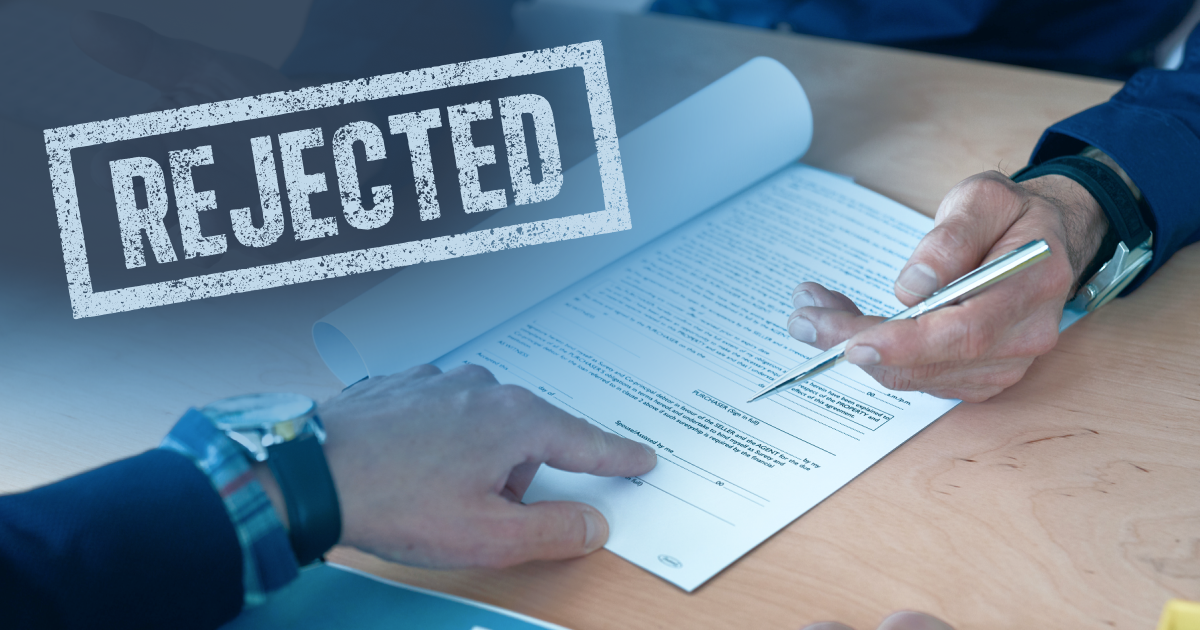
You spent the whole week on this one. Drove out for the walkthrough. Pulled pricing for three equipment options. Tailored the scope to match everything the facilities manager told you they needed.
Then the email came back: "We decided to go another direction."
Now you're staring at that proposal wondering what to fix. Tighter formatting? Better cover page? Lower price?
None of those may be the problem.
In commercial services, most losing bids trace back to decisions made weeks or months before the proposal was written. The building was wrong, the timing was off, or the decision was already made. You were diagnosing at the proposal stage when the failure happened upstream.
If you Google, “how to win the proposal,” you’ll see articles and videos talking about RFP compliance checklists, government tender formatting, and bid bonds.
Most of that is irrelevant - it doesn’t answer the main question a rep is asking when the pressure to meet quota is on, and they’re still losing bids on maintenance agreements, service contracts, or recurring work.
What most of those articles won’t tell you is, the problem is almost never the document. It's the five things that happened before you opened a blank page.
80% of B2B deals go to the buyer's pre-contact preferred vendor (6sense, 2025)
65% of commercial service business volume comes from repeat customers, with another 60% driven by referrals (ServiceTitan, 2025)
The average B2B buying decision involves 6-10 stakeholders across functions (Gartner, 2024)
Multi-threaded outreach to 5+ stakeholders closes at 30% vs. 5% for single-threaded deals (Instantly, 2026)
What Does It Look Like When a Rep Rarely Loses?
There's a rep on every team who wins four out of five bids. You've seen them. They don't have a better proposal template, they don't price lower, and they don't work longer hours.
They get called first.
When a building has a problem, that rep's name comes up before anyone opens a search engine. Not because of a pitch they delivered six months ago, but because over time, they became the person who always shows up with a solution.
Sometimes it's their company's service, sometimes it's a referral to someone they trust for a job outside their scope. The relationship is the asset, not the bid.
This isn't accidental. Repeat customers and referrals account for 65% (repeat) and 60% (referrals) of business volume, respectively, across commercial service contractors (ServiceTitan, 2025).
The rep who wins consistently has enough of those relationships that warm opportunities outnumber cold pursuits. When they do bid, the groundwork is already laid.
Ben Walters, a Sales Leader at Convex, sees this pattern across the teams he works with. The reps who win consistently don't treat proposals as the starting point. The preparation they do before anyone asks for a bid, the research, the relationship-building, the understanding of what a building actually needs, is where deals are won or lost.
Building that kind of trust in a market where buyers are skeptical of every cold approach takes time. But it starts with fixing five specific upstream failures that most reps never diagnose.
Bid-to-win rate: The percentage of submitted proposals that result in awarded contracts. For commercial service contractors, healthy new-business rates range from 20-35%, with top performers reaching 40% or higher through disciplined qualification.
Total cost of ownership (TCO): The full financial impact of a service contract over its lifecycle, including response time commitments, scope coverage, risk exposure, parts and labor terms, and escalation protocols. Facility managers who evaluate on TCO weigh more than the line-item price.
Evaluation window: The period when a commercial building is actively considering new vendors for a service contract. Most evaluation windows open 60-90 days before a decision and close well before the last proposal arrives.
Are You Bidding Buildings You Were Never Going to Win?
Most bids don't fail because the proposal was weak. They fail because the building was never a realistic target for your company. Wrong size, wrong vertical, wrong geography, wrong service need.
The first win-rate fix is learning which buildings to walk away from before you invest hours in a proposal.
The instinct is understandable. More bids = more chances. At least that’s the thought. But that math breaks down fast when half the buildings on your list sit outside your service range or need capabilities you don't offer.
Whatever the reason, every hour on a bad-fit proposal is an hour you didn't spend on a building where you had a real shot.
"I prefer to not cast such a wide net because I might get contacts I don't need as opposed to finding and working with smaller groups that are more in line with our target customer profile." - Kyleigh Moreno, Director of Sales, Marketing, and Development, Moreno & Associates
What Does a Filtering Discipline Actually Look Like?
Kyleigh Moreno runs sales, marketing, and development for Moreno & Associates, a building maintenance and janitorial company serving the Bay Area and Silicon Valley.
Before she built a filtering system to narrow her prospect list to buildings that Moreno can consistently win, she spent four to five hours per prospecting session searching Google and manually entering data into spreadsheets.
This was not only time consuming, it was nearly impossible to narrow 700,000 local contacts down to roughly 100 by role, combining building type, square footage, and permit data - that showed Kyleigh they had a genuine service need.
She now uses a map-based workflow in Convex that highlights existing clients and lets her prospect adjacent buildings, using a neighboring relationship as social proof.
The discipline isn't about having the biggest list. It's about narrowing to the buildings where her company can actually win, then showing up with context that a cold bid never carries.
That filtering step is the first decision that separates a 20% win rate from a 40% one. But even when you pick the right building, you can still show up at exactly the wrong time.
Do You Know When the Existing Vendor’s Contract Is Up?
Existing vendors win 60-90% of commercial service RFP competitions, while new challengers typically win in single digits to 15% (Proposal Best Practices, 2025). If you're bidding a building that has 14 months left on its current contract with a vendor who's performing, your proposal is going into a recycling bin.
Commercial service contracts are sticky. Three-to-five-year terms, auto-renewal clauses, and switching costs that include retraining staff on new vendor protocols.
The building doesn't want to switch. They want their current provider to keep doing the job.
Your opportunity only opens when something changes: a contract hits its renewal window, the existing vendor underperforms and the evaluation window opens early, or a new facilities director comes in with different vendor preferences.
Without intelligence on that timing, you're throwing darts.
Sales is a combination of right time, right message, and right person - which is what we’ll cover next.
Are You Talking to the Person Who Actually Signs?
“Single-threading” or only engaging one contact is the most common reason a good proposal goes silent.
You had three solid conversations with the facilities manager, sent the proposal, and then heard nothing. Because the facilities manager doesn't control the budget.
According to Gartner, the average buying decision involves six to ten stakeholders. In commercial buildings, that group typically includes the building owner or property management company, the facilities director, sometimes an operations manager, and whoever controls the capital expenditure approval.
The person who feels the problem and the person who signs the check are rarely the same.
Multi-threaded deals that reach five or more stakeholders close at 30%, compared to 5% for single-threaded outreach (Instantly, 2026).
Identifying the right contacts and reaching the decision-maker before you write the proposal is the step most reps skip. They build a relationship with the person who answers the phone and never reach the person who holds the budget.
The prospecting work that gets you past the operational contact to the signer has to happen before the proposal, not after.
This is called “stakeholder mapping” - and it gives you the ability to see the contacts you’re reaching out to more like an org chart. Identifying who controls what, analyzing what their specific concerns are, and understanding their level of authority over the decision.
Why Does the Lowest Price Still Lose?
I’m sure you’ve had times where you were confident that you were the cheapest bid and still lost. Or you weren't the cheapest and you're convinced that's the reason.
Both assumptions miss the real problem. Price-only framing turns your proposal into a commodity, and commodities always lose to the lowest bidder or the incumbent (existing vendor).
When a proposal leads with a number, the decision-maker has nothing to evaluate except that number. You've stripped away every other reason to choose you.
The alternative is framing your proposal around value, specifically what the building pays over time when the cheaper option doesn't work out.
What Is the Total Cost of Ownership in a Commercial Service Bid?
Total cost of ownership (TCO) goes beyond the line-item price. It includes response time guarantees, scope coverage gaps that trigger separate billing later, risk transfer terms, parts and labor structures, and escalation protocols for when something breaks at 2 a.m. on a Saturday.
This is where many bids lose.
Building owners and facility managers with extensive experience will evaluate TCO even when the RFP asks only for price. They've been burned by the low bidder who missed a system, didn't carry the right insurance, or disappeared when the emergency call came in.
Your proposal should make the TCO comparison easy for them by showing what's included, not just what it costs.
Decision makers at commercial facilities have to take more into account than price. Risk, response times, guarantees, ratings and reviews, and referrals all play into the decision.
The reps who rarely compete on price don't avoid the price conversation. They have it after the value conversation. Does what you’re proposing truly fit what they need? Or, are you just trying to win?
Sophisticated buyers sniff out unusually high or low pricing almost immediately.
Did the Building Already Make a Decision Before You Showed Up?
This is one of the fastest ways to waste time - and lose a bid.
Most commercial buildings begin evaluating new vendors 60-90 days after a big change happens. Let’s say a decision maker changes roles, or a building changes hands.
When the new person settles into their role, you have a short window to engage them in a conversation before they make a decision.
If your proposal arrives after that window closes, you're competing against a decision that's already been made. The last bid across the desk almost never wins unless it undercuts everyone else on price.
Remember the rep from the introduction, the one who spent the week tailoring a perfect proposal. That building started its evaluation two months earlier. Two vendors were already in conversations with the facilities director. By the time the rep's proposal arrived, it was a formality for the building's records, not a real consideration.
Research from 6sense confirms this pattern across B2B buying: the buyer's pre-contact preferred vendor wins roughly 80% of the time (6sense, 2025). The vendors who won those deals were already visible when the evaluation window opened. They showed up because they had intelligence that the building was actively looking, not because they guessed.
Having access to these signals tells you which buildings are entering that evaluation window right now - which is the difference between arriving first and arriving last.
How Do You Fix Your Bid-to-Win Rate?
There are five bid-loss patterns that all lead to one upstream problem.
If you’re staring blankly at a rejection email for a bid you felt sure you were going to win, you’re diagnosing at the proposal stage when every failure happened before you opened a blank document.
Fixing your bid-to-win rate means moving the work earlier.
Bid-Loss Pattern | Upstream Fix |
Wrong-fit building | Filter targets by ICP, service capability, and geography before pursuing |
No read on the incumbent | Research contract timing and vendor satisfaction before investing hours |
Single-threaded to one contact | Identify and engage the budget authority alongside the operational contact |
Price-only framing | Lead with scope, TCO, and risk coverage before presenting the number |
Outside the evaluation window | Use intent signals and permit data to arrive when buildings are actively looking |
"Most commercial service bids are lost before the proposal is written. The five most common reasons are all upstream sales-motion failures, not document failures."
Ben Walters sees the same pattern across every team he works with. The reps who fix these five upstream gaps don't just win more bids. Over time, they become the person the building calls before they ever open a search engine.
They stop being the last bid in the stack and start being the first call.
That's the compounding effect. Better filtering leads to better timing, better timing leads to the right conversations, and the right conversations build the relationships that eventually make the next bid unnecessary because you’re already the vendor of choice.
Moreno's win rate didn't improve because she wrote better proposals. It improved because she stopped pursuing buildings she was never going to win.
What Winning Commercial Service Bids Have in Common
The answer to "why do I keep losing bids" almost never lives inside the proposal document. It lives in the five decisions you made before you started writing: the building you chose, the timing you had, the stakeholder you contacted, the way you framed value, and the moment you arrived.
Fix those five things and the proposal becomes what it was always supposed to be. The last step, not the first.
If you’re tired of losing bids, and you’d like to see which buildings in your territory are actively evaluating new vendors right now, book a demo of Convex. Our team will show you how all of these signals are built into a platform that identifies the right person, at the right time, at buildings you can win.
Frequently Asked Questions
What is a good bid-to-win rate for commercial service contractors?
A healthy bid-to-win rate for new business typically falls between 20-35%. Top-performing teams reach 40% or higher through disciplined qualification and target selection. Rates below 15% usually signal an ICP alignment or filtering problem, not a proposal quality issue. Track your rate monthly and by building type to identify which segments convert best.
How do facility managers evaluate commercial service bids?
Most facility managers evaluate beyond price, weighing response time commitments, scope coverage, references from similar buildings, insurance and licensing, and the vendor's familiarity with their specific building systems. Sophisticated buyers score on total cost of ownership, not the lowest line-item number.
Should I ask a potential client why I lost a bid?
Yes. Frame it as a request for feedback to improve your future approach, not as an attempt to reopen the negotiation. Keep it brief and make clear the deal is closed. You won't always get an honest answer, but the feedback you do get is more valuable than almost any win.
How do I compete against a low-price competitor?
Don't compete on their terms. Reframe the comparison around TCO, not line-item price. Show what your scope includes that theirs likely leaves out, and reference specific scenarios where coverage gaps create downstream costs. Facility managers who've been burned by the cheapest bid are your strongest audience for this approach.
What is a Go/No-Go framework for commercial service bids?
A Go/No-Go framework is a set of qualifying questions you answer before investing time in a proposal. Does this building fit your ICP? Do you have a contact above the operational level? Is the evaluation window open? Can you compete on something other than price? If the answers are mostly no, walk away and redirect those hours toward a building where you can win.
How long does a commercial building typically take to switch service vendors?
Most buildings take 60-120 days from the start of their evaluation to a signed contract, depending on contract complexity and stakeholder count. The evaluation window itself often opens after a triggering event: an incumbent failure, a contract renewal date, or a new facilities director who wants to rebid.
What is the difference between being disqualified from a bid and losing on merit?
Disqualification happens when your proposal doesn't meet a hard requirement: missing insurance documentation, incomplete scope, wrong format. Losing on merit means your proposal was evaluated and another vendor was selected on fit, price, relationships, or timing. Most commercial service reps who believe they lost on merit actually lost on one of the five upstream factors covered in this article.
Related Reading
Declining Cold Outreach Effectiveness: What Commercial Services Teams Need to Know
The Best Trigger Events for Outreach: A Guide for Commercial Services Sales
Stop Paying for Shared Leads: Build a Predictable Pipeline with Property Intelligence
How Property Intelligence Streamlines HVAC Prospecting and Increases Close Rates
Share