

Key Takeaways
Building-level intelligence is essential for commercial solar; residential tactics don’t translate.
Teams cut research time from 2+ hours to 3–5 minutes using property intelligence.
Buyer intent signals reveal which accounts are already searching for solar services.
AI outreach built on property data converts dramatically higher than generic emails.
Teams shifting from lead vendors to prospecting infrastructure see 9x ROI in 12 months.
The Biggest Challenge of Commercial Solar Sales
If you’re like many solar sales reps, you're either buying leads from a vendor who scraped a list, paying through the nose for “exclusive leads,” or you're spending two plus hours on Google and LinkedIn trying to figure out who owns a building so you can send them a message.
None of the three feels like a system.
The leads you buy are often little more than a name and phone number/email, and often, they don't come with building data. So, you don't know if the roof is viable. You don't know if they just refinanced or filed permits. You're calling blind.
And the manual research? By now, you're fast at it. You've got your workflow. County assessor website for permits, LinkedIn for context, Google Maps for aerial views, Hunter.io for emails and contact data, maybe a quick “drive-by” to see what you can - but it still takes half your morning to build a list of ten qualified prospects.
The reps who are winning right now aren't buying more leads. They're working with better sales tools.
What Is Commercial Solar Lead Generation?
Solar lead generation is exactly like it sounds - the process of finding people interested in installing solar on their property and having conversations with them that lead to sales.
And, this is where commercial and residential solar require a completely different approach.
For residential installers, lead generation means paid ads, referral programs, and lead vendors.
You're targeting homeowners where the “buying decision” is emotional and the sales cycle is short. Generally, a homeowner clicks a Facebook ad, fills out a form, and then you schedule a site visit.
Commercial solar works nothing like residential. You're selling to facility managers, property owners, building engineers, and operations directors at warehouses, office parks, data centers, and manufacturing facilities.
The decision involves ROI calculations, engineering reviews, capital budgets, and multiple stakeholders.
A facility manager at a 200,000 sq ft distribution center isn't clicking a Facebook ad offering "zero down" solar.
So your entire workflow has to change. The tactics that work in residential fall apart when you move upmarket into commercial.
Here’s why. In residential, you’re qualifying people - paying close attention to things like creditworthiness and financial stability.
In commercial, you're qualifying buildings before you even get to a person. Things like: square footage, roof type (or available space on the surrounding land), ownership structure, and capital availability.
You need building data to know if solar is even viable before you figure out who to call.
Stats That Matter for Commercial Solar Sales
The U.S. commercial solar market grew 28% year-over-year in 2024, with installations reaching 6.8 GW (SEIA, 2024)
67% of B2B buyers prefer to research solutions independently before engaging with sales (Gartner, 2024)
Sales reps spend an average of 21% of their time researching accounts and contacts (HubSpot, 2024)
Companies using buyer intent data report 3.2x higher pipeline conversion rates (Forrester, 2023)
Commercial solar projects have 6–18 month sales cycles, requiring persistent relationship-building (NREL, 2024)
Convex customers report 9x median ROI over 12 months based on time savings and pipeline velocity (Convex proprietary data, 2024)
Why Traditional Solar Lead Generation Breaks Down for Commercial
Paid lead vendors give you a name and a phone number. Maybe an address.
But they don't tell you if the building's roof can handle a solar array. They don't tell you if the property owner is the same person who makes capital decisions. They don't tell you if there's a facilities manager you should be talking to instead.
You're still starting from zero. Every call is cold.
Manual research fills in some of those gaps, but it costs you time. Here's what most commercial solar reps do:
You Google the property address and dig through the county assessor's site to find the owner of record. Then you're cross-referencing the LLC on LinkedIn, hunting for a facilities manager or operations director, guessing email formats. You pull up Google Maps to check the roof, look for recent permit activity that might signal upcoming work.
Every commercial services team runs into the same wall - ownership data, permits, and contacts live in a dozen different places.
If you're efficient, that's 90 minutes. If the property has a complicated ownership structure or if you're trying to confirm the right contact, it's two hours.
And you're doing this for every single prospect before you even know if they're thinking about solar.
The bottleneck isn't effort. It's infrastructure. You're using tools built for other jobs — LinkedIn for recruiting, Google Maps for directions, county sites for tax appeals — and stitching them together into a prospecting workflow.
It works, but it doesn't scale. And it definitely doesn't let you prioritize the accounts that are actually warm.
How to Find Commercial Solar Leads: Property Intelligence + Intent Signals + Outreach
The shift happening right now is from buying lists to building intelligence-driven prospecting.
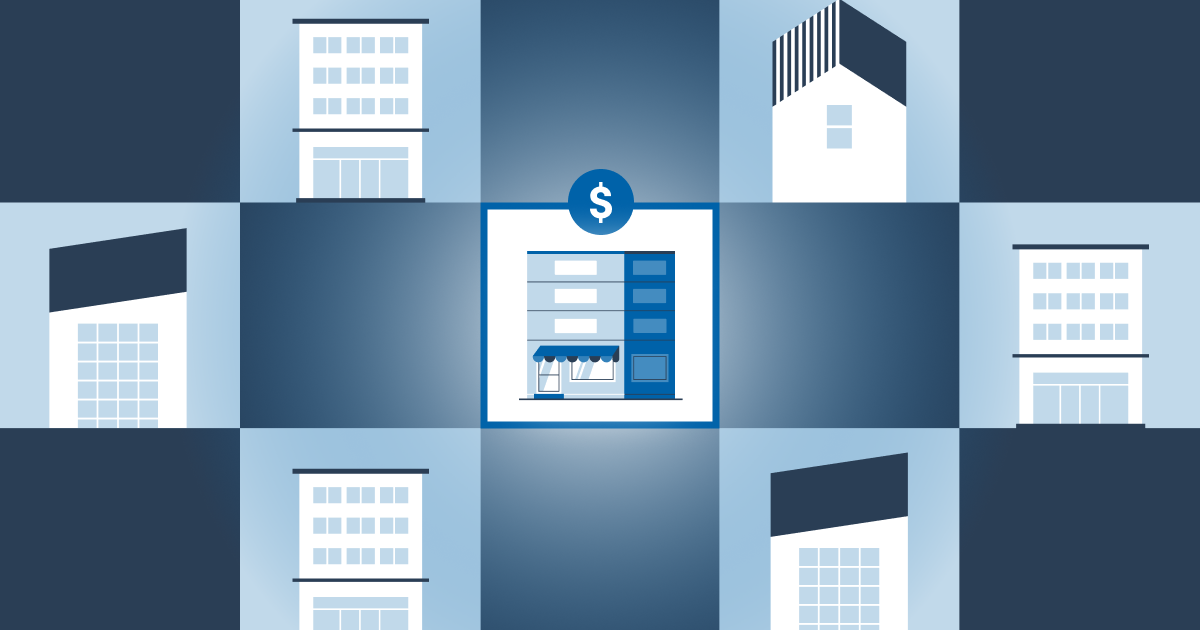
Instead of starting with a name, you start with the building. You want to know square footage, ownership structure, permit history, and who makes the decisions before you reach out.
Instead of cold calling, you want to know which accounts are actively searching for solar solutions, maybe even looking for local installers.
Instead of writing the same email 50 times with minor “personalization” tweaks, you need Generative AI tools that allow you to scale outreach without triggering spam filters. This means pulling in building data, permit activity, and ownership context to write something tailored to their needs shows that you actually reviewed their property.
Here's how property intelligence solutions like Convex work in practice:
Step 1: Identify commercial buildings with solar-ready attributes
You start by filtering by building type, size, age, and ownership.
A 150,000 sq ft warehouse with a flat roof owned by a regional logistics company? That's a target. A small, multi-tenant office building with a pitched roof? Probably not a priority unless the signals say otherwise.
Property intelligence platforms track 6+ million commercial buildings with attributes like square footage, acreage, construction year, transaction history, and aerial imagery. You're not guessing. You're qualifying before you call.
Step 2: Find the decision-makers
You need verified contacts - not scraped emails with a 40% bounce rate. The facility manager's direct phone number. The property owner's work email. The operations director's mobile.
This requires what’s known as sales intelligence. Sales intelligence software tracks owners, property managers, facilities directors, engineers, and maintenance staff.
Real contact data, not guesswork on who has updated their LinkedIn profile and who hasn’t.
Step 3: The ability to monitor buyer intent signals
This is where things get interesting. Buyer intent platforms track aggregated search behavior and web activity to identify companies actively researching specific topics.
If the operations manager at a manufacturing facility in Houston just searched "commercial solar installers Houston," you can see these signals in your sales dashboard and know that they’re most likely a warm prospect that you should reach out to.
In short, buyer intent signals allow you to see which accounts are actively researching solar solutions - and “signal strength” tells you how likely they are to make a purchase based on their search behaviors.
Step 4: Using Generative AI to personalize and scale outreach
You've got the building data. You've got the contact. You've got the signal. Now you need to send a message that doesn't sound like a template.
This is where Generative AI tools can make all the difference.
Generic AI tools guess and pattern-match. They can write something that sounds good, but they don’t actually understand the building or the decision-maker behind it.
Generative AI tools trained on property intelligence, firmographic data, permit history, job titles, ownership structure, intent signals, and location context don’t have to guess. It can draft emails and call scripts that feel like they were written by someone who actually reviewed the property - in seconds.
Convex's Generative AI does exactly that. Two clicks, and you've got an email or call script that isn’t built from a template - it’s tailored to the data on your prospect.
What a Solar Lead Generation System Actually Needs
Once you realize that commercial solar prospecting works like any other B2B outbound motion, but with building data attached, the question changes from “where do I buy leads?” to “what sales infrastructure do I need?”
Here's what that “stack” actually looks like.
Property intelligence is the foundation. Why? You need data on millions of commercial buildings - not just addresses, but square footage, roof type, building age, ownership structure, permit history, transaction records, and aerial imagery.
In other words, all of the context that tells you whether a building is even worth pursuing. You can't qualify a solar opportunity without knowing the building first.
Sales intelligence gets you in front of the right people. Verified contact data for facility managers, property owners, operations directors, and building engineers.
Buyer intent signals tell you who's actively looking.
You need to know which accounts are searching for solar services right now - regularly updated data showing search activity, topics of interest, and geographic focus. That's how you prioritize warm accounts over cold ones.
Now, if you want to scale outreach to these decision-makers, your team will need a bit of help so they don't spend too much time searching for details to include in their outreach.
This is where AI-powered outreach turns data into messages.
Generative AI that pulls in firmographic data, property intelligence, permit history, job titles, ownership structure, and location to draft personalized emails and call scripts so they can reach decision-makers with ease.
Once they've sent a message, you'll want them to be able to prioritize a territory so they don't spend all day driving.
Map-based visualizations bring property intelligence data to life. Once you've filtered buildings by type, size, ownership, permits, and signals, you see them on a map—not in a spreadsheet. Plan routes, prioritize clusters, and build geographic lead lists. It's the interface that turns data into a field sales strategy.
CRM integration is the final piece. Most teams already have Salesforce, HubSpot, Zoho, or Pipedrive.
The question is whether everything syncs - property data, contacts, intent signals, and AI-drafted messages all flowing in with bidirectional updates so nothing gets lost in the hustle.
Pipeline basics (deal stages, notes, follow-ups, tagging, deal values) need to sit alongside enriched building data in one system. When that works, you have actionable intelligence instead of scattered Post-it notes, lists, and spreadsheets.
Sales Efficiency Metrics That Actually Matter
When you shift from buying lead lists or manual prospect research to property intelligence, here's what changes:
Time to qualify a lead
Manual research: 90–120 minutes per prospect. Property intelligence: 3–5 minutes per prospect.
That's not a marginal improvement. That's a different operating model. A rep who used to qualify five leads a day can now qualify 40.
Cost per qualified lead
Paid lead vendors charge $50–$200 per lead, and you still don't know if the building works or if you're talking to the decision-maker.
Property intelligence platforms often charge a flat subscription. If you're qualifying 100+ leads a month, your effective cost per lead drops significantly - and every lead comes with building data, verified contacts, and intent signals.
Pipeline velocity
The math here is simple: Research faster with better data, and you contact more prospects. More prospects with context means more conversations convert. More conversions = more pipeline.
Convex customers report a 9x median ROI over 12 months, driven primarily by time savings (reps spend more time selling, less time researching) and higher conversion rates (context-rich outreach beats cold calls, as we’ll cover in number 4).
Conversion rate
The gap between cold outreach conversion rates and those from intent data is huge. Generic outreach converts at 1-5% per Clearbit's sales outbound study.
Personalized outreach using buyer intent data converts 93% higher and accelerates the sales cycle by 83%, according to Default's research.
These metrics show a dramatic increase in your team's sales efficiency and shift the conversation from “How many leads can we buy?” to “How many warm, qualified conversations can we have?”
Common Objections (and Honest Answers)
"Isn't this just another lead vendor?"
No. Lead vendors sell you a list of names and phone numbers. You still have to research the building, verify the contact is a decision-maker, and determine whether they're a fit.
Property intelligence platforms give you the building data, verified contacts, buyer intent signals, and AI tools to personalize outreach. It's prospecting infrastructure, not a list.
"Does buying solar leads actually work?"
Sometimes it does. It works especially well in residential solar if you've got a high-volume operation. Buying leads allows speed, but it also comes with challenges.
In commercial, you need context to get in front of decision-makers. A name and a phone number don't tell you if the roof works, who makes the decision, or if they're even thinking about solar. You're still doing the research. You're just paying extra for a phone number first.
"Are solar leads worth it?"
Depends on what you're buying. If "solar leads" means a scraped list with no building data, probably not.
If it means exclusive leads that are only sent to one company, they can be quite effective - but those leads are also very expensive, especially in the commercial space. You could be paying upwards of $500 per lead.
What to Do Next If You're Frustrated With Your Current Options
If you're still doing manual research or buying leads without building data, here's where to start:
Audit your current lead sources. How much are you spending per qualified lead? How much time does your team spend researching buildings, contacts, and decision-makers? What's your conversion rate on cold outreach vs. warm?
Get the baseline numbers. You need to know where you're starting before you can tell if anything's actually changing.
Calculate the cost of manual research. If a rep spends 4 hours qualifying a lead and their loaded cost is $45/hour (average across US-based sales teams), that's $180 per qualified lead before you even factor in tools, CRM costs, or opportunity cost.
Multiply that by the number of leads your team qualifies per month. That's your prospecting tax.
Identify gaps in building intelligence. Do you know the square footage, roof condition, and ownership structure of your top 50 target accounts? Are any of them actively searching for solar services? Do you have verified contact info for the decision-makers?
If not, you're operating in the dark.
Want to see what property-based prospecting looks like in practice?
Convex was built for the way commercial solar teams actually sell - finding the right buildings, the right decision-makers, and the right timing without burning hours on research.
If you want to cut lead generation time from hours to minutes and build a pipeline full of warm, solar-ready properties, book a demo of Convex today so you can see it for yourself.
Frequently Asked Questions
How do I generate leads automatically?
You won’t fully automate relationships, nor should you in the commercial solar space, as large transactions are often driven by relationships. But property intelligence platforms can automate who appears on your dashboard. You set filters - building size, roof type, location, ownership structure, signal strength - and the platform surfaces qualified opportunities. From there, AI can draft tailored outreach in a few clicks so reps spend their time talking to people, not hunting for addresses - it’s not fully automated, but it accelerates the process of getting in front of the right people.
How to qualify solar leads?
Qualifying commercial solar leads requires answering four questions:
Does the building have adequate roof space (or surrounding land) and structural capacity?
Who makes the purchasing decision?
Is there budget or capital availability?
Is there active interest or a triggering event (permit activity, lease expiration, energy cost spike)?
Property intelligence platforms like Convex answer the first two instantly. Buyer intent signals help with the fourth. Budget discovery still requires conversation.
Are solar leads worth it?
It depends on what you're buying. Generic lists with a name and phone number rarely justify the cost, since you still have to research the building and determine whether the lead is a true decision-maker. Exclusive leads can work, but they’re expensive and not always truly exclusive.
What is the 5-minute rule for leads?
The 5-minute rule states that responding to inbound leads within five minutes dramatically increases conversion rates compared to delayed responses.
How do I identify buildings with high solar potential?
Start with physical characteristics. Large flat roofs, newer construction, warehouses, distribution centers, big-box retail, and industrial facilities almost always pencil out faster. Add contextual cues, recent roof permits, large electrical loads, adjacent land, and owner-occupied properties, and you can spot viable targets in seconds.
What triggers commercial property owners to consider solar?
Most commercial solar conversations start after a triggering event: a change in local energy efficiency regulations, a major equipment replacement, rising utility rates, capex planning cycles, or sustainability mandates. You can spot these moments early by watching permit activity, ownership changes, expansions, and buyer intent signals. When multiple triggers happen - like a roof replacement and a spike in regional solar searches - that’s when top reps make their move.
How many touches does it take to book a commercial solar meeting?
It depends on timing and context. In pure cold outreach, most teams see 8–12 touches before a meeting happens. That’s because you’re trying to create interest from scratch. When you layer in property intelligence and buyer intent - so you’re reaching out to the right building and the right person at the right moment - the number drops fast. Warm accounts that already show search activity or recent permit movement often convert in as little as 2–4 touches because the conversation is relevant and timely.
Does buying solar leads work?
Buying leads can work in high-volume residential solar sales where speed matters more than context. For commercial solar, buying leads without building intelligence usually means you're still spending hours researching each prospect to determine fit. The better approach is investing in infrastructure that lets you identify, qualify, and prioritize prospects using property data and intent signals rather than purchasing unverified contact lists.
Share