
TL;DR
Door-to-door canvassing still works in commercial services in 2026, but only when targeting happens before the visit
Cold knocking has the same problem cold calling does. Gatekeepers, scattered notes, no decision-maker name, hours of windshield time for a handful of real conversations
Property data, permit history, and buyer intent signals turn canvassing from a discovery method into a relationship-building move
The first 7 seconds change completely when the rep already knows what's happening inside the building
"No soliciting" signs and local permits matter. Check your local rules before sending reps out
Canvassing the “Old Way”
The old way of canvassing required a lot of footwork. And a ton of discipline.
On an average Tuesday, you drive by a building that looks promising. Maybe it's a 60,000-square-foot small office park with three buildings and a dozen tenants.
You've got business cards, a tablet, and a vague sense that somebody in there might need what you sell.
But you don't know who manages the building (or who manages the businesses inside it). You don't know who pays the bills. You don't know if anyone with budget authority is even on-site.
So you walk in cold. A few receptionists take your card. They might pass it along. They might not. So, you leave, drive ten minutes to the next small office park, and do it all over again.
That version of canvassing is broken. Not the part where you show up - the part where the visit itself is how you find sales opportunities.
Stats that frame the picture
“Door knocking” can be worth up to $400 in marketing cost per attempt (Keith Mercurio, via ServiceTitan)
Sales reps spend 70% of their time on non-selling tasks like admin, research, and data entry (Salesforce State of Sales, 2024)
87% of salespeople say connecting with customers in person is still critical (Salesforce, via Mailshake, 2025)
75% of B2B buyers are taking longer to make purchase decisions than they were in 2023 (Forrester, via Kondo, 2025)
The average outside sales call costs between $215 and $400, compared to about $50 for an inside call (Mailshake, 2024)
What is Door-to-door Canvassing in Commercial Sales?
Door-to-door canvassing in commercial services is the practice of visiting commercial buildings in person to meet with decision-makers and find sales opportunities.
Unlike residential sales, where the decision-maker is a homeowner, commercial reps are looking for building owners, property managers, and facilities leads.
The buildings themselves can be offices, warehouses, mixed-use properties, healthcare facilities, schools, or anything else classified for commercial use.
Because it’s B2B, this type of canvassing is also called “commercial canvassing.”
Signal-driven canvassing is the modern version of the same task. Instead of “knocking on doors” blindly, reps walk into pre-qualified buildings with the decision-maker's name and a specific reason to be there.
The qualification work is already done. Property data, permit activity, and buyer intent signals tell the rep which buildings are worth visiting before they leave the truck.
Is Door-to-door Canvassing Still Effective in 2026?
Yes, but the workflow has shifted dramatically. Canvassing still produces meetings and contracts in commercial services, especially in HVAC, roofing, fire and life safety (FLS), janitorial, and building automation (BAS). What's changed is when the prospecting happens.
Think about it this way: “The pavement is for relationship-building. The screen is for finding the opportunity.”
In other words, prospecting, intent, and property data-based tools can show who’s actively in the market for your services before you even leave the office - so you don’t waste time knocking on doors that aren’t a fit.
This is a total shift from walking into a building and hoping the gatekeeper at the front desk will connect you with the “right person.”
When you talk to salespeople, 87% say staying connected with customers in person is critical to closing deals. That hasn't changed. Buyers at commercial buildings especially want to put a face to the company that will be on their roof, in their boiler room, or behind the front desk after hours.
What's changed is the purpose of the visit.
Walking into a building cold and asking who's in charge of the HVAC system used to be an effective prospecting step. Now, it shows that you didn’t do your homework.
Today’s canvassing is done with modern property intelligence tools from a laptop, a tablet, or even your phone - so you don’t walk into the building unprepared.
The reps still hitting their numbers don't knock on 80 random doors. They show up at 8 buildings where something is already happening.
What Makes Old-School Canvassing Ineffective?
Old-school commercial canvassing breaks down because the math doesn't work.
A rep can knock 80 doors in a day, get past 5 gatekeepers, leave 75 cards, and end up with one named contact and no clarity on whether the building is even a fit. The cost per real conversation just doesn’t work anymore.
And three problems compound when you’re cold-cavsassing.
First, the decision-maker usually isn’t at the front desk. In commercial buildings, the person who controls the maintenance contract is often a property manager three counties away, a facilities director in a different building, or a corporate ops lead who's never on site. The receptionist out front can’t help because their role is to be a gatekeeper, not hand out decision-makers’ names.
Second, “notes” don't survive the day. Reps come back from a route with a stack of business cards, a few hand-scribbled building names, and a memory that fades by Friday. Half the leads die in a notepad unless they’re ready to buy the moment you walk in - which is rarely the case.
Finally, the qualifying happens last, not first. Without intent, signals, and property data, every visit is a fishing trip. The rep only learns whether the building is an opportunity after the visit, or never finds out at all.
That's hours of “windshield time” that may not pay off.
What Does Signal-driven Canvassing Look Like?
Signal-driven canvassing reverses the workflow entirely. Instead of “hitting the streets,” “knocking doors,” and burning gas, the initial prospecting happens before the rep goes out into the field.
Traditional canvassing advice says, “pick an area and hit every building in that area;” signal-driven canvassing says, “go where the opportunities are.”
A decade ago, this wasn't possible. You couldn't see who was actively searching for janitorial services from your laptop or smartphone.
Today you can. Property data, ownership records, permit history, and buyer intent signals tell the rep which buildings are worth visiting and who to ask for. The visit becomes the relationship move, not a fishing expedition.
Same activity, different approach. The route is built around buildings showing actual signs of buying activity, not buildings that happen to be on the way.
You see who owns the building, who manages it, and who runs the relevant operations inside it before you knock on the door. Verified contact information for the decision-maker is in your pocket, so you can ask for the right person directly, instead of asking who handles the relationship.
And you can see what's been happening at the building. A permit for rooftop unit replacement pulled in March. A new tenant build-out that just kicked off. A facilities director who started six weeks ago and is probably reviewing existing service contracts and vendor relationships.
In this way, you can see whether the building is even worth your time and have enough context to start a warm conversation with the decision-maker instead of starting cold.
This is what warm selling looks like applied to a field workflow. The rep isn't generating warmth at the door. The data did that already.
How Do You Build a Smart Canvassing Route?
A smart canvassing route gets built at a desk in 15 to 20 minutes, not behind a windshield.
Reps use property intelligence tools like Convex to filter the territory by ICP fit, sort by signal strength, pull verified contacts for each building, and use generative AI to draft a property-specific email or call script before hitting the road.
Picture an average Tuesday morning. The rep has six buildings on today's route. Here's how each one got picked.
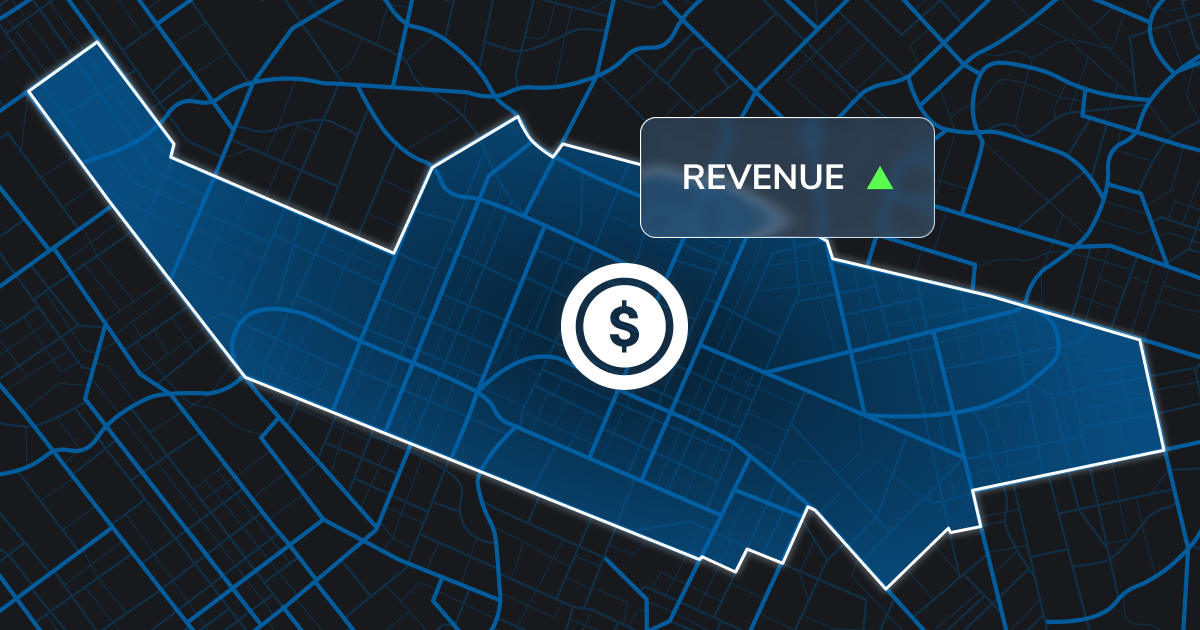
Step 1. Pull the territory on the map: Open a property intelligence view of the area, every commercial building in a defined radius, layered with size, type, ownership, and recent activity to make sure it fits their ideal customer profile (ICP).
Step 2. Filter by signal strength and property fit: You're visiting the buildings showing buyer signals like permits pulled, search activity for relevant services, ownership changes, contract renewal windows, that match your ICP.
If you work buildings 50,000 square feet and up, every building under that threshold drops off the map. The 6 left are the ones worth pursuing.
Step 3. Pull verified decision-maker contacts: For each of those buildings, you now know the facility director's name. The property manager's name. The owner if it's owner-occupied. You know who to ask for at the front desk, which alone changes how the receptionist responds to your drop-in.
Step 4. Pre-write the “opener:” Generative AI takes the building's specific context, ownership data, permit history, recent activity, and drafts the outreach for you.
Email, call script, in-person opener. Pick the one specific thing that gives you a reason to be there beyond “I sell HVAC.” The hook is in the building's own data, and what search behavior shows they’re actively trying to buy.
The buildings are mapped for you, the route is planned, and your first contact message is ready to go - before you even start your truck. Now it’s about building a relationship with the decision maker.
If you’d like, you can read more about this approach in our guide to reaching decision-makers at commercial buildings.
What to Say in the First 7 seconds?
The first 7 seconds matter because that's roughly how long it takes the receptionist or gatekeeper to decide whether you belong there.
Princeton psychologists Janine Willis and Alex Todorov found that people form judgments about trustworthiness, competence, and likability in as little as 100 milliseconds - and longer conversations don't change those judgments, they just reinforce them.
By the time you finish your second sentence, the gatekeeper has already decided what kind of visitor you are.
That's why what you say in the opening seconds matters more than what you say after. The receptionist isn't really listening to your full pitch. They’re pattern-matching: does this person sound like a vendor cold-knocking, or someone with a real reason to be here?
The way to win in this situation is to lead with the building, not the pitch.
Reference something specific, a permit, a piece of equipment, or a recent change. The receptionist responds differently to "I'm following up on the rooftop work from March" than she does to "Who handles your HVAC?"
Most canvassing literature focuses on tonality and posture. Stand back from the door, stay neutral, don't sound like a salesperson.
While posture and tone still matter, what changes the conversation isn't tonality alone. It's having a concrete reason that isn't “I'm here to sell you something.”
Let’s compare a cold drop-in vs. one informed by building data:
Cold script: "Hi, I'm with Apex Mechanical. Could I speak to whoever handles your HVAC?"
Property-data script: "Hi, I'm with Apex Mechanical. I'm following up on the rooftop unit work the building had done in March. Is Maria Chen still the facilities lead here?"
The second version sounds like the rep belongs there. The first sounds like every other vendor that walks in cold.
Stratus Building Solutions' Terri Reddan put it well: "When you have those insights, you're one step ahead… It gives you the ability to have a more intelligent conversation with them."
And as a result, volume goes down while conversation quality goes up.
We have a more in-depth guide on getting past the gatekeeper. If you’re struggling to reach decision makers directly, it’s worth a read.
How Do You Follow Up Without Losing Leads?
The old quote, "The fortune is in the follow-up," is truer today than ever. But most reps face the same problem - they’re canvassing from a vehicle, without easy access to their CRM.
This is where you need the right tools. Smartphone note-taking apps or a pen and paper get lost in the shuffle of everyday work.
Property intelligence tools that are accessible on all your devices and have a built-in CRM solve this problem. They allow you to log the visit on the spot, not at the desk that night.
The rep enters the visit on the same device used to navigate the route, the data syncs with your other sales tools, and the follow-up email or next-touch can be drafted before pulling out of the parking lot.
Which is important because commercial deals are rarely won on the first touch. It would be nice, but 95%+ won't. Which means you’ll need a follow-up process after each touch.
Drop-ins, emails, calls, and even mailers all work well, but they leave reps drowning in admin. They hit eight buildings, scribble notes, plan to enter everything Friday afternoon, and lose half the context by then.
The fix is to log their notes at the visit itself, on the same device the rep is already using to navigate to the meeting.
Convex offers these sales workflows built into the app, and they push data straight into Salesforce, HubSpot, or your pipeline manager of choice. Climate Engineering's Branden Jovaag described it like this: "With Convex, I can build a citywide map of where I'm going after and, because it syncs with Salesforce, I have all my account details in one click."
The follow-up sequence after a canvassing visit usually looks like this:
Same day. Visit logged, recap email sent, next-touch scheduled
3 to 5 days later. Phone call if relevant, or a value-add email referencing the in-person conversation
10 to 14 days later. Second visit at a different time of day, or a phone call to the named contact
Without an operational layer like field sales management software holding which buildings were visited, what was said, and what's next, even good canvassing turns into a leaking bucket.
From “Driving for Dollars” to Booked Meetings
Haynes Mechanical Systems, a 230-employee HVAC and building automation contractor in Colorado, used to run their MSRs the old way. Driving city streets, carrying business cards, knocking on doors, assessing buildings from the curb.
Within two months of changing how prospecting worked, first-appointment bookings nearly doubled, and the team built nearly 30 active proposals representing $400K in pipeline.
Their target profile was specific. Commercial buildings 50,000 square feet and up, no restaurants, retail, or residential. The goal was five new meetings per week per rep to hit service contract targets, with service contracts being roughly a third of company revenue.
What changed wasn't the canvassing. They still visit buildings. What changed was everything before the visit.
Now management can see which building types new reps are targeting in real time, which means coaching happens early, before a rep wastes weeks chasing buildings outside the ICP.
Reps cross-reference building data against existing customer data to understand market penetration. They use permit data to spot when a competitor pulled work in a building where Haynes has an advantage, and build a head-to-head strategy. Pipeline transparency runs through team meetings. Leading indicators like first appointments booked and buildings tracked are visible, not just lagging ones.
Matt Koenig, Haynes' Director of Sales, framed what the shift gave them: "Now we can control a leading measure we need to achieve a lagging measure. Convex helps us identify the activities that help us get the meetings."
That's the canvassing reframe in one sentence. The activities are the same. The rep still walks into the building. What changed is the team's ability to control the leading measure: the buildings they target, the decision-makers they contact, and the visits that turn into meetings, rather than just measuring how many doors they knocked on.
You can read more about Haynes' new approach and their results by clicking here.
What to Do About "No Soliciting" Signs and Local Permits?
Commercial canvassing rules vary widely by city, county, and state - so you’ll need to reference your local guidelines to ensure you’re in compliance with them. Many local jurisdictions require commercial solicitors to obtain a permit, business license, or both before going door-to-door.
Almost all jurisdictions allow building owners to enforce "No Soliciting" signs as a trespassing notice, so check your local rules before sending reps out.
The U.S. Small Business Administration explicitly states that licensing rules vary by state, county, and city, and that it's the business's responsibility to research its own requirements, per the SBA's official guidance.
What's allowed in one municipality without a permit may require a surety bond, a notarized application, and a city-issued business license in another.
Falls Church, Virginia, for example, requires all three for peddlers, solicitors, and canvassers. Some cities ban commercial canvassing outright in certain districts. Most jurisdictions that do allow it limit hours to between 9 AM and 9 PM, but specifics vary.
"No Soliciting" signs deserve real respect, both for the legal exposure and for your business's reputation. Walking past a posted sign costs the company more than the meeting was ever worth.
The signal-driven approach reduces this risk by design. A rep walking in with a verified decision-maker name, a known building issue, and a specific reason to be there reads to a receptionist more like a follow-up visit than a cold solicitation.
The conversation starts in a different place. And when the data lets you reach the decision-maker ahead of time by email or phone, take that path. A scheduled meeting is always better than a cold visit, both for conversion and for the legal side.
Disclaimer. This article is general information for sales teams and isn't legal advice. Commercial canvassing, peddling, and soliciting regulations vary widely across cities, counties, and states. Before door-to-door canvassing, check the specific rules in every jurisdiction you operate in, and consider talking to your own counsel.
To Knock, or Not to Knock?
Door-to-door canvassing didn't get killed by digital. The cold, blind version of it did.
The reps still booking meetings on foot today are the ones who stopped using the visit to discover opportunity and started using it to build relationships with opportunities they'd already identified.
Property data, permit history, and buyer intent signals do the qualifying work. The visit is what turns a verified contact into a real conversation.
If your team is still running canvassing the old way, the biggest move isn't to stop knocking. It's to change which doors get knocked, and to know who's behind them before the rep arrives.
If you want to see what signal-driven canvassing looks like in your territory, book a demo. We'll show you how commercial services teams are using property intelligence and buyer signals to walk into the right buildings, with the right contacts, ready for a real conversation.
FAQ
Is door-to-door canvassing still effective for commercial B2B sales in 2026?
Yes. Eighty-seven percent of salespeople say in-person connection with customers is still critical, and commercial buyers want to meet the team that'll be on their property. Use property data and buyer signals to find an opportunity, then use canvassing to build the relationship.
What's the best time of day for commercial canvassing?
Standard business hours work best, with the highest yield typically in mid-morning and mid-afternoon. Lunch hours and the end of the day produce more "decision-maker is unavailable" responses. Local rules generally limit door-to-door activity to 9 AM through 9 PM, though specifics vary.
How do you handle "No Soliciting" signs on commercial buildings?
Respect them. Ignoring posted signs can support a trespassing claim and damage the company's reputation in the area. Where a building is posted, the better move is to identify the decision-maker through property data and reach out by email or phone with a specific reason for the conversation.
What's a good opening line for a commercial canvassing visit?
Lead with the building, not the pitch. Reference something specific, a recent permit, a known equipment age, a tenant change, or a competitor service call. "I'm following up on the rooftop unit work from March. Is Maria Chen still the facilities lead?" works dramatically better than "Who handles your HVAC?"
Do you need a permit for commercial canvassing?
It depends on the jurisdiction. Many U.S. cities require commercial solicitors to obtain a permit, business license, or both before canvassing. The SBA recommends researching state, county, and city requirements before operating. This article isn't legal advice. Check your local rules.
How is signal-driven canvassing different from traditional door-knocking?
Traditional canvassing uses the visit to find an opportunity. Signal-driven canvassing uses property data, permit activity, and buyer intent signals to find the opportunity first, then uses the visit to build a relationship with a verified decision-maker about a specific, known reason to talk.
How many doors should a rep knock per day in commercial services?
Volume targets miss the point in 2026. A rep visiting six pre-qualified buildings with named contacts and a specific reason to be there will outperform a rep knocking on forty cold doors. Set the daily goal around qualified visits and conversations with decision-makers.
Related reading
Declining Cold Outreach Effectiveness: What Commercial Services Teams Need to Know
The Modern HVAC Lead Generation Playbook: From Cold Lists to Warm Conversations
How Territory Visibility Can Speed Up Sales Even for Your New Reps and Lowest Performers
Property Intelligence Deep Dive: Mapping Commercial Real Estate for Service's Sales
Share