TLDR
Most commercial real estate databases were built for brokers and investors, not teams selling services to buildings
Services teams need different data: permit history, equipment age, verified decision-maker contacts, and buyer intent signals
The real ownership question isn't "who owns this building?" It's "who signs the service contract?"
Property intelligence platforms go beyond static records by resolving ownership, verifying contacts, and scoring buying signals
Free tools work for one building at a time. They cost more in rep hours than most paid platforms cost in software
A nationwide database covering almost 6 million commercial properties turns territory planning from guesswork into a filtered, prioritized map
You typed "commercial real estate database" and every result assumed you're buying a building.
Comps. Cap rates. Vacancy trends. Absorption forecasts. Every platform, every listicle, every guide on page one was built for brokers, investors, and appraisers. The entire category assumes you care what a building sold for.
You don't. You care what's on the roof, who manages the facility, and whether the building pulled a mechanical permit last quarter. You're not buying commercial real estate - your team is selling services like janitorial, BAS, and waste management to it.
That's a different job. It needs a different database.
Salespeople spend only 34% of their time actually selling. (HubSpot, 2025)
Only 43% of salespeople hit quota in 2025, down from 52% the year before. (Salesforce, 2025)
Companies that adjust territories based on market demand see up to 30% more revenue per rep. (eSpatial, 2025)
Almost 6 million commercial properties across North America are mapped in Convex's database, each with 200+ unique data points. (Convex, 2026)
Sales reps spend 60% of their time on non-selling tasks. (Salesforce, 2026)
Most CRE Databases Were Built to Sell Buildings
The commercial real estate database market was built around transactions. Buying, selling, leasing, and financing buildings.
The major platforms track vacancy rates, listing activity, lease comps, and sale prices. Marketplace sites list active inventory for brokers and buyers.
These systems are helpful for underwriting a deal, pulling comps, or even sourcing off-market acquisitions.
But when a sales manager is searching for a solution, you’re probably asking something more like: "Which commercial real estate database helps my HVAC reps find buildings with aging equipment and reach the facilities director by phone?"
This reframes the entire conversation. Because the data you need to see which buildings are great targets is very different from that of a banker or broker.
A commercial services sales team doesn't need transaction comps or absorption data. They need building attributes, permit triggers, ownership chains, and verified contacts for the person who actually signs a maintenance contract.
The buildings are the same. The data model is completely different.
Commercial Real Estate Database: A searchable collection of property records covering commercial buildings, typically including address, building type, square footage, ownership, and transaction history. Traditionally built for brokers, investors, and appraisers conducting market research and deal underwriting.
Property Intelligence Platform: A commercial property database enriched with resolved ownership chains, verified decision-maker contacts, permit history, equipment data, and real-time buyer intent signals. Built for sales teams that prospect buildings, not analyze transactions.
What Data Should a Commercial Property Database Actually Include for Sales Teams?
Open a building record in most commercial real estate databases and you'll see assessed value, last sale date, cap rate, square footage.
That's useful if you're underwriting a deal. It tells a service rep almost nothing.
Now picture what a rep actually needs before calling on a 120,000 sq ft medical facility. They need to know the building type and age. They need permit history showing whether a mechanical or fire system permit was pulled recently. They need the name and direct number for the facilities director, not the main office line. And they need to know whether anyone at that property has been researching vendors like theirs in the last 30 days.
That's five data points a broker database doesn't track.
What Broker Databases Track | What Services Teams Need |
Transaction comps and sale prices | Permit history and equipment age |
Cap rates and NOI | Building type, size, and use classification |
Vacancy rates and absorption | Ownership structure and tenant roster |
Lease terms and rent rolls | Verified decision-maker contacts |
Listing status and days on market | Buyer intent signals and search activity |
Most commercial real estate databases cover the left column well. The right column is where your reps actually spend their day.
How Do You Find the Owner of a Commercial Property Online?
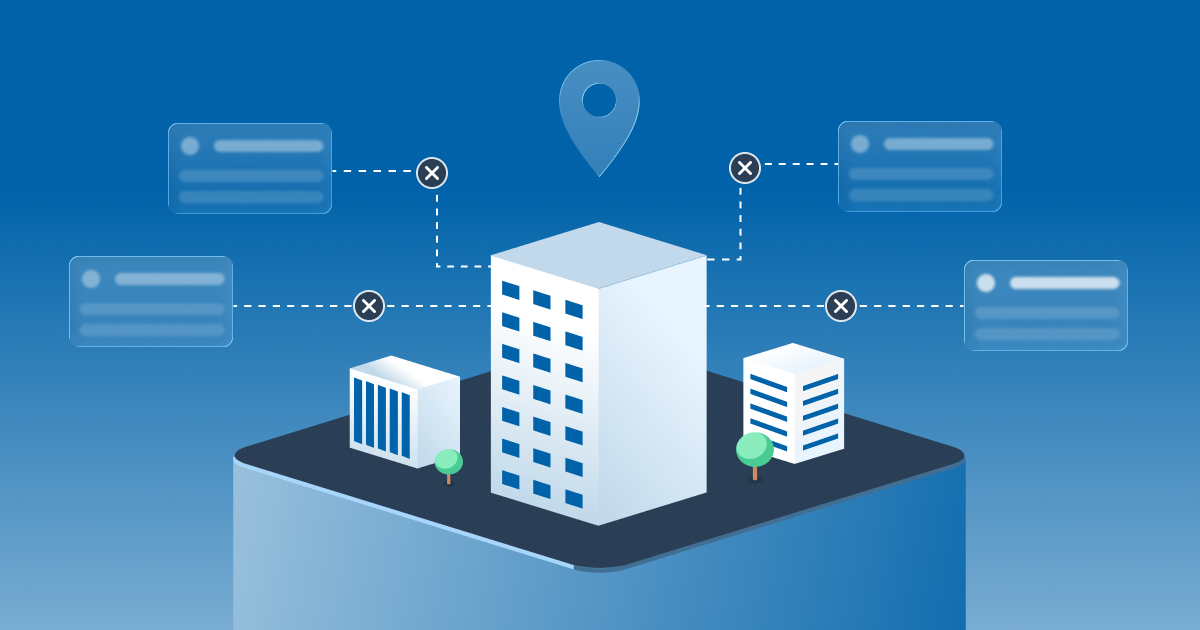
The building says one name on the deed. The person who signs the service contract is someone else entirely.
A 75,000 sq ft industrial building might be owned by an LLC registered in Delaware. That LLC is a subsidiary of a holding company. The holding company hired a third-party property management firm. The property manager assigned a regional facilities director. That facilities director is the person who approves your maintenance contract.
None of those layers show up in a county assessor search.
This is the ownership problem commercial services teams run into every day. No commercial real estate database built for brokers solves it, because brokers don't need to resolve five layers of management to find their buyer.
To solve this, many reps start with Google, check county permit records, search websites and press releases for hiring announcements, and search LinkedIn for job titles.
After that it’s guesswork.
It might work for one building at a time. But it takes 20 to 30 minutes per property when everything goes right.
Multiply that across a territory with 300 buildings and you've spent the week researching instead of selling.
On Reddit, a Sales Leader described trying to solve this problem by exporting 8,000 to 12,000 ownership records from a CRE platform, then scrubbing and cold-calling from that static list for the rest of the year.
By the third month, the list was going stale, by month six, only a few people were answering the phone. People had changed roles, buildings had changed management, and some had even sold.
Reaching the actual building owner, property manager, or facilities personnel, and getting a response depends on whether your database resolves those ownership and management layers or just reflects what the county recorder has on file.
What's the Difference Between a CRE Database and a Property Intelligence Platform?
A database gives you records. You still have to figure out what to do with them.
The distinction matters because the entire first page of results for "commercial real estate database" treats the category as one thing. It's not.
A CRE database is a collection of property records. Filterable, exportable, static until the next update cycle.
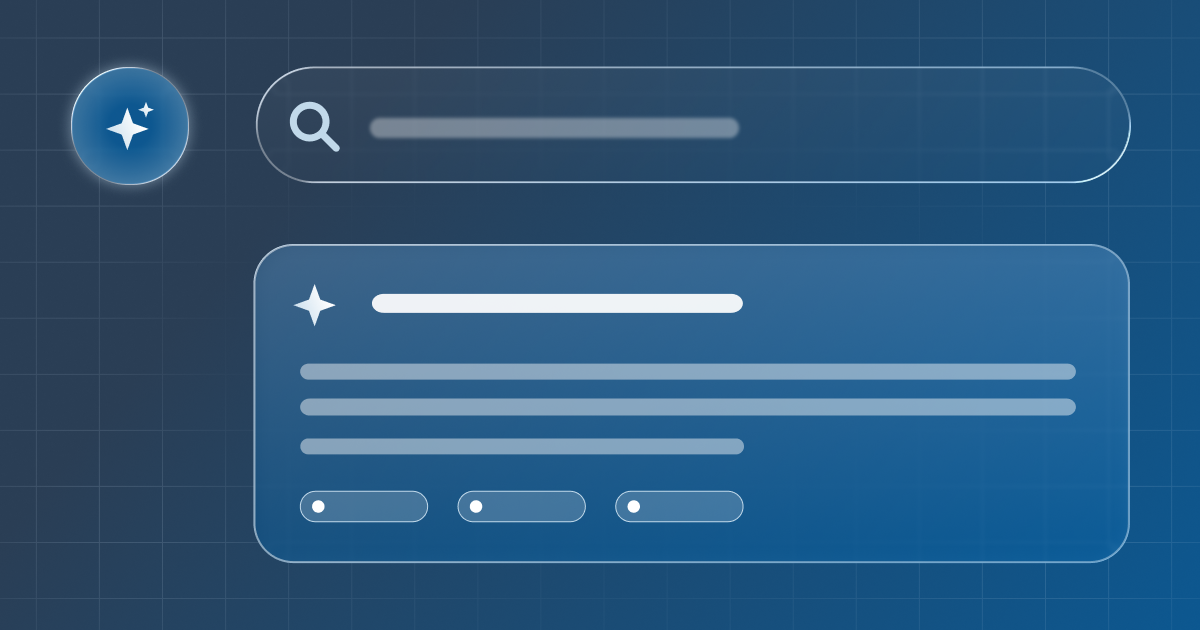
A property intelligence platform starts with the same building records but layers ownership, verified contacts, permit history, and buyer intent signals on top so they’re actionable for a sales team - and it ties everything to a map of your territory.
One is a filing cabinet you search through. The other is a workflow that generates pipeline.
Let’s look at it from a head of sales perspective. Say, for example, that a head of sales at a mid-market HVAC company needs to assign territories for two new reps. She pulls up a CRE data platform her company already pays for.
The export gives her addresses, assessed values, and last-sale dates.
Nothing in that spreadsheet tells a rep which building pulled permits 15 years ago for a chiller, which one just changed property management companies, or which facilities director is currently researching HVAC service contracts online.
And it leaves reps working from static lists without prioritization. Which is one of the reasons that only 43% of salespeople hit quota last year (Salesforce, 2025), down from 52% the year before.
Property intelligence platforms, like Convex, that were built for reps selling into commercial buildings resolve ownership, attach verified contacts, and score buying signals directly on a territory map - so all of the key insights they need for sales are right at their fingertips.
This isn’t hypothetical. Matt Koenig, General Manager at Haynes Mechanical Systems, watched this shift play out in real-time on his team.
Before his reps had building-level data, they were driving around trying to identify buildings that fit their profile, then networking their way to a decision-maker with a business card. They were growing - but without the focus that Matt has in mind.
Within two months of switching to Convex, first appointment bookings nearly doubled, generating 30 active proposals and $400K in new pipeline.
"Now we can control a leading measure we need to achieve a lagging measure." - Matt Koenig, General Manager, Haynes Mechanical Systems
Most services teams also have a coverage problem.
Are Free Commercial Real Estate Data Tools Enough?
There’s an old saying - you get what you pay for. And with free tools, that’s often the case.
According to a 2026 study by Salesforce, reps were spending 60% of their time on non-selling tasks. For most reps this looks like “tab overload.” 50 tabs open across several browsers.
The county assessor website gets opened to look for permits and to search by address. But there’s no phone number or email attached, so the Secretary of State site gets opened in a second tab, searching for the LLC. A third tab for LinkedIn, looking for a facilities director. A fourth for Google Maps, checking the building type.
By 10:30 they've pieced together context on three buildings. The contact info might be current. Might not. They still don't know which buildings are actually in-market for services.
This is what a free commercial real estate database strategy looks like at scale.
A team of ten reps, each spending 15 to 20 hours per week on manual research, averaging just two hours per day on active selling (Ebsta/Pavilion, 2025), at a fully loaded cost of $75 per hour, is roughly $19,500 per month in team labor just to build a targetable list.
So the software is free. The time isn't.
Specialized Elevator hired a dedicated business development rep to sell in their New England territory. After a year, that BDR had reached roughly 4% market penetration. Their email response rate hovered between 8% and 10%, and using traditional tools, they weren’t seeing the results they wanted.
After switching to Convex, they were able to identify 42,000 potential customers across five New England markets that they hadn’t yet touched. Tens of thousands of commercial buildings filtered by type, signals, permits, ownership, and with a verified contact before the rep made a single call.
What Changes When Every Building in Your Territory Shows Up on One Map?
Let’s go back to the head of sales example. She’s just hired two new sales reps.
Instead of splitting ZIP codes and handing each rep a CRM with account names, the territory shows every commercial building in the region marked by pins on a map.
Buildings with personnel actively searching for industry specific terms like, “HVAC maintenance,” or “waste management in Chicago,” are all put into a priority list called Signals. As the number of signals grows, the signal strength increases and reps get a priority list of high intent contacts to work.
The reps aren't asking "where do I go?" They're filtering by building type, size, permit activity, and buyer intent. The map shows them which of their accounts in each target segment to call first.
This is what a commercial real estate database looks like when the property intelligence data is layered on top.
Not transaction records. Not comps. A visual, filterable layer of every property in your territory with the data your reps need before they pick up the phone.
Branden Jovaag, a maintenance sales rep at Climate Engineering (recently acquired by Harris Company) in Colorado, described how this works in practice.
His team considered expanding into an adjacent region but had no data to justify the investment. He filtered the target area by qualification criteria inside Convex and pulled 50 qualified leads in minutes, without leaving the office.
Over time, his campaigns tracked 1,250+ qualified prospects and booked 140+ first appointments.
"With Convex, I can build a citywide map of where I'm going after and, because it syncs with Salesforce, I have all my account details in one click." - Branden Jovaag, Maintenance Sales Rep, Climate Engineering
The buildings were always there. The contacts were always findable, eventually. The difference is whether your team spends the week assembling that picture or starts the week with it already built.
Your Reps Don't Need More Records
The commercial real estate database category is going in two directions. One side will keep serving investors and brokers with transaction data, comps, and market analytics. The other side, built for commercial services, looks less like a traditional commercial real estate database and more like a territory map with every building, every owner, and every signal already loaded.
Your reps don't need more records to search through. They need a starting point that's already filtered, verified, and prioritized. The search that brought you here returned results built for a different buyer. The next step is seeing what a commercial property database looks like when it's built for yours.
If you're ready to see what your territory looks like with every building, contact, and signal already mapped, schedule a demo of Convex.
Frequently Asked Questions
What is the best commercial real estate database?
It depends on the job. If you're underwriting deals, pulling comps, or tracking vacancy, the broker platforms own that space. If you're running a sales team that sells services to commercial buildings, you need a database that tracks different fields entirely: permit history, ownership chains, verified contacts for facilities directors and property managers, and buyer intent. The best database for your team is the one that answers "who do I call and why this week?" for every building in your territory.
How much do commercial real estate databases cost?
The broker platforms can run thousands per month per user. Property intelligence platforms built for commercial services teams typically price by user count and territory coverage. But the real cost question is what your reps are spending in hours. Ten reps doing 15 hours of manual research each week at $75/hour fully loaded is $19,500/month in labor just to build a list. The database cost is a line item. The research cost is a payroll line.
What's the difference between a CRE database and a property intelligence platform?
A CRE database stores property records: addresses, assessed values, transaction history, square footage. Property intelligence platform enriches those records with resolved ownership chains, verified contacts, permit activity, and buyer intent signals. The database tells you a building exists. The intelligence platform tells you whether it's worth your rep's time this week.
Can I find commercial property owner information for free?
Yes. County assessor sites, secretary of state filings, GIS portals. They work. For one building, you'll spend 20 minutes and get an owner name that may or may not be current and may or may not be the actual decision-maker. For 300 buildings across a territory, you're looking at 100 hours of research before your reps make a single qualified call.
Do I need a nationwide commercial real estate database or a local one?
If you operate in one metro area and don't plan to expand, local county data can cover the basics. The gaps are contact data, intent signals, and permit history, which counties don't aggregate. If you operate across multiple states or plan to evaluate new territories, a nationwide database with consistent data quality across markets eliminates the patchwork problem. One elevator company identified 42,000 potential customers across five states in a single search. That doesn't happen market by market.
What data fields matter most in a commercial property database for sales teams?
Building type and square footage tell you whether it's a fit. Permit history tells you whether something is happening. Ownership structure, resolved through LLCs and management layers to the actual decision-maker, tells you who to call. Verified contact info, direct phone and email for facilities directors and property managers, tells you how to reach them. Buyer intent signals tell you whether they're looking right now. Most broker databases cover the first two. The last three are where the gap lives.
How do commercial services teams use property databases differently than brokers?
Brokers query a database to analyze a deal. Comps, cap rates, vacancy, lease terms. They might use it a few times per transaction. Services teams prospect from the database every day. They're not analyzing buildings. They're filling a pipeline with buildings that need their work and reaching the person who can approve a contract. Different data, different cadence, different workflow entirely.
Related Reading
Why Quota Attainment Is Falling for Commercial Services Sales Teams
Sales Territory Analysis: How Commercial Services Teams Study Their Market
Share